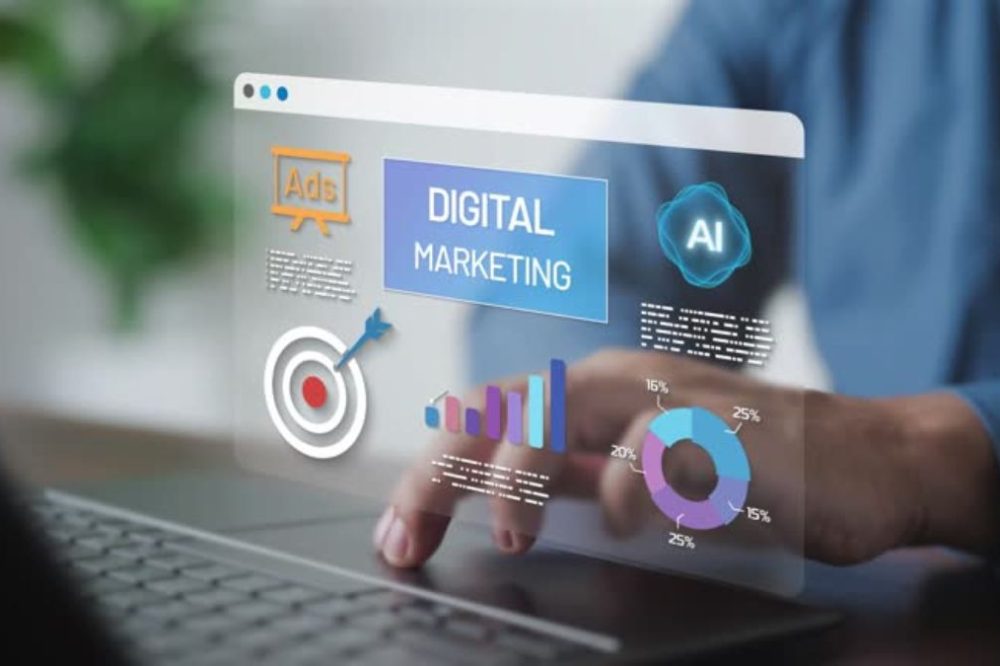
Digital marketing is never boring, but 2026 is shaping up to be one of the more disruptive years in recent memory. AI-generated answers are replacing the traditional results, privacy restrictions are tightening around tracking and ad targeting, and customers expect brands to reply in real time across every channel at once. Search behaviour is changing. If your business doesn’t stay on top of these trends, you will quietly lose visitors, ad performance, and conversion rates as competitors adjust.
This book covers the digital marketing trends for 2026 that matter. They are not transitory fads, but fundamental transformations that will affect how people discover businesses, how advertising get targeted, and which technologies are becoming crucial. We’ll explore the software categories driving these trends – SEO software, content marketing platforms, marketing analytics software, and social media management software – since choosing the appropriate tools is just as crucial as the trend itself.
Why 2026 seems like a tipping point
There’s been a lot of change in marketing over the last decade, but this year a few forces are aligning: AI-generated search answers are eating into traditional click-through rates, third-party cookies are mostly gone, and consumers are growing increasingly numb to generic, mass-produced content. Brands still playing the 2022 playbook are facing declining rewards, while brands adapting early are garnering disproportionate attention and budget efficiency.
Here’s a look at the trends that are driving strategy this year – and what to really do with each one.
1. AI-Generated Search Results Are Changing SEO
Search engines are answering more enquiries at the top of the results page with an AI-generated summary, meaning fewer users are even clicking through to a website at all. This has required a move from typical keyword-stuffed material to responses that are written well enough that artificial intelligence systems can quote them – and to content depth that keeps visitors engaged once they do click through.
What to do: Invest in SEO software that tracks ranks, visibility from AI-overview, and citation frequency. Clear headers. Direct responses towards the top. Strong topical authority. Not keyword chasing in isolation.
2. First-Party Data Is the New Base
Major browsers are phasing out the usage of third-party cookies, meaning advertisers can no longer monitor users around the web to construct audience profiles. First-party data – data you acquire from your own website, email list or app – has become the backbone of efficient targeting.
What to do: Focus on technologies that help you collect and organise first-party data in a clean way – your CRM, your email platform, and any marketing analytics software that brings together consumer behaviour across touchpoints. Zero-party data (information a client voluntarily gives you, such as answers to a quiz or a preference survey) is also becoming a valuable addition.
3. AI-Driven Personalisation at Scale
Personalisation used to be simply using a first name in the subject line of an email. By 2026, marketers will be able to use AI to personalise the entire customer journey from product recommendations and email timing to ad creative and website design based on real-time behaviour, removing the need to manually create unique experiences for each category.
What to do: Seek out platforms that have AI personalisation built in, not those that you have to bolt on to your current stack. Many of the content marketing platforms and email solutions you use today have this built in, so you don’t have to build it from the ground up.
4. Short-form video continues to reign supreme, but authenticity is key.
Short-form video remains the most engaging content type on just about every platform, but audiences have grown tired of content that feels too polished or ad-like. Raw, original, creator-style videos will always beat carefully produced brand material – even from the brand itself.
What to do: Reallocate budget from expensive video creation to faster, more frequent, lower-cost content that seems appropriate to the platform. Working with creators who already have audience trust typically beats brand-owned channels for the same cost.
5. Social Media Is Turning into a Search Engine
Younger consumers are increasingly searching directly on sites like TikTok and Instagram, rather than Google, especially for product recommendations, reviews and local business discovery. Brands have been forced to optimise social material for searchability, not just interaction.
What to do: Consider captions, video text overlays and hashtags as searchable metadata, not merely stylistic choices. Strong social media management software now has data on search visibility across platforms not simply likes and shares.
6. Marketing Automation That’s Smarter Not Faster
Automation is not new, but the platforms of 2026 take things a step further, leveraging AI to select when and how to engage a customer instead of simply executing a pre-built sequence. AI-driven automation, rather than a hard drip campaign, can modify timing, messaging, and channel based on real-time interaction data.
What to do: Audit your automated workflows and find opportunities to replace rigid, one-size-fits-all sequences with AI-driven decisioning. Many marketing analytics software and automation platforms now offer this as a direct upgrade option rather than a full replatform.
7. Privacy-first advertising is a must.
Globally, regulatory pressure on data privacy continues to increase, and the platforms themselves are imposing greater limits on consent and tracking. Those who haven’t evolved their measurement approach are witnessing diminishing attribution data and, in some circumstances, compliance danger.
What to do: Rather than tools still depending on outmoded tracking methods, invest in PPC management software and analytics programmes developed on privacy-compliant measurement – server-side tracking, aggregated conversion modelling, and consent management.
8. Influencer Marketing Becomes Long-Term Partnerships
One-time influencer postings are working less effectively than consistent, multi-post relationships when the creator actually utilises and speaks about the product over time. People can recognise a one-off paid endorsement these days, and confidence is easily lost if it feels transactional.
What to do: Move budget away from one-off influencer posts to fewer, longer-term collaborations. This tends to be cheaper overall, and yields better, more realistic results.
9. Voice and Visual Search Are Still in Their Infancy
While voice search never quite took off the way some projected years ago, visual search (searching with an image rather than words) has risen gradually, especially in e-commerce and travel. More and more consumers take a picture of a product and search for where to buy it or for alternatives.
What to do: If you have an e-commerce business, make sure your product photographs are excellent quality, optimised for visual search indexing and accurately categorised. It’s a smaller trend than AI search or first-party data but it’s expanding steadily enough to matter for retail-focused organisations.
10. Marketing Teams Are Simplifying Their Stack of Tools
There are so many specialised tools that many marketing teams have ended up with an expensive, overlapping patchwork of software. In 2026, expect to see a clear move towards consolidation into fewer, more integrated platforms – merging the content marketing platform, marketing analytics software and social scheduling into cohesive suites, rather than juggling a dozen individual subscriptions.
What to do: Review your current software stack for overlap. Many all-in-one platforms have grown to the point where they can replace three or four point solutions at a lower overall cost, while simultaneously minimising the data silos that make it tougher to consolidate first-party data.
How to Build a 2026-Ready Marketing Stack
You don’t have to overhaul your entire tech stack overnight to adapt to these trends, but you do have to take an honest audit of where your current tools are falling flat:
- Is your SEO software tracking traditional rankings or AI-overview visibility?
- Is your marketing analytics software integrating first-party data or are you still dependent on third-party tracking that’s becoming less and less reliable?
- Is your content marketing platform powered by AI for personalisation or is it all manually done by segment?
- Does your social media management software provide native platform search optimisation or just scheduling and basic interaction metrics?
Answering these honestly will often give one or two priority updates rather than a complete platform makeover.
Summary
What ties all of the trends on this list together is a shift away from generic, one-size-fits-all marketing towards something more direct, more personalised and more quantifiable – even while third-party tracking fades. Brands who use 2026 as an opportunity to double down on authentic content, first-party relationships and AI-assisted personalisation will outperform those still following yesterday’s playbook. Start with the one or two trends that are most relevant to your business, build out your tool stack, and then go from there, rather than trying to change everything at once.
FAQ
Q1. The Hottest Digital Marketing Trends for 2026
The big shifts are AI-generated search results and how that impacts SEO strategy, the death of third-party cookies and the need to acquire first-party data, AI-powered personalisation at scale and social media platforms as search engines for younger audiences.
Q2. How AI Is Changing SEO in 2026
And they’re using AI for the easy answers too, which is affecting the traditional click through rates. Brands should be creating content with certain citable elements and use SEO tools that track rankings of content created by AI, not just keyword rankings.
Q3. Why Will First-Party Data Reign in 2027?
Third-party cookies are effectively dead, meaning companies cannot build audience profiles via cross-site tracking. First-party data – the data you collect on your own website, email list or app – is now the secret to accurate targeting and personalisation.
Q4. Short video investment 2026?
Yes short form video is still the most engaging content type across most platforms but consumers want authentic creator style content vs overly produced brand videos. It’s often not the expensive stuff that beats the cheap stuff.
Q5. Can small business owners do all these digital marketing trends simultaneously?
No. And if you try to do it all at the same time it often ends up being a watered down effort. The small business needs to identify one or two trends that are most relevant to their audience and industry, tweak their marketing analytics software or content strategy, and then scale up.

Enjoyed this article?
If this guide helped you, consider supporting Rough Diary. Your support helps us continue creating practical, informative, and useful AI and technology content.