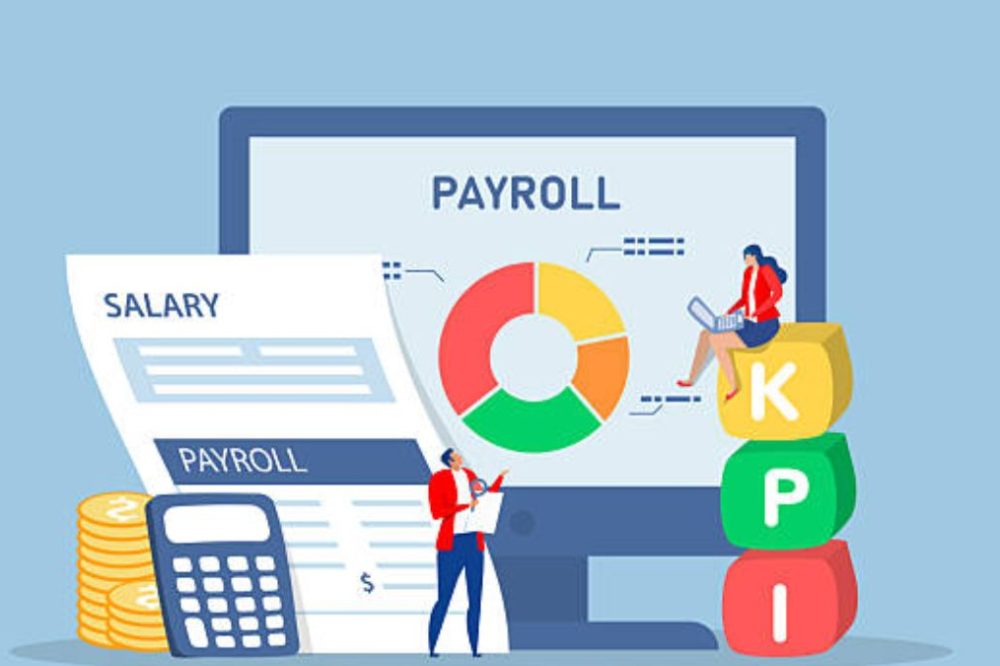
Handling payroll by hand is one of the fastest ways for a small business owner to blow a Saturday – and one mistake tax filing may transform that lost weekend into an expensive IRS penalty. That’s why picking the best payroll software is one of the highest-leverage decisions a growing business can make. The appropriate platform doesn’t just write a check, it calculates withholdings, files federal, state and local taxes seamlessly, manages new-hire onboarding and increasingly incorporates HR services like benefits administration and time tracking – all from one screen.
Here’s a look at the top HR and payroll platforms for small businesses in 2026, who each one is truly built for, what they cost, and how to choose the best one for your team size and industry.
Small Business Payroll Software: What to Look For
Before we compare specific tools, it helps to understand what genuinely separates an excellent platform from a bad one:
- Automated payroll tax filing – Federal, state and local payroll taxes computed and filed for you, including year-end W-2s and 1099s
- Unlimited or flexible pay runs – pay your employees as regularly as you like, at no extra cost
- Pay frequencies and direct deposit
- Employee self-service, a site allowing employees to examine pay stubs, update direct deposit and access tax forms
- HR add-ons – onboarding, benefits administration, time-off monitoring and compliance support
- Time tracking integration – crucial for hourly, shift-based, and tipped teams where wages are determined by hours worked
- Transparent, scalable cost – a base monthly fee + per employee charge is the industry standard; watch out for hidden state filing fees
With that in mind, here’s a look at how the top platforms compare.
1. Gusto – Best Small Business Payroll Software Overall
Gusto is frequently voted the finest all-around payroll software for small business and it’s easy to see why. It blends full-service payroll – automatic tax filing, limitless pay runs, direct deposit – with real HR tools like onboarding checklists, PTO tracking, and an in-house benefits brokerage. Gusto has its own insurance team, so companies that sign up for medical, dental, or workers’ comp coverage through Gusto often just pay the price, with no administration fees added on by some competitors.
Best For: Small firms with a mixed workforce (salaried and hourly) who want payroll and HR in one modern, easy-to-use platform. Pricing: Plans often start at $6-12 per employee per month, plus a base cost. Tiers unlock benefits administration and dedicated HR help.
2. QuickBooks Payroll – Best for businesses already using QuickBooks
If your books are already in QuickBooks, QuickBooks Payroll is the easiest way to go. It syncs payroll data directly to your accounting, automates tax filings and gives you same-day or next-day direct deposit, depending on the plan. It was recently named a top small business payroll alternative by independent review sites, partly because it integrates so effortlessly into an existing QuickBooks workflow.
Best for: Small businesses who are already QuickBooks accounting users and want payroll to sync automatically without a separate system.
3. ADP RUN – Best for Scaling Beyond 25 Employees
ADP is the name most synonymous with enterprise payroll, and its small-business offering, RUN Powered by ADP, offers that same detail to smaller teams. It’s built to scale – when your staff grows, you can scale up to ADP’s larger platforms without switching providers. It offers HR tools, background checks, and compliance support, but the cost is not transparent and usually requires a unique quote.
Best for: Growing small firms who intend to move past 25+ people and want a service that grows with them.
4. OnPay – Best Flat-Rate Choice
OnPay also scores with straightforward, flat-rate pricing with no extra per-state filing fees, a major plus if you have employees in numerous states and your competitors charge extra per state.
Best for: Small firms in many states looking for stable, all-inclusive pricing.
5. Paychex Flex – Great for combined HR and insurance assistance
Paychex is a good solution for small firms looking for additional hand-holding around benefits, compliance and HR policy. It has an in-house insurance team and a lengthy history in HR compliance support. It does charge a premium for insurance add-ons, though, so if benefits management is a big issue, it’s worth comparing total cost to Gusto.
Best for: Small enterprises that seek dedicated payroll and HR compliance help.
6. Patriot Software – Best Affordable Entry Point
Patriot Software is one of the cheapest solutions to automate tax filing and direct payment for firms who want straightforward, no-frills payroll with no big feature list. It’s a good start for really tiny teams who don’t need complete HR functionality yet.
Best for: Solopreneurs and tiny teams that need simple, low-cost payroll.
7. Rippling – Best for Advanced Automation
Rippling is known for its superior process automation, linking payroll, HR, IT and device management into a one solution. It’s more feature-dense (and more expensive in general) than the other solutions mentioned, but if you’re a small business looking to scale quickly and want one system to handle everything from onboarding to laptop supply, it’s worth a look.
Best for: Fast-growing small businesses looking for payroll that integrates with larger HR and IT operations.
8. Homebase / TimeTrex – Best for Hourly, Shift-Based Teams
For restaurants, merchants and service firms that rely on hourly, shift-based teams, payroll accuracy is highly dependent on clean time and attendance data. Platforms like Homebase and TimeTrex are building payroll right on top of scheduling, time tracking and overtime regulations, which cuts down on the errors that occur when payroll and time tracking exist in different systems.
Best for: Hourly, multi-location or tipped teams that need to sync scheduling and time tracking directly with payroll.
Payroll Software Comparison Summary
| Software | Best For | Notable Strength |
|---|---|---|
| Gusto | Total SMB | HR + benefits + payroll all in one |
| QuickBooks Payroll | Existing QuickBooks customers | Smooth accounting sync |
| ADP RUN | Scaling Beyond 25 Employees | Long-term scalability |
| OnPay | Multistate teams | Flat rates, no extra state fees |
| Paychex Flex | Benefit-heavy teams | In-house insurance help |
| Patriot Software | Very small teams / budget | Entry point: low cost |
| Rippling | Fast-Growing Companies | Payroll + HR + IT Automation |
| Homebase / TimeTrex | Hourly, shift-based teams | Time tracking built into payroll |
HR and Payroll Software vs. Manual Payroll
Some really tiny firms still think of payroll being done manually with Excel spreadsheets. It can be done. It’s dangerous, though. Miss a tax deadline or miscalculate withholding and you may incur significant penalties from the IRS or state agencies. Dedicated payroll software eliminates that risk automatically, figures deductions properly, and saves hours each pay period that would otherwise be spent doing calculations and forms manually.
How to Select the Best Payroll Software for Your Business
- Start with the type of worker. Salaried teams have less complicated payroll needs than hourly, tipped, and multi-location teams, which require close integration of time tracking and pay calculation.
- Check the state coverage and fees. If you have employees in different states, check to see if the provider charges an additional fee per state, which can greatly affect the total cost.
- Work out how much HR you actually need. If you just want payroll, a leaner product like Patriot or OnPay can be cheaper than an all-in-one platform like Rippling.
- Make sure it syncs with your accounting program. If you already use QuickBooks, Xero or FreshBooks, prioritize native integration with a payroll source.
- Don’t forget growth. If you’re looking to double headcount in the next 1-2 years, pick a platform that scales with you, not one you’ll outgrow and need to migrate away from.
Final Thoughts
There is no one payroll software that is best for all small businesses – it all depends on the size of your team, the type of workforce you have and how much HR functions you want bundled in. But Gusto is still the best overall choice for most general-purpose small businesses, thanks to its balance of payroll, HR and benefits. For current QuickBooks users, QuickBooks Payroll is the obvious choice; multi-state teams should definitely look at OnPay; and if you pay hourly, shift-based teams, a platform like Homebase or TimeTrex that links payroll directly to time tracking will give you the best accuracy.
Frequently Asked Questions (FAQs)
1. What is the best payroll software for small businesses?
Gusto is our top overall payroll software for small businesses because it offers automated tax filing, limitless pay runs, and built-in HR and benefits functions, all on one easy-to-use platform. Ultimately, the best option comes down to your workforce type and budget – organizations that use QuickBooks may choose QuickBooks Payroll, while multi-state teams frequently do better with a flat-rate service like OnPay.
2. How much does payroll software cost for small business?
Most payroll software has a base monthly fee and charges you per person. You’re looking at anywhere from $6-$12 per employee each month on top of a $30-50 base fee. Tools like Patriot Software, which are payroll-only, are usually cheaper than full-service HR and benefits administration products.
3. Does payroll software automatically file my payroll taxes?
Yes. Most current payroll platforms, like Gusto, QuickBooks Payroll, ADP RUN, and OnPay, automatically compute and file federal, state and local payroll taxes, and create year-end forms like W-2s and 1099s.
4. Is payroll software worth it for a very small business or a solopreneur?
Even for a one- or two-person business, payroll software can be a huge time saver and help avoid expensive tax filing mistakes compared to doing the calculations by hand. Affordable choices like Patriot Software or Gusto’s solo/contractor plans are designed for very small teams.
5. What is the difference between payroll and HR software?
Payroll software is not simply about computing salary, deducting taxes and submitting tax forms. HR software can offer a broader variety of functionality, including onboarding, benefits administration, performance management, and compliance. There are several new systems like Gusto, Rippling that combine the two into one system so that businesses don’t need to use separate solutions.

Enjoyed this article?
If this guide helped you, consider supporting Rough Diary. Your support helps us continue creating practical, informative, and useful AI and technology content.