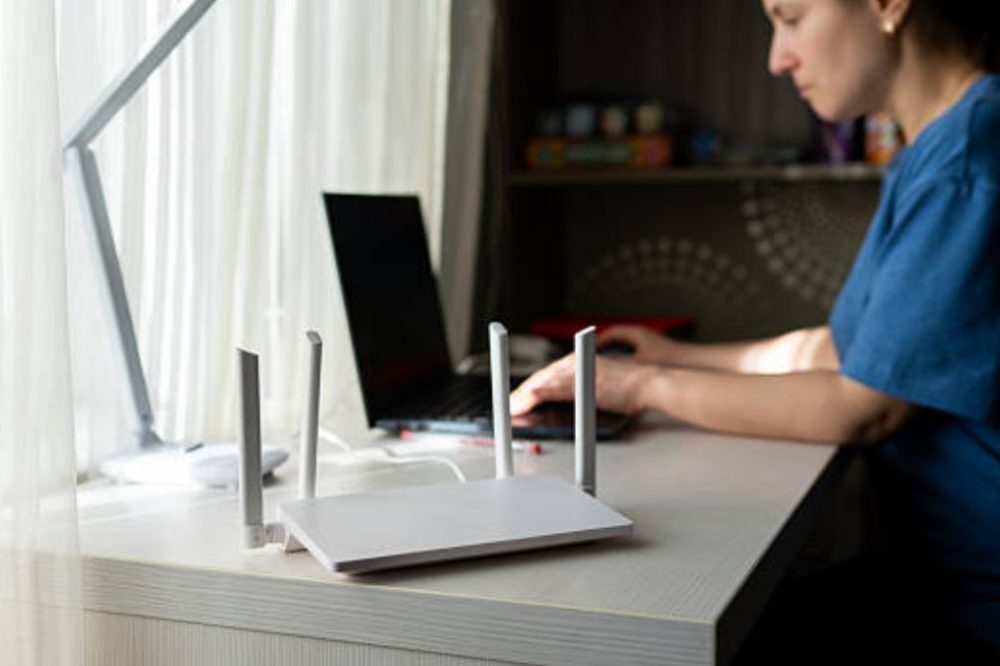
A poor, unstable home WiFi connection is almost never the fault of your internet provider – it’s generally the router. A fast fiber or cable plan is nevertheless bottlenecked by an old, underpowered or poorly situated router, leaving you with dead zones, buffering video conversations and a network that can’t keep up with a household full of connected devices. The finest wifi router for home use isn’t just the most costly box on the store, it’s matching the router’s characteristics and coverage type to your actual home size, internet plan, and device count.
This article will show you just how to pick the correct router in 2026, plus particular picks based on actual 2026 testing results, so you’re not left guessing between a wall of almost identical-looking boxes.
Step 1: WiFi 7 vs WiFi 6 (Do You Really Need the Latest Standard?)
It’s the newest generation and 2026 testing reveals some really big real-world speed advantages over older standards in the right situations – but it’s not automatically necessary for every home. Here is the naked truth:
- You’d benefit from WiFi 7 if: you have a multi-gig internet plan (500Mbps or faster), you have many connected devices, you do heavy 4K/8K streaming or video calls across multiple rooms simultaneously, or you’re building a smart home with dozens of connected devices
- If your internet plan is capped at about 300-500Mbps, your home is small to medium-sized and you don’t have an abnormally device-heavy household, WiFi 6 (or 6E) is still entirely fair – you’ll save considerably on cost without a noticeable difference in daily use.
- One real caveat tho: a few 2026 reviews have noted a problem with WiFi 7’s Multi-Link Operation feature’s connectivity to certain Apple device WiFi chipsets, causing intermittent drops on iPhones in particular – as of testing in 2026, this is still only partially fixed by firmware updates, so if you are a heavy iPhone household, keep an eye on this if you get a first-gen WiFi 7 router
Step 2: Choose Between a Single Router and a Mesh System
- If you have a smaller home (around ~1,500 sq ft) or an apartment where one central device may reasonably cover the whole room without big dead zones a single router will do fine.
- If you live in a big house, a multi-story home, or have thick walls (brick, concrete, plaster) or separate regions such as a garage office or basement that a single router can’t reach, a mesh system with numerous coordinated nodes throughout your home is the best alternative.
In real life, the difference is substantial: In 2026 testing across a two-story brick house, top mesh systems delivered wireless satellite speeds still comfortably exceeding what most home internet connections actually need, while a single router in the same environment would likely leave upper floors or far rooms with a meaningfully degraded signal.
Step 3: Match the router specifications to your actual home.
- First, check the speed of your internet plan. It does no good to get a router rated for multi-gig speeds if your ISP plan caps out at 300Mbps. Make sure the router’s capability matches what you are actually paying for.
- Don’t be modest about the number of devices you have connected – phones, laptops, smart TVs, streaming devices, smart speakers, doorbell cameras and smart plugs all add up faster than most households realize. If you really want a device heavy smart home then prioritize a mid-range mesh system that’s built for 200+ simultaneous connections.
- Think about the structure of your house: brick, concrete, and plaster walls break WiFi signals much more than drywall, which is exactly the situation when a mesh system’s capacity to route around barriers is most valuable
- You should also consider wired needs – if you have a gaming desktop, NAS or wish to hardwire a smart TV look at how many and what speed of LAN ports are supplied as some budget routers cut corners here.
Best Routers of 2026 (According to Use Case)
Best for Most Homes: Netgear Orbi 770
In real-world testing in 2026, spanning a two-story brick house with 2Gbps fiber, the Netgear Orbi 770 produced the most stable speeds, the smoothest roaming between nodes and zero disconnections of any WiFi 7 mesh system tested – while also being one of the more budget-friendly alternatives in its class. The best future-proof WiFi 7 mesh recommendation for most families switching to WiFi 7 mesh in 2026, thanks to its mix of durability and relatively affordable pricing.
Best for: Most homes where you want durable, high-performing mesh coverage without the brand premium price
Best Single Router (No Mesh Required): Eero Max 7
If you have a house where one beefy router can give you enough coverage, the eero Max 7 is what independent testing describes as truly remarkable tri-band WiFi 7 performance spanning 2.4GHz, 5GHz, and 6GHz bands – among of the fastest single-box routers tested in 2026.
Best for: Smaller-to-medium residences that don’t require a multi-node mesh system, but want the best speed
Best for Very Large Homes: Asus ZenWiFi BT6 or Netgear Orbi 970
If you have a really big house and require the most coverage, the Asus ZenWiFi BT6 tri-band mesh system claims to cover up to about 7,600 sq ft for a 3-pack, while the Netgear Orbi 970 quad-band system is pitched as an ultra-premium solution for the most demanding large-home settings.
Best for: Large homes (5,000+ sq ft) that need optimum whole-home coverage without dead zones
Best Budget WiFi 7 Gateway: TP-Link Archer BE550
During the 2026 testing, the TP-Link Archer BE550, a tri-band router, delivered good speeds at near ranges. It’s a sensible, budget-friendly option to go up to WiFi 7 without the flagship price, however it omits certain high-end capabilities like an integrated VPN server. The TP-Link Archer BE550 costs at $249.
Best for: Budget-minded homes looking to upgrade to WiFi 7 without breaking the bank
Best Mid-Range Mesh for Bigger Homes: TP-Link Deco BE63
The TP-Link Deco BE63 supports more than 200 devices at once and boasts coverage of up to 4,600 sq ft, making it a solid mid-priced mesh choice for bigger, device-heavy families not looking for the extreme top-tier Orbi or Asus pricing tier.
Best for: Larger homes with lots of devices wanting solid mesh coverage at a mid-tier pricing
Best for Gamers: Asus ROG Rapture GT-BE98 Pro / ROG Strix GS-BE18000
If you live in a gaming-heavy home, Asus’ ROG range of gaming routers combines the speed of WiFi 7 with gaming-specific capabilities like prioritizing traffic to reduce latency during competitive play. Expect to pay a premium price to reflect the specialized feature set.
Best for: Gaming homes that value low latency and traffic prioritization over general purpose simplicity
Common Wi-Fi Problems and What Actually Fixes Them
- Dead zones in some rooms -> virtually always a coverage issue, best remedied by a mesh system rather than trying to enhance one router’s power.
- Slow speeds on a fast plan -> old router that can’t handle the speed tier your ISP is providing, or too many devices on an obsolete WiFi standard
- Devices drop connection as you walk around the home -> this is exactly what mesh “smooth roaming” is supposed to fix. Cheap mesh systems with poor roaming might result in a very apparent 2-3 second freeze as you move from node to node, whereas better implementations are completely seamless
- WiFi seems slow only with some devices (typically iPhones on WiFi 7) -> check for the known Multi-Link Operation conflict with some Apple WiFi chipsets, and check for firmware updates from your router vendor to fix it
How to Pick the Right Router for Your Home
- Small home or apartment, average internet plan (under 500Mbps): One WiFi 6 or affordable WiFi 7 router, like the TP-Link Archer BE550, is really all you need – don’t waste your money on mesh coverage you don’t require.
- Multi-story home or home with brick/concrete walls: Go right to a mesh system – Netgear Orbi 770 is the safest overall option based on 2026 testing.
- Large house (5,000+ sq ft): For really big spaces, you require the coverage footprint of the Asus ZenWiFi BT6 or Netgear Orbi 970.
- Smart home with many devices: Choose a mesh system capable for 200+ simultaneous connections, like the TP-Link Deco BE63.
- Gaming-oriented household: Look at a dedicated gaming router line such as Asus ROG for traffic prioritization capabilities that a general purpose router will not provide.
- Heavy iPhone household considering WiFi 7: Check current firmware and known compatibility notes before purchase since Multi-Link Operation conflicts are still being worked on and fixed in 2026.
Summary
There is no one best wifi router for home use that works for all households. It is dependent on the size and architecture of your home, the speed of your internet plan and how many devices you’re actually connecting. Real world testing has shown that for most households in 2026, the Netgear Orbi 770 WiFi 7 mesh system is the optimum combination of dependability, coverage and fair pricing. One robust router like the eero Max 7 or a budget WiFi 7 solution like the TP-Link Archer BE550 can save substantial money for smaller houses. Very large or device-heavy homes definitely benefit from a higher-capacity mesh system.
Before you buy anything, be honest about what your internet plan and home actually need. The fastest, most expensive router on the shelf won’t fix a coverage problem that only a mesh system can solve, and a premium mesh system is genuinely unnecessary if a single router already covers your space well.
Frequently Asked Question
1. Do I need WiFi 7 or is WiFi 6 still good enough in 2026?
For the average family, WiFi 6 is still absolutely fine, provided you have an internet subscription under 500Mbps and a moderate number of devices connected. If you have a multi-gig internet plan, a device-laden smart home or need to support simultaneous heavy usage like 4K streaming and video calls across numerous rooms, WiFi 7 is worth the added cost.
2. Will a single router work or do I require a mesh WiFi system?
For smaller homes under about 1,500 sq ft with uncomplicated layouts, a single router can usually do the trick. A mesh system is worth it if you have a larger home, a multi-story home, a home with thick brick or concrete walls or really any home with dead zones a single router can’t reach.
3. What is the finest WiFi router for a big house in 2026?
Both the Asus ZenWiFi BT6 and Netgear Orbi 970 are squarely targeted at very large households, with mesh coverage of several thousand square feet. If you don’t require the top tier, the Netgear Orbi 770 is a good option for most large homes with a more accessible pricing. It offers outstanding coverage and stability.
4. Why is my new iPhone disconnecting from my new WiFi 7 router?
One of the reported issues with 2026 is the Multi-Link Operation feature in WiFi 7 conflicting with some versions of the WiFi chipset in Apple products. Router manufactures and Apple are trying to remedy things but as of 2026 the problem remains for some users. If you are finding this happening to you, check with the maker of your router for the latest firmware update.
5. Mesh WiFi vs. WiFi Extender: What’s the Difference?
A mesh system is a network of nodes that are interconnected and act as one network, so you may move around your home and not have to reconnect every time you change locations. In essence, a wifi extender is just re-broadcasting the signal from your existing router from a second device. It’s cheaper, but not always as smooth, and sometimes slower than a full mesh system.

Enjoyed this article?
If this guide helped you, consider supporting Rough Diary. Your support helps us continue creating practical, informative, and useful AI and technology content.