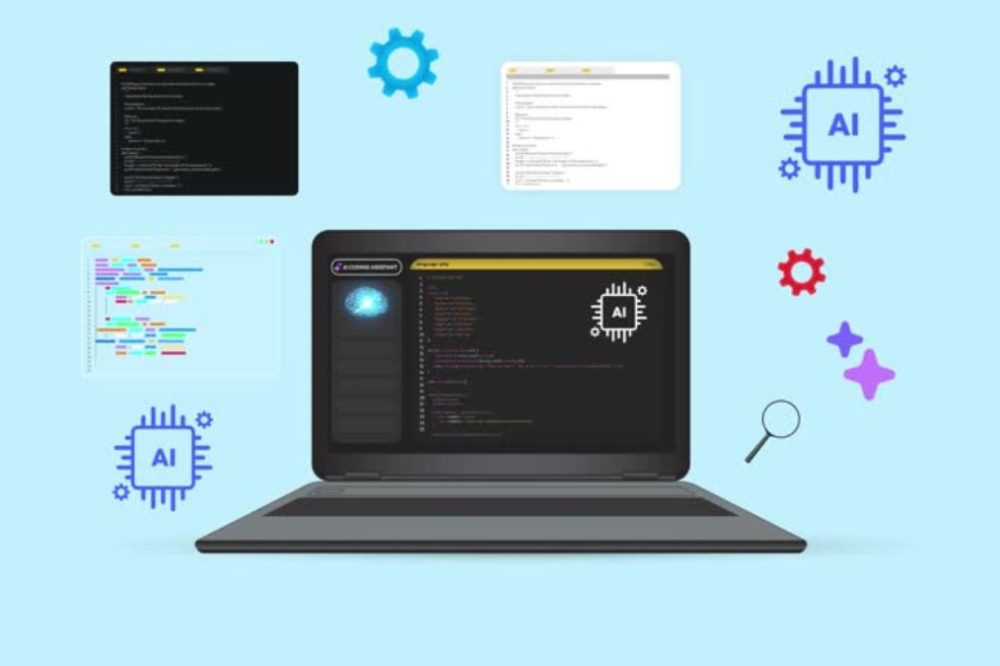
The market for AI coding tools has more or less doubled in the past 18 months, from $5.1 billion in 2024 to an expected $12.8 billion in 2026 – and 90% of professional developers now use one on a regular basis. What started as fancy autocomplete a few years ago has grown up into something really different: autonomous agents that can crawl a codebase, make changes across several files, run tests and repeat on their own until a task is actually finished, rather than just suggest the next line as you type.
The bottom line to just about every serious comparison this year: there is no one top tool. The category has broken up into factions, including AI-native IDEs, terminal-first autonomous agents, and embedded copilots that live inside your existing editor. Each has a different performance leader and different desired use case. In this post we split down the best ai tools for coding and debugging in 2026 by what each one truly does best, based on real benchmark data and documented developer workflows.
The 3 Kinds of Coding Tools for AI
- AI-native IDEs (Cursor, Windsurf) – a full-fledged code editor built from the ground up with AI in mind, with rich repo context, multi-file editing, and reviewable diffs in a workflow that naturally extends traditional coding
- Terminal-first autonomous agents (Claude Code, OpenAI Codex) – operates at the command line, navigates a codebase, executes commands, does tests, and iterates independently until a task is confirmed finished, instead of via an editor interface
- Embedded copilots (GitHub Copilot, Amazon Q Developer, Tabnine) – plugins that sit inside your favorite editor, aiming for low-friction adoption and wide IDE compatibility, not a separate environment
1. Cursor – Best Overall IDE Experience for the Majority of Developers
In 2026, Cursor emerged as the most successful AI coding tool on the market, boasting over 1 million users and $2 billion in yearly recurring revenue, and has cultivated a devoted following among developers. Cursor is a fork of VS Code, not a plugin on top of it, meaning AI is integrated into every surface of the editor. It has a Composer agent mode where you can explain sophisticated, multi-file changes in natural language and have it do it across the necessary files directly. It supports different underlying models (such Claude Opus and GPT-based models) so teams have the ability to match a model to a certain task rather than being locked into one vendor.
Best for: Most developers who want the most full, natural-feeling AI-native IDE to be their everyday driver
Pricing: Free tier available; Pro roughly $20/month; Teams around $40/user/month with single sign-on (SSO) and admin controls
Watch out for: As a whole IDE, not only a plugin, switching to Cursor implies switching your main editor, which is more friction than simply adding a plugin to a tool you already use
2. Claude Code – Best for Complex Autonomous Debugging & Large Codebases
Anthropic’s terminal-native coding agent, Claude Code, runs inside your shell, reading your codebase, modifying files, performing commands, running tests, and making pull requests with actual autonomy. It is at the top of independent benchmarks for complex, multi-step agentic tasks, scoring 80.8% on the SWE-bench Verified, the highest score reported for any mainstream coding assistant, as of mid-2026. It has been especially strong at debugging subtle issues and understanding large, unfamiliar codebases – not just completing the next line.
Best for: Complex refactoring, tough debugging, and working on big or unfamiliar codebases from the terminal
Pricing: Included with Claude Pro (~$20/month) at consumption restrictions, or pay-as-you-go via API for larger use
Watch out for: Terminal-first approach has a distinct learning curve than an IDE-based tool – developers who prefer a visual editing experience may find Cursor or Copilot more immediately comfortable
3. GitHub Copilot – Best for Enterprise Use and Wide IDE Compatibility
GitHub Copilot is the enterprise standard and competitors struggle to match its fit for organizations: native integration across VS Code, JetBrains, Neovim, Visual Studio and Xcode, IP indemnity (legal protection if AI-generated code creates liability) and the ability to train custom models on private codebases. One feature that stands out is its Copilot Workspace which guides a developer from a GitHub problem via a proposed set of code modifications to a pull request in a single AI orchestrated cycle.
Best for: Enterprise teams that want extensive IDE coverage, GitHub-native workflows, and easy organizational rollout
Pricing: Free tier (2,000 completions/month); Premium plans starting from $10/month up to Enterprise tiers around $39/user/month
Watch out for: GitHub said it temporarily halted new signups for its Copilot Pro and Pro+ levels in April 2026 – check the current plan availability directly before committing a team to it
4. OpenAI Codex – Best for Python, Data Science and Background Agents
OpenAI Codex is particularly well-suited for Python and data science workflows, and its most useful is when background agents and parallel software tasks matter more than a traditional, single-threaded editor workflow – supporting multiple coding tasks at the same time rather than working thru them sequentially.
Best for: Python-heavy and data science teams and workflows that stand to profit from parallel, background task execution
5. Windsurf – Best Cursor Substitute
Windsurf (Cascade) has emerged as the leading straight Cursor alternative, delivering a similar AI-native IDE experience with solid codebase understanding and the ability to edit several files at once. It targets developers looking for this kind of tool but wanting a different foundation or pricing model than Cursor.
Best for: Developers looking for an AI-native IDE experience as an alternative to Cursor specifically
6. Amazon Q Developer – Best for AWS-Centric Teams
Amazon Q Developer has built-in security scanning tools and integrates seamlessly for teams already heavily invested in AWS infrastructure, making it an appropriate default specifically for enterprises whose overall tooling and deployment already flows thru Amazon’s cloud ecosystem.
Best for: Teams that are deep into AWS and want AI coding help in a way that’s baked into their existing cloud environment
7. Google Antigravity / Gemini Code Assist – Ideal for Google Cloud-Native Teams
If your team’s stack is 100% on Google Cloud, then Antigravity and Gemini Code Assist are worth checking out for their native GCP integrations – acting as a cloud-native coding assistant that can hook into your CI/CD pipelines, automatically fix failing tests, and reply to code review comments.
Best for: Teams who are all using Google Cloud infrastructure
8. Tabnine – Best for Privacy-Focused, On-Premises Use
Tabnine has created a niche among teams with strict data privacy requirements, with on-premise and private deployments that ensure proprietary code never leaves the organization’s own infrastructure, a true differentiator for regulated industries or companies with strict IP protection policies.
Best for: Regulated industries and privacy-conscious enterprises seeking on-premises AI coding assistance
The Benchmark Bottom Line
In almost every serious comparison of 2026, the pattern repeats: Claude Code is the winner on autonomous coding benchmarks and debugging complex, multi-file issues (80.8% SWE-bench Verified), Cursor is the best for day-to-day, natural-feeling IDE editing, and GitHub Copilot has the broadest multi-IDE compatibility and enterprise fit. Most senior developers don’t pick one – they run two tools in parallel, typically Cursor or Copilot within the editor for everyday completion and multi-file work, and Claude Code in the terminal for complex debugging and larger, more autonomous tasks, according to several independent testers.
A Real Word of Caution: AI-Generated Code and Security
Before you buy into any of these tools as a totally hands-off solution, it’s worth being blunt about one genuine risk: independent security testing from Veracode revealed that 45% of AI-generated code failed security tests, with 62% having design issues. That isn’t a reason to ignore such tools – 62% of teams claim at least 25% productivity gains, mostly on mundane coding chores – but it is a strong hint that AI-generated code needs the same code review and automated security screening discipline as human-written code, not less. Tools like GitHub Copilot Enterprise and Amazon Q have built-in security capabilities to assist control this risk and coupling any AI coding tool with a rigorous review process remains vital, not optional.
Choosing the Right AI Coding Tool For You
- For most individual engineers and small teams, if you’re looking for the most full and natural daily-driver IDE experience, Cursor is the safest and most commonly recommended place to start.
- If you do a lot of difficult debugging or work on vast unfamiliar codebases, the benchmark-leading efficiency of Claude Code on only those activities makes it worth adding to your workflow alongside an IDE tool.
- GitHub Copilot’s IDE breadth, IP indemnification, and GitHub-native integration make it the safest organizational choice for a business team building out AI coding tools.
- If you are very committed to a certain cloud provider, Amazon Q Developer (AWS) or Google Antigravity/Gemini Code Assist (GCP) provide better native integration than a cloud-agnostic solution.
- If data protection and on-prem installation are a must, Tabnine’s got you covered.
- Whatever tool(s) you pick, keep the good faith code review and automatic security scanning – AI-assisted code still needs the same attention as any other code going into production.
Summary
There is no single greatest ai tool for coding and debugging that wins across every workflow in 2026 – the category has really fragmented into IDEs, terminal agents, and embedded copilots, each with a separate performance champion. For most developers, Cursor remains the best overall daily-driver IDE experience. In particular, Claude Code is the leader in sophisticated, autonomous debugging and large-codebase understanding with the claimed best SWE-bench Verified score of major tools. GitHub Copilot is still the safest and most broadly compatible alternative for enterprise rollout, while specialist options such as Amazon Q, Google Antigravity, and Tabnine each solve a more specific infrastructure or privacy requirement.
The trend of the most productive developers is not to pick one tool and stick with it, but to use a primary IDE tool for everyday editing, a terminal-based agent for the toughest debugging and refactoring tasks, and still do human code review with real, documented security risks in AI-generated code. And use a tool that matches your editor of choice for day-to-day, throw a terminal agent on when you have a really gnarly debugging problem, and keep the review discipline going no matter how good any one tool gets.
FAQs
1. Particularly, which is the greatest AI tool for debugging complex code?
Claude Code now leads independent benchmarks for complicated, autonomous debugging and large-codebase understanding, achieving the highest reported SWE-bench Verified score (80.8%) among mainstream coding aids. It’s good at drilling into unfamiliar code, running tests, and iterating until the problem is actually fixed, not simply a band-aid solution.
2. Do you use Cursor or Github Copilot?
While GitHub Copilot offers the broadest interoperability with IDEs, enterprise-grade IP indemnification and the lowest-friction rollout for enterprises already standardizing on GitHub, Cursor generally offers a more full, more natural-feeling AI-native IDE experience with more powerful multi-file agent capabilities. Many developers utilize both, or run Copilot for organizational compliance concerns, but personally preferring Cursor’s editing experience.
3. Can I safely utilize AI-generated code in production?
It needs to be scrutinized as much as human-written code, not less – independent security testing found 45% of AI-generated code failed security tests, with 62% having architectural issues. This means real code review and automatic security scanning are no longer optional extras but required. This is the case no matter whether AI coding tool produced the code.
4. What is the difference between a terminal coding agent and an AI-native IDE?
Examples of AI-native IDEs are Cursor and Windsurf – complete code editors designed around AI, that provide a visual, familiar editing experience with multi-file agent capabilities. Terminal-based agents like Claude Code and OpenAI Codex operate at the command line, exploring a codebase independently, running commands, running tests – typically for the toughest debugging and refactoring jobs, but with a less visible, more command-line-centric approach.
5. Do I need to buy several AI coding tools or would one be enough?
Drawing on a number of 2026 comparisons, most senior developers use two tools at the same time – a major IDE tool (Cursor or Copilot) for everyday completion and editing and a terminal agent (Claude Code) for complicated debugging and huge refactoring activities. For most individual developers, a single tool is a good starting point, adding a second tool if you hit workflows that the first one really problems with.

Enjoyed this article?
If this guide helped you, consider supporting Rough Diary. Your support helps us continue creating practical, informative, and useful AI and technology content.