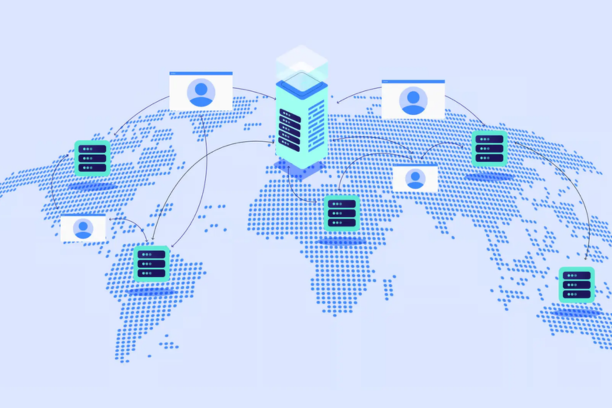

For more than a decade, the dominant approach to data has been simple: send it to a big centralized cloud data center, typically hundreds or thousands of miles away, to be processed, and then send the results back. That worked pretty well when internet connections were slower and gadgets were simpler. That round journey has become a serious bottleneck by 2026 when billions of connected sensors, real-time AI applications, and autonomous systems immediately generate and need data. Edge computing is the answer to that bottleneck, and it’s quietly become fundamental to how modern AI, IoT and 5G-powered systems actually function.
In this book, you’ll learn what edge computing is, how it truly works, how it differs from (and complements) cloud computing, and where you are already benefiting from it without even knowing it.
What is Edge Computing? Explained Simply
Edge computing is a distributed computing paradigm in which data is handled near the point of data generation – on or close to the device itself – rather than being transmitted to a remote, centralized cloud server for processing. Instead of sending all the data on a long round trip to a data center and back again, edge computing brings the processing power out to the “edge” of the network: the devices, sensors and local servers closest to where the data is being generated.
A helpful mental model: Imagine cloud computing as one giant central hospital for the whole region, while edge computing is the little clinics sprinkled throughout every neighborhood. The central hospital can still manage difficult, resource heavy situations but the local clinics take care of everyday, time sensitive requirements right away, without patients having to travel back and forth across the region for routine care.
A Concrete Example: Self-Driving Vehicles
One of the best examples of the need for edge computing is autonomous cars. Today, self-driving cars have cameras and radar and sensors that are scanning continually the road. In a typical cloud-based paradigm the sensor data would have to travel to a remote server to be analyzed, and then the response transmitted back to the car – and even with fast internet that round trip adds actual latency. Seconds count in safety situations, and fractions of a second might mean the difference between a car stopping in time and a crash.
Instead, edge computing enables the vehicle to evaluate the data locally: An onboard computer analyzes the video feed in real time and applies the brakes immediately, without waiting on a faraway server. Afterward, only aggregated information – event logs and driving statistics – is sent to the cloud for storage or longer-term analysis. This decreases latency considerably for the decision that really counts right then and there, but leaves the cloud’s role intact for everything that is not time important.
How Edge Computing Works, Actually
- Data is produced at the source. A sensor, camera, smartphone or industrial gadget collects data continuously as part of their routine operation.
- Local processing is straightforward. Edge devices or close edge nodes , evaluate data on the spot , rather than sending raw data to a remote server , often within milliseconds .
- Local action is taken at once wherever appropriate. In instances where time is of the essence-stopping a car, pointing out a safety problem on a factory line, tweaking a medical monitoring device-the answer occurs directly at the edge, not waiting for a round trip to the cloud.
- Only summary relevant data is given. Rather than delivering all the raw data, edge systems often send summarized, useful information to the cloud where it may be stored, analyzed further in depth, or tracked long term for trends.
This strategy cuts considerably both latency (time before a response) and network traffic (raw data no longer needs to travel great distances for every single decision).
The Layers of Edge Computing
Edge computing is not a single, uniform layer. It exists over a range of places, depending on how close the processing is to the initial source of data:
- Device edge: the processing happens right on the device itself (smart camera, smartphone, sensor, etc.) with hardly no network travel at all.
- Local/on-premises edge – Processing for a cluster of connected devices is done by a nearby server or gateway (often in the same building or facility).
- Regional Edge – smaller, distributed data centers nearer consumers than a centralized cloud region, offering a balance of speed and greater processing capability than a single device can provide.
- Cloud – the classic, centralized data center, still used for heavy, non-time-sensitive processing, long-term storage and large scale analytics.
In practice, most edge computing implementations use a combination of layers, not just one layer, with time-sensitive decisions being routed to the closest layer that can handle them, while the cloud is reserved for decisions that don’t need to happen quickly.
Cloud Computing and Edge Computing: Competing or Complementary?
There is sometimes confusion about edge computing replacing cloud computing – yet the two actually complement each other, each doing what it does best. Cloud computing is still the best option for massive processing, vast storage and complicated analytics where an instant response is not required. Edge computing takes care of the time-sensitive, real-time jobs where a tiny delay can make a big difference. A smart modern system generally uses edge computing to make instant local judgments, and the cloud for anything else that’s better suited to centralized large-scale processing capacity, not one or the other.
Why Edge Computing Will Matter More in 2026
A few converging phenomena have pushed edge computing from the domain of network engineers into general infrastructure:
- Real-time AI applications Edge AI provides the local compute resources to conduct machine learning inference on the edge, enabling use cases like real-time video analytics, autonomous systems, and adaptive control in manufacturing, without waiting for a cloud round trip for each inference.
- The rise of IoT devices – billions of linked sensors, wearables and smart gadgets are creating massive amounts of data constantly. Sending all that data to a centralized cloud for every decision just doesn’t scale efficiently.
- 5G networks – quicker, lower-latency wireless communication – go hand-in-hand with edge computing, as 5G’s low latency is most effective when paired with processing that’s also happening close to the data source rather than hundreds of miles away.
- Privacy and data sovereignty – processing sensitive data locally, in your own environment, instead of it being transmitted over the internet to a central server, minimizes the exposure to risk during transit and supports data residency requirements in regulated businesses.
Edge Computing: Practical Applications
- Autonomous Vehicles – Instant Safety Decisions thru Real-time Sensor Processing
- Smart manufacturing – factory sensors that immediately detect equipment problems or safety dangers, without a delay that could allow a problem to escalate
- Smart cities-traffic systems, public safety cameras, infrastructure monitoring that needs prompt local responses
- Retail automation – technologies that handle inventory and checkout data locally in stores for faster, more reliable operation
- Medical monitoring devices – wearables and clinical monitoring equipment that have to alert to vital health occurrences in real-time, not after a round trip to a remote server.
- Content delivery – media and web content cached and supplied from edge locations closer to users, lowering load times
Advantages of Edge Computing
- lower latency – decisions and replies happen locally, without the delay of data traveling to a remote data center and back.
- Reduced bandwidth usage – Less network load by providing just relevant or summarized data to cloud instead of continuous raw data stream.
- Improved reliability – Many edge systems don’t rely solely on a live connection, so they can operate locally even with sporadic or restricted internet connectivity.
- Improved privacy and security- Instead of transferring data over the internet for every single decision, sensitive data is stored locally, at the point of source, reducing exposure in transit.
Conclusion
Edge computing is not a replacement for the cloud, but a necessary complement as real-time AI, billions of IoT devices and 5G connectivity exceed the capacity of a strictly centralized architecture. Edge computing represents a major architectural shift in the way existing systems process data. The underlying architecture is complex but the core premise is simple: do what needs to happen quickly as close to the source as possible and save the cloud for what benefits from centralized power and scale. As more and more of daily life happens trough autonomous systems, smart devices, and real-time AI, edge computing has emerged as one of the technologies that actually makes all of this work, reliably and silently.
Questions and Answers
1. What is edge computing in layman’s terms?
Edge computing is a computing paradigm where data is processed close to its point of creation, such as on a device or local server, instead of transferring the data to a remote cloud data center for processing. This shortened reaction time is particularly significant for time-sensitive applications.
2. Is edge computing the end of cloud computing?
No. Edge and cloud computing are not competing technologies. They complement one another. Heavy processing, vast storage and complicated analytics are best done in the cloud. Edge computing is for real time applications that are time sensitive where even the tiniest delay may affect. Most systems are doing a combination of the two presently.
3. Why is edge computing so important for AI and IoT, in particular?
Edge AI gives you the local compute capacity you need to do machine learning inference right at the source, enabling real-time applications like video analytics and autonomous systems without the latency of a cloud round trip. Similarly, the vast amount of data produced by IoT devices makes it unfeasible to send everything to a central cloud for every single decision. Local edge processing is needed for these systems to scale.
4. Is edge computing safer than cloud computing?
In certain aspects, edge computing provides benefits for security and privacy, because it brings sensitive data closer to the source and away from the risks of transmission via the Internet. That said, security is very much a function of how a given system is built and implemented. Edge computing is not necessarily more secure in all cases, just a different architecture with different privacy trade-offs.
5. Are edge computing technologies able to operate offline?
Since primary processing and decision making happens on the device or a nearby local server, rather than only requiring a live connection to a far-away cloud server, many edge computing systems may operate locally for extended periods of time when internet connectivity is limited or temporarily lost. This is one of the practical benefits of edge computing for applications in remote or unreliable-connectivity contexts.

Enjoyed this article?
If this guide helped you, consider supporting Rough Diary. Your support helps us continue creating practical, informative, and useful AI and technology content.