Your alarm clock is synchronized to your sleep cycles and to your calendar. Your thermostat learns your schedule without you telling it. Weeks before a failure, factory equipment warn of their own maintenance needs. This is not science fiction, this is the Internet of Things, silently working behind the scenes of consumers’ daily lives and entire industries. Global IoT connections are forecasted to surpass around 21.9 billion devices by 2026, on their way to 30 billion in the next few years – nearly three linked gadgets for every human being alive on the world.
This guide reveals what the Internet of Things is really about, how it operates behind the scenes, the real architecture, and where it is already changing homes, cities, healthcare, and industry – much of it in ways most people never consciously realize.
Simply Put: What Is the Internet of Things?
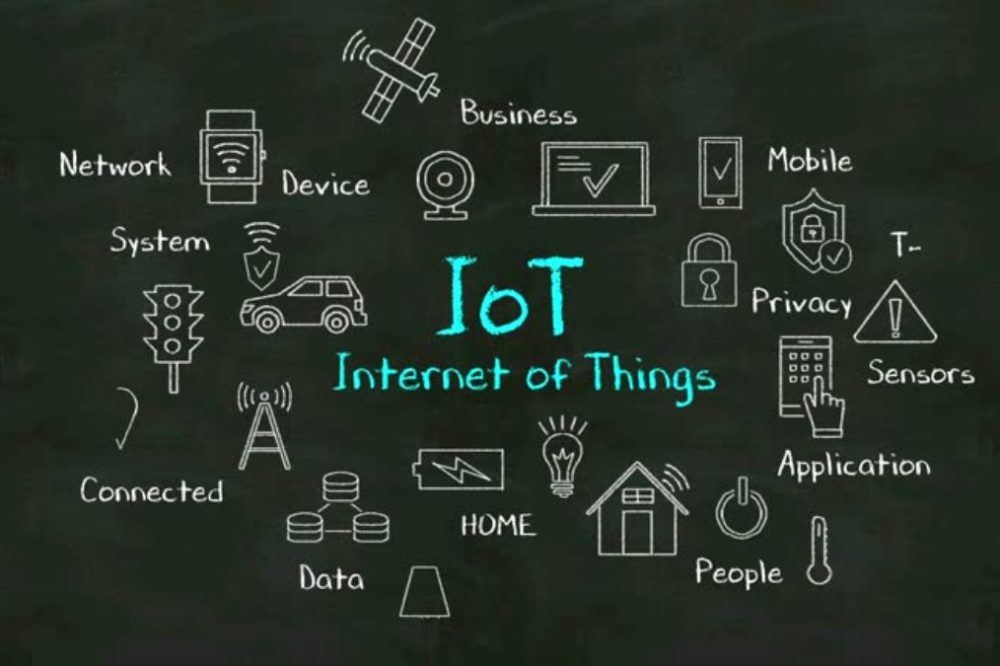
The Internet of Things (IoT) is a network of physical objects – appliances, vehicles, wearables, sensors and machines – embedded with sensors and connected to the Internet, enabling them to collect data, communicate, and act automatically without requiring human interaction for every activity.
There are generally three things that have to be true for something to really be considered an IoT device:
- It’s a physical thing that has a duty. A thermostat, a watch, a streetlight, a piece of factory equipment.
- It has a sensor or chip that measures anything physical: temperature, motion, light, location, heart rate, or something else.
- It can connect to a network, Wi-Fi, Bluetooth or mobile data, to send that reading somewhere, or to receive an instruction back.
The fundamental shift that IoT is, is a movement in the flow of information. Rather than a person needing to actively check out a situation before acting on it, the system understands what is happening and can respond on its own. A farmer no longer has to walk his fields to check for dry soil – the sensors know beforehand, and may immediately initiate watering without anybody having to ask.
How IoT Works: The Layers
The easiest approach to get a handle on IoT is to think about it in layers-because a modern IoT system is always made up of multiple separate levels working in concert:
- Perception layer (sensing) – the “eyes and ears” of the system. It is made up of sensors (temperature, proximity, motion, RFID, etc.) and actuators that directly communicate with the real environment, acquiring raw data and transforming it to a digital form.
- Connectivity layer – the network that transmits the data onward, using protocols appropriate for the particular use case (more on this below).
- Processing layer (Middleware) – where data is stored, filtered and evaluated. By 2026, more of this processing will be done thru edge computing, where time-sensitive choices are made locally instead of sending every reading to a distant cloud server, reducing latency and bandwidth costs.
- Application layer – the user-facing interface where processed data becomes something actionable: a smart home app, an industrial dashboard, or an automatic alarm.
Connectivity: How can IoT devices actually communicate with each other?
The best connectivity protocol for an IoT device depends mostly on range, power consumption and amount of data to be moved:
- Short-range protocols – Bluetooth minimal Energy (BLE) and Zigbee are the most popular in wearables and smart home devices, providing dependable short-range communication with minimal battery consumption.
- LPWAN (Low-Power Wide-Area Network) – protocols like LoRaWAN and NB-IoT allow sensors to run for 10+ years on a single battery and communicate over long distances. This is great for smart agriculture and remote environmental monitoring where changing batteries all the time is not practical.
- Wi-Fi and cellular (including 5G) – where there is a demand for more capacity, such as connected cameras or cars sending more data in real time.
The specific choice is a real trade-off . Higher bandwidth requires more power and often lower range . Low power and long range like LoRaWAN sacrifices data throughput for battery life and range .
Consumer IoT vs Industrial IoT (IIoT)
It’s worth making a distinction between two very different categories that are both within the umbrella of the IoT, but with really different stakes involved:
Consumer IoT is the Internet of Things for daily smart devices: a smart speaker, a Wi-Fi coffee maker, a fitness tracker, communicating mostly over simple cloud APIs where failure is usually a small inconvenience.
In an industrial IoT (IIoT) context, this is mission crucial. A failure here isn’t just a missed alarm, it might imply catastrophic downtime, supply chain disruption or a real safety issue. The direct outcome is that enterprises that have deployed current IIoT architecture typically report considerable reductions in mean time to repair (MTTR), decreased unplanned downtime and enhanced overall equipment performance.
It’s hugely important knowing which category a specific IoT deployment belongs to, for how much redundancy, security and reliability engineering the system actually needs.
The Internet of Things in the Real World
IoT currently touches almost every industry, typically behind the scenes:
- Smart houses – thermostats, lights, security systems and appliances that change automatically based on patterns and preferences
- Healthcare – wearable and clinical monitoring devices that continuously monitor vital signs and send alerts when there are concerning changes, without the need for frequent manual checks
- Smart agriculture – soil and environmental sensors that activate irrigation or notify farmers to conditions before problems become obvious
- Smart cities – traffic management systems, monitoring of public infrastructure and utility grids that react to real conditions rather than fixed timetables
- Manufacturing – industrial equipment that anticipates its own maintenance needs and catches costly malfunctions before they happen
- Energy – smart grids and appliances in the home that automatically balance power demand, no human intervention needed
The Future of IoT: The Rise of AIoT
The next big step in the advancement of IoT is very much about artificial intelligence frequently referred to as AIoT (Artificial Intelligence of Things). Instead of devices just collecting and sending data for a human or system to analyze elsewhere, AIoT devices are increasingly interpreting the data themselves and making autonomous decisions, often right at the edge, not waiting for a round trip to a centralized system. This shift from devices that collect data to devices that comprehend and act on data is a truly different capability from past generations of connected devices that primarily just reported what they saw.
The Rise of IoT Security: A Growing and Real Concern
IoT security has become a real and ongoing concern, rather than an afterthought, with billions of linked devices, many of which have limited processing power and inconsistent security update policies. Many IoT gadgets, unlike traditional computers or smartphones, are deployed with little or no built-in security, seldom get updated, and are often connected to networks that include much more sensitive data or important systems than one might expect from the item itself. As IoT deployments extend into the billions of connected devices, securing this expanding attack surface, from consumer smart home gadgets to industrial control systems, has become one of the more important, continuing challenges the industry is working thru.
Ultimately
The Internet of Things is not one sexy technology, but rather an ongoing transformation in how physical items and digital systems communicate with each other, made up of layers of sensors, connectivity protocols, processing, and increasingly, AI-driven decision-making. It does its thing behind the scenes in houses, cities, farms, hospitals, factories, with or without people consciously noticing, and it rarely makes a splash. As billions more devices connect, and AIoT pushes intelligence even further to the edge, understanding the principles of sensing, communication, processing and action is the basis to grasp virtually everything IoT continues to enable.
Frequently Asked Question (FAQ)
1. How do you define Internet of Things in simple words?
The Internet of Things (IoT) is the network of physical objects, such thermostats, wearable devices, cars and industrial equipment. They’re all integrated with sensors and network connectivity. This means they may collect data, interact and perform automatically, without the need for direct human involvement for each and every interaction.
2. How many IoT devices will exist in 2026?
More than 21.9 billion IoT connections are predicted worldwide by 2026, a number projected to climb to more than 30 billion in the years after – or around three connected devices for every person on the planet.
3. What is the difference between consumer and industrial IoT?
Consumer IoT is about the smart gadgets we use every day, like speakers, fitness trackers and smart home appliances. “Failure is usually a small inconvenience. Industrial IoT (IIoT) is concerned with mission-critical systems in manufacturing, energy and infrastructure where failure could cause catastrophic downtime, safety issues or supply chain disruption, demanding far more robust reliability and security engineering.
4. What is AIoT? How is it different from traditional IoT?
AIoT, or Artificial Intelligence of Things, is the application of artificial intelligence directly to IoT devices, which allows the IoT devices to understand data and act on it on their own (at the edge rather than requiring centralized systems) as opposed to simply collecting and sending raw data for external analysis. This is a big upgrade over the original Internet of Things devices that mostly merely told you what they saw.
5. IoT security is an issue for consumers and business. Real or perceived?
Yes. Many IoT devices ship with little security, update irregularly, and are connected to networks that may be carrying more sensitive data than the device’s own could imply. A real difficulty that continues to face individual consumers and companies looking to use IoT at scale is the magnitude of the number of connected devices (running into the billions) and the security of this ever-expanding attack surface.

Enjoyed this article?
If this guide helped you, consider supporting Rough Diary. Your support helps us continue creating practical, informative, and useful AI and technology content.