
Content Marketing will be running on a truly different stack than even two years prior, by 2026. Gone are the days when you could choose a single tool to generate blog articles – today’s content teams are using specialist AI tools for planning, writing, optimization, distribution, and a brand-new category: tracking whether your brand is even mentioned by AI search engines.
This list sorts the top AI tools for content marketing in 2026 by function, so you can build a stack that suits your actual workflow instead of collecting subscriptions you barely use. We’ll cover content production, SEO and optimization, AI visibility tracking, social and video, email, and all-in-one platforms.
How to Think About Your AI Content Marketing Stack
Before we get into specific technologies, it’s useful to understand where AI actually gives the quickest return. Dedicated content AI technologies are usually most beneficial for teams who publish more than 20 pieces of content a month and don’t have in-house authors. Email-centric AI is especially beneficial for teams sending high amounts of email with less than impressive open rates. Teams with five or more active social accounts benefit most from social-specific AI tools. Start with your largest bottleneck instead of trying to pick up every category at the same time – getting good at one or two high-impact tools on a consistent basis is better than splitting your budget across 10 products that are utilized half-heartedly.
Writing and Content Creation Tools
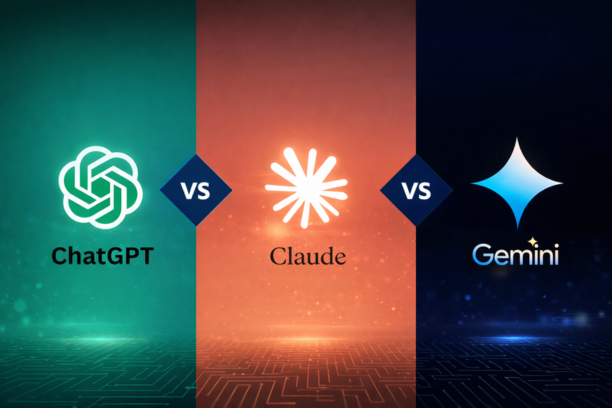
ChatGPT, Claude, and Gemini
These general-purpose AI helpers are the most flexible starting point for any content marketing team – composing blog pieces, developing outlines, brainstorming campaign concepts, and summarizing research. In particular, Claude has earned a good reputation for delivering cohesive, well-structured long-form work that holds up across large pieces without losing consistency.
Jasper
Jasper has developed from a generic AI authoring tool into a true corporate content platform built on brand consistency at scale. You may upload current content and style guides with its Brand Voice training so the AI writes in your exact voice – a big deal when numerous team members or outside agencies are creating content for the same brand.
Best for: Marketing teams and agencies who need regular, on-brand material at scale
Pricing: Premium tier, often more expensive than budget content tools
Copy.ai
Copy.ai has grown from a basic “beat the blank page” writing assistance to a more comprehensive AI-native go-to-market platform that’s now targeting processes, agents and automation that combine sales and marketing copy and not just one-off blog material.
Best for: Teams looking for AI content development combined with broader sales and GTM workflows
Pricing: Entry plans from ~$24/month; GTM-focused corporate levels much higher
Writer
Writer is built for business content teams who require tight brand governance and compliance, providing SOC 2-compliant data management and a centralized style guide enforcement for large organizations creating huge volumes of regulated or brand-sensitive content.
Best for: Large organizations that have stringent brand governance and data compliance.
Pricing: Enterprise targeted, usually requires a sales conversation
Anyword AI
Anyword is a performance-driven copywriting specialist. It uses conversion prediction score to anticipate the expected performance of specific ad copy or marketing messaging prior to spending funds on live testing.
Best for: Teams generating ad copy and performance marketing material where measurable conversion is most important
Pricing: Mid-tier price aimed for performance marketing teams
Koala AI Chatbots
Koala AI has exploded in popularity with content teams churning out massive amounts of SEO-centric blog content, able to turn a target term into a publish-ready long-form essay in a fraction of the time it would take manual research and writing.
Best for: Budget-friendly high-volume SEO content creation
Pricing: Cheaper than expensive options like Jasper
Tools for SEO & Content Optimization
Semrush Content Toolkit
Semrush’s content package includes topic discovery, AI-generated SEO briefs, and article optimization as part of its larger SEO platform, making it a good option for teams who want to keep content development and search optimization under one existing subscription, rather than switching between different products.
Best for: Teams already using Semrush for SEO and want content tools thrown in
Pricing: Content-specific add-ons usually charge roughly $60/month on top of a regular Semrush subscription
SEO Surfer
Surfer combines the study of SERPs with an editor that scores material in real-time, enabling authors to shape and optimize content based on what is actually ranking for a target keyword while they write, instead of guessing the perfect length or terms to add.
Best for: Content teams who want real-time optimization feedback as they write
Pricing: Standard plans around $89/month
Frase
Frase blends content briefs and SEO scoring with integrated AI visibility tracking. It monitors how likely your material is to be referenced across ChatGPT, Perplexity, and Google AI Overviews, along with standard ranking considerations – a truly valuable two-in-one for teams watching their budget.
Best for: Small teams who seek SEO optimization and AI citation tracking at a non-enterprise price
Pricing: It is a more budget-friendly option to Surfer SEO.
MarketMuse
While most SEO tools focus on optimizing single articles, MarketMuse takes an overall content planning approach that is data-driven. The platform uses AI-powered topic modeling to identify content gaps and unexploited ranking opportunities throughout your entire site, as well as competitive analysis that shows you where your content strategy falls short against competitors.
Best for: Teams developing long-term thematic authority and content strategy, not just optimizing individual pieces
Pricing: Around $149 a month
AI Tools to Track Search Visibility
This is the latest, fastest-growing category of content marketing tooling – platforms developed particularly to answer a question traditional analytics can’t: is your brand actually showing up when consumers ask ChatGPT, Claude, or Perplexity for recommendations?
AI Visibility Trackers (Semrush AI Toolkit, OtterlyAI and similar)
These technologies also monitor brand mentions and sentiment across major AI platforms, measuring if and how your brand is referenced in AI-generated replies – a measure that has become increasingly significant as more customers begin their inquiry inside a chatbot instead of a traditional search engine.
Best for: Any brand looking to be found in AI-driven search, not simply Google rankings
Pricing: Varies widely depending on platform and level of tracking required
Social Media & Distribution Tools
Sprout Social
Sprout Social is one of the most established AI-powered social media management solutions, providing performance benchmarking and scheduling for numerous accounts. Sprout Social is a good fit for teams managing five or more active social accounts that require comparative performance statistics.
Best for: Teams managing several social accounts and wanting depth in benchmarking and reporting
Pricing: Mid-tier to premium social management software
Hootsuite and FeedHive
Both services provide AI-assisted scheduling, caption writing and analytics in order to track performance across social media, making them viable competitors to Sprout Social depending on your feature and budget requirements.
AI Tools for Email Marketing
Reply.io & Seventh Sense
If you want to focus on email performance, Reply.io does multi-channel outreach automation and Seventh Sense is an AI-powered send-time optimization tool – it automatically sends emails at the time the individual recipient is most likely to open them.
Best for: Teams sending large email volumes and looking to optimize for deliverability and engagement using AI vs. human A/B testing alone
Video & Voice Content Tools
HeyGen
HeyGen creates AI avatar movies from text scripts, enabling marketing organizations to make talking-head video content – product explainers, social clips, training content – without filming, saving time and costs for teams without in-house video production.
ElevenLabs
ElevenLabs builds AI voices that sound so convincing, it’s becoming more difficult to identify them from humans, which has made the startup a favorite among marketing teams that require voiceovers for video content, advertising and presentations, but don’t want to hire voice talent for each project.
All-in-One Content Marketing Platforms
Averi
Averi is a fully integrated AI content engine, with strategy, creation, optimization and publishing in a single, connected workflow. It begins by auditing your current website to understand your brand voice and positioning, then constantly finds content opportunities by tracking your competitors and trends.
Best for: Teams using disconnected products (various SEO tools, project management software, CMS) who want a cohesive workflow instead
StoryChief & Brandi AI
Both systems aim to assist teams in organizing content calendars and monitoring success across conventional search engines and newer AI-powered discovery platforms, all in a single dashboard, focusing on strategic planning and content workflow management.
Choosing the Right Tools for Your Team
- Begin with your largest bottleneck. If you spend most of your time drafting, focus on a content creation tool like Jasper or Koala AI. If your material isn’t being found, consider an optimizing tool such as Surfer or Frase.
- Don’t miss AI visibility tracking! As more research is taking place within AI chatbots vs traditional search, knowing if your brand is being cited is soon becoming as crucial as traditional rank tracking.
- Select tool complexity to match your team size. Writer and similar enterprise platforms are great for large teams that need stringent control, but smaller teams are usually better served by simpler, cheaper technologies that don’t require substantial onboarding.
- Maintain human editorial control. AI content tools are most effective when combined with real editorial assessment – not left to publish on autopilot.
- Start small. Begin with one or two tools and learn to use them well before growing your stack – a concentrated toolkit used well will always trump a vast set of subscriptions used rarely.
Conclusion
The finest AI tools for content marketing in 2026 won’t be one-stop-shops that do everything, but rather a combination of several tools that excel at a specific task: authoring, optimization, tracking AI visibility, distribution, and measurement. Whether you need the content creation reliability of Jasper or Claude, the optimization prowess of Surfer or Frase, or the latest AI visibility trackers that track your brand inside ChatGPT and Perplexity, the best content marketing stacks in 2026 will be a handful of well-selected tools and consistent human editorial judgment.
Resist the impulse to experiment with every new tool that hits your inbox. Start with the function that is now consuming the majority of your team’s time, become really great at one or two tools that address that function, and then develop intentionally from there as your content operation expands.
FAQ (Frequently Asked Questions)
1. The Top Content Creation Tools for Content Marketing in 2026
Ultimately it comes down to what you want to prioritize: Jasper is the best option for brand-consistent writing at scale, Koala AI is a good budget alternative for high-volume SEO blogging, and general-purpose assistants like Claude and ChatGPT are the most flexible starting point for teams of any size.
2. Do I need a separate AI visibility monitoring product or does my SEO tool already handle this?
Search rankings are what SEO tools report, not the frequency of AI citations, which is another statistic. Dedicated AI visibility tools (or native features like Frase’s AI-visibility scoring) specifically track if and how often your brand is showing up in AI-generated answers from ChatGPT, Claude, and Perplexity – a newer, important layer that traditional SEO tools don’t fully address on their own.
3. How many AI tools should a small content marketing team adopt?
It’s often better for small teams to start off with two or three tools that solve their largest bottlenecks – usually a content production tool and an optimization or SEO tool – instead of trying to embrace a big stack all at once. Only expand when you really have mastered your present tools, and see a clear remaining gap.
4. Could AI content marketing technologies replace human writers and marketers entirely?
No. Even the best AI content technologies are most effective when integrated with human editorial judgment, brand judgment and strategy. Think of AI tools as a major multiplier of efficiency, not a wholesale replacement of marketing talents and editorial quality control.
5. What sets an all-in-one content platform apart from a bunch of specialized tools?
Tools like Averi or StoryChief are all-in-one solutions that bring together planning, creating and publishing in one process. This removes the tool toggle and helps teams manage various platforms. Dedicated tools (e.g. Jasper for writing, Surfer for optimization, a specific email program) sometimes provide more capability in that specific area but you’ll have more distinct subscriptions and integrations to handle.

Enjoyed this article?
If this guide helped you, consider supporting Rough Diary. Your support helps us continue creating practical, informative, and useful AI and technology content.