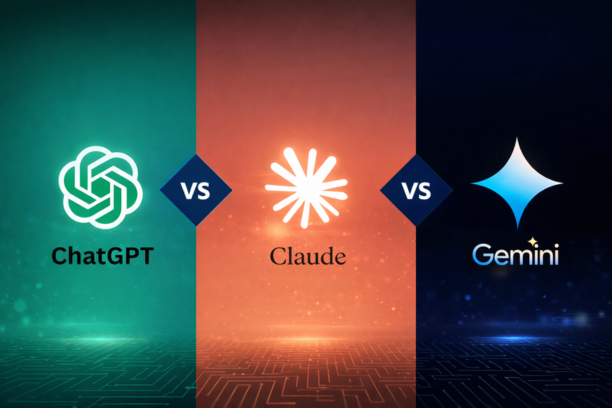
Ask three designers what is the finest ai image generator in 2026, and you’ll likely get three confident, contradicting replies – because Midjourney, DALL-E, and Leonardo AI are developed around truly diverse ideologies. Midjourney is a great art tool. DALL-E is all about knowing exactly what you asked for and it’s a convenience tool. Leonardo AI is a manufacturing tool that prioritizes control and volume. None of the three is absolutely “better” – the proper decision relies entirely on what you’re trying to make.
In this guide, we examine all three head-to-head on quality, affordability and ease of use, plus round up the strongest options worth knowing about for specialized use situations such as commercial licensing, text-in-image work and open-source flexibility.
A speedy verdict
- Midjourney – ideal for artistic quality and photorealism, the go-to for client-facing creative and concept work
- DALL-E (via ChatGPT) – best for novices and accurate fast understanding, especially text-in-image accuracy
- Leonardo AI – ideal for precision control, production speed and commercial/game asset work
Midjourney – Best Overall Art Quality
Midjourney remains the aesthetic leader in 2026, and independent benchmark testing backs that reputation up – Midjourney V7 ranked first in the majority of head-to-head comparisons on the Artificial Analysis Image Arena leaderboard as of mid-2026, among all commercially available image generation models. It creates one-of-a-kind, artistic, cinematic images with a high degree of style control that other programs struggle to match in their entirety, and that’s why it’s the go-to tool for client-facing creative work.
- Strengths: Best-in-class artistic aesthetics, excellent lighting and composition, strong style consistency
- Weaknesses: No true API access for most individual users (Discord or web app only for paying users), and not the fastest for high-volume batch production
- Pricing: Basic plan starts around $10/month (roughly 200 images); Pro tier around $60/month for heavier use
DALL-E (via ChatGPT) – Best for Beginners and Prompt Accuracy
DALL-E’s primary benefit is convenience and understanding. It can grasp very complex and specific text instructions and recreate them accurately, and the direct interaction with ChatGPT makes it easy to iterate on ideas conversationally, rather than having to mess about with a separate interface. It’s also the best of mainstream tools at producing readable, accurate text in photos, something that’s previously tripped up other AI image generators.
- Strengths: Most user friendly for beginners, Highest prompt-following accuracy, Good at rendering legible text in images, Conversational iteration inside ChatGPT
- Weaknesses: Output style can feel more generic and less uniquely “artistic” than Midjourney’s signature look
- Pricing: Part of ChatGPT Plus at $20/month. Also available for free with limits via Microsoft’s Bing Image Creator
Leonardo AI – Best for Production, Control and Commercial Use
Built for creators and organizations who need high-volume production, not beautiful images, Leonardo AI routinely churned out many versions faster than any other platform in head-to-head testing. It’s good at keeping characters consistent over time, which is a really tough problem for AI picture tools thus it’s especially strong for gaming assets, branded content series, and campaign work that requires the same character or style to be repeated across many photographs.
- Strengths: Fastest batch generation, strong character/style consistency tools, generous free tier, built-in commercial usage rights on paid plans
- Weaknesses: Default aesthetic is less distinctively artistic than Midjourney’s signature style
- Pricing: Paid plans start around $10/month; free tier offers a genuinely generous 150 daily credits for experimentation
Head to head: best for which use case?
- Photorealistic portraiture and product photos: DALL-E and Leonardo do well on this and Midjourney is not far behind for stylized realism.
- Fantasy illustration and concept art: Midjourney is definitely winning on visual quality and atmosphere.
- Logos and text-heavy graphics: DALL-E does the most reliable job of the three with in-image text, and if you’re doing dedicated text-in-image work, a specialist tool like Ideogram beats all three.
- Consistency capabilities: Built into Leonardo AI, giving you a tremendous edge in maintaining characters across a campaign or series.
- Volume production and speed: Leonardo is fastest for batch testing, a huge plus when content calendar needs to outpace perfection.
- No prompting experience, beginner: DALL-E inside of ChatGPT provides the gentlest learning curve, as you can conversationally convey what you desire.
Other AI Image Generators You Need to Know About
Midjourney, DALL-E and Leonardo earn much of the head-to-head comparison glory, but there are a few experts worth considering, depending on your particular need:
- Flux (Black Forest Labs) – A model with no weight limits, that matches Midjourney on photorealism for a much lower price. Popular with developers and startups who generate photos at scale through an API.
- Ideogram – The obvious choice for clear, precise text in images, the new standard for logos, signage, and social graphics with lots of text.
- Adobe Firefly – The safest solution for commercial use, as it is trained just on licensed and public domain content, eliminating copyright risk for brand and company use.
- Stable Diffusion – The free, open-source, self-hosted alternative that gives you as much as you want to generate without a subscription fee, given you’ve got the local GPU horsepower (8GB+ VRAM recommended) to run it.
- Google Imagen 4 – A fast-improving, strong challenger for photorealism, is available through Google Cloud and is increasingly competitive with the best closed-source models.
What to Check Before Using AI Images Commercially
Before using AI-generated images in paid ads, print materials, or resale products, make sure your specific plan has commercial usage rights – most paid tiers of Midjourney, DALL-E, Leonardo AI, and Adobe Firefly do, but terms vary by plan and can change, so it’s worth checking directly with the provider for your use case. It’s also a good idea to stress-test any tool before you commit to a campaign: create a few images of people who fit your brand’s usual demographic and carefully check for anatomical errors (extra fingers are still a common giveaway), and if your project requires the same character or style across multiple shots, run a consistency test before you’re deep into a campaign and find out the tool can’t reliably repeat itself.
Choosing the Best AI Image Generator for You
- If you want professional, artistic, client-facing work, Midjourney remains the aesthetic leader, requiring the least amount of prompting effort to produce a beautiful result.
- If you’re brand new to AI image generation, begin with DALL-E inside ChatGPT first, as its conversational interface and good prompt-following make it the kindest introduction.
- If you’re producing large amounts of branded or campaign content, the speed and character consistency tools in Leonardo AI make considerable time savings over the alternatives.
- For companies concerned with commercial licensing risk, Adobe Firefly’s fully licensed training data provides the strongest legal safety net.
- If budget is your main concern, and you have the technological setup, Stable Diffusion (or hosted Flux) provides great quality without the continuing subscription charges.
Summary
The finest ai image generator doesn’t win in every use case in 2026 – Midjourney, DALL-E, and Leonardo AI were each designed with a distinct priority in mind, and the ideal pick depends on what you’re actually doing. Midjourney is still the best for artistic quality and for creative client facing work. DALL-E is still the easiest place to start for the newbie, and the most reliable for accurate prompt following and in-image text. Leonardo AI is clearly the winner in terms of production speed, character consistency, and commercial volume work.
In 2026, most creators and teams aren’t picking one tool and jamming every project into it. They’re using two or three in rotation – Midjourney for hero creative, Leonardo for pipeline and campaign consistency, DALL-E for quick conversational iteration – and choosing the tool for the job instead of expecting one platform to do it all equally well.
FAQ’s
1. Midjourney vs DALL-E: What’s the best?
Midjourney is often more artistic, styled, and visually stunning, therefore it’s the better option for creative work and client-facing work. DALL-E is easier to use and better at following precise directions and handling text within images, making it a better choice for beginners and for quick, conversational iteration within ChatGPT.
2. Is Leonardo AI free to use?
Yes, Leonardo AI has a really generous free tier that gives you 150 daily credits. That is enough to really play about with before deciding if you want to go to a subscription plan. Paid plans begin at about $10/month for extra capacity or other features, such as commercial usage rights.
3. The finest AI picture generators for corporate use and sponsored advertisements?
Commercial use is permitted by most premium plans, such as Midjourney, DALL-E and Leonardo AI, but Adobe Firefly is regarded the safest bet, as it is trained on licensed content and art in the public domain only, so there’s less possibility of copyright issues for brand-sensitive commercial work.
4. What is the best free AI image generator?
The best entirely free options are Leonardo AI’s free tier (150 daily credits) and Stable Diffusion (free and open source, but requires local GPU hardware). Bing Image Creator (built on DALL-E) also has limited free generations for casual use.
5. What is the finest AI image generator for logos and text-rich designs?
Ideogram is the best specialist tool for creating precise, understandable text in your photos, and is the number one solution for logos, signage and text-heavy social graphics. But between Midjourney, DALL-E, and Leonardo, DALL-E usually does best with text in the image.

Enjoyed this article?
If this guide helped you, consider supporting Rough Diary. Your support helps us continue creating practical, informative, and useful AI and technology content.