
Artificial intelligence is not a nice to have for businesses anymore – it is the backbone of how modern teams write, sell, develop and make decisions. If you’re looking for the greatest AI tools 2026 has to offer, you’re not alone: usage has exploded throughout every department, from marketing and sales, to operations and finance. The question today isn’t whether to utilise AI, but what stack to deploy in a crowded, fast-moving industry.
This article analyses down the best AI business software, AI automation tools, and enterprise AI platforms for 2026 – including free solutions for solopreneurs and premium picks for larger teams. Whether you are considering AI CRM software, business intelligence tools or AI customer service software, you will discover a clear and practical starting point below.
2026: Why AI Tools Are More Critical Than Ever
Companies that are embedding AI into their daily processes are experiencing tangible, quantifiable wins – more rapid content generation, reduced operating expenses and more intelligent decision-making based on real-time data. You have a real competitive disadvantage now between firms that are doing AI well and companies that are doing everything manually. At the same time, the incorrect tools – or too many overlapping tools – can squander funds and create integration issues.
The smartest tack is to align tools with specific bottlenecks: content development, customer assistance, sales prospecting, data analysis, or process automation. Below, we’ve broken out the best solutions by use case so you can construct a stack that truly works for your organization.
1. Best AI Tools for General Productivity and Writing
ChatGPT (Free + Paid)
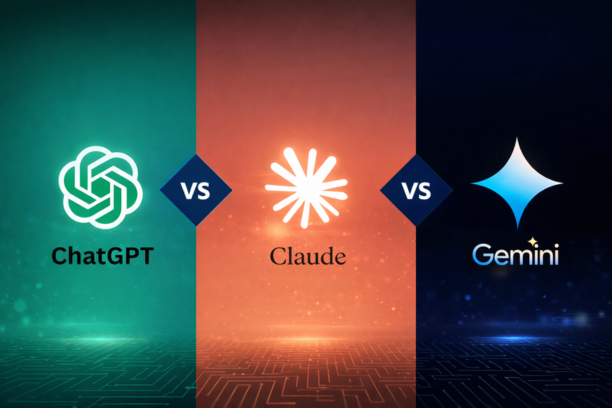
And ChatGPT remains one of the most flexible helpers for writing emails, summarising materials, brainstorming and getting quick answers to research queries. Most day to day jobs are covered by the free tier, with subscription plans offering faster response times, broader context windows, and deeper reasoning models – essential for more complicated AI content development and analysis work.
Claude
Many firms utilise Claude for reliable long-document analysis, code support and cautious, well-reasoned writing. It’s a great choice for teams working on contracts, study summaries or technical documentation where precision and detail matter. Claude is offered through a free tier and various paid membership tiers, as well as API access for developers building unique internal tools.
Google Gemini AI
For companies currently operating within Google Workspace, Gemini’s deep connectivity with Gmail, Docs, Sheets and Slides makes it a perfect fit. It is good at things like summarising long reports, writing first drafts and image-based activities. There’s a free version, and paid versions have higher usage restrictions and more advanced functionality.
2. Best AI Tools for Content and Marketing
Jasper (Paid)
Jasper has evolved from a simple AI writing assistance to an all-in-one content operations platform for blog posts, ad copy, email campaigns and social scheduling. It’s built to understand the voice and tone of a brand, which makes it a solid option for marketing teams churning out large amounts of on-brand material. It’s also one of the highest CPC keyword categories for the AI industry – constantly competitive search terms like “AI content marketing software” and “AI copywriting tools” are indicative of strong commercial intent on the part of marketers.
Canva AI (Gratis & Paid)
Canva’s AI-powered design features – like AI image generation, background remover and “Magic” editing tools – make it accessible to non-designers that need finished images fast. The free plan is rather liberal for small businesses, while Canva Pro includes professional designs and brand kits.
Grammarly (Free & Premium)
Grammarly is still the best option for correcting grammar, tone, and clarity in emails, proposals, and marketing copy. It has both browser and desktop connectors so it operates silently in the background across just about every app your team already uses. Free version covers the fundamentals, subscription levels provide tone rewrites, plagiarism checkers, and team style guides.
3. Top AI Tools for Sales & CRM
Keywords such as “AI CRM software,” “AI sales automation” and “best CRM for small business” score among the top CPC searches in the business software category, reflecting the emphasis firms place on solutions that directly produce revenue.
HubSpot AI
HubSpot’s AI capabilities are baked right into its CRM, helping sales people write outreach emails, summarise call notes and auto-score leads. The free CRM tier is a good starting point for small organisations, and you can unlock more automation and forecasting with subscription tiers of the Sales Hub.
Salesforce’s Einstein
For larger orgs already on Salesforce, Einstein AI provides predictive lead scoring, automated case routing and generative email authoring right in the platform. It’s a premium, enterprise-oriented alternative best suited to organisations that already have Salesforce infrastructure in place.
4. Best Automation and Workflow Tools for AI
Artificial Intelligence Zapier
Zapier integrates with thousands of apps and is now adding AI to its automation engine, enabling teams to create “if this, then that” workflows using plain-language instructions instead of complex logic trees. It’s perfect for small businesses who want to automate tedious admin tasks like invoicing, lead routing and follow-up emails, without a developer.
Lindy and other AI agent platforms
A newer genre of AI automation software is centred around autonomous “agents” that manage complex, multi-step corporate processes, such as scheduling, customer follow-ups, data entry and internal coordination. Ops teams aiming to decrease manual, repetitive work without adding manpower find these products appealing.
5. Best AI Tools for Data and Business Intelligence
“Business intelligence software” and “AI analytics platform” are high-value search terms, and underscore the enterprise demand for tools that can convert raw data into choices.
ThoughtSpot
Teams may ask business questions in simple English and get quick answers with charts in ThoughtSpot. No SQL necessary. It’s designed for leaders who want quick, self-serve insights without waiting on a data analyst, and has tools to automatically recognise abnormalities and forecast patterns.
Power BI + CoPilot
With Microsoft’s Power BI and Copilot, conversational AI is embedded in dashboards and reports, making it easier for non-technical personnel to query data and generate summaries. And it’s a good fit for companies already utilising Microsoft 365.
6. Best AI Tools for Coding and App Development
No-Code AI Builders Such as Base44 and More
Non-technical founders say that enterprises who don’t have their own engineering team can use “vibe coding” platforms such as Base44, where they can explain an app in plain English and obtain a working prototype in return. This reduces the cost of producing internal tools, customer portals, or basic apps without paying developers.
GitHub Copilot
GitHub Copilot remains one of the most used AI coding assistant solutions for teams of engineers, helping to speed up development with code suggestions, problem spotting, and automatic boilerplate generation.
7. Best AI Search and Research Tools
Complexity
Perplexity is like a research assistant that pulls from current sources on the web and cites them in the answer. It’s great for market research, competitor analysis and fact-checking – things that old-school search engines make slower and messier. There is a free tier for ordinary use, and a premium Pro plan with more powerful models and higher usage restrictions.
Selecting the Right AI Stack for Your Business
Rather than trying all of the tools on this list, begin with your biggest bottleneck:
- If your team is “content heavy” focus on Jasper, Canva AI and Grammarly.
- Sales-driven firms benefit most from HubSpot AI or Salesforce Einstein.
- If your operations are heavy, go for Zapier AI and AI agent solutions.
- “Data-driven CEOs love ThoughtSpot or Power BI with Copilot.
- For solo founders and small teams, you can get astonishingly far with simply ChatGPT or Claude or Gemini, plus Canva AI – all of which have solid free levels.
In 2026, the most successful organisations aren’t necessarily those who have the most tools, but those that have aligned a small, well-integrated stack to their real workflows and educated their workers to utilise it regularly.
Final thoughts
The finest AI tools 2026 has in store include every area of corporate operations – from writing and content, sales and CRM, to automation, data analytics, coding and research. The good news is: You don’t need a large budget or a technical team to get started. For solitary entrepreneurs and small teams, free solutions like ChatGPT, Claude, Gemini, and Canva AI can handle most everyday needs. But when your business grows, paid systems like Jasper, HubSpot AI, Salesforce Einstein, ThoughtSpot, and Zapier AI offer more advanced automation and analytics.
The trick is to resist the impulse to do everything at once. Identify the biggest time drain-be it content generation, lead follow-up, manual reporting, or repetitive admin-and get one tool that does it well before you add the next. AI is growing fast, and the tools at the top of the list today will continue to change, so think of your stack as something to evaluate and update every few months rather than a one-time decision.
The appropriate AI stack, done right, doesn’t just save time – it frees your team to work on the strategic, creative, and relationship-driven work that truly grows the business.
Frequently Asked Questions (FAQs)
Q1. What are the finest AI tools 2026 firms should start with on a budget?
ChatGPT, Claude, Gemini and Canva AI all have great free offerings that cater to writing, research and basic design needs. These are the greatest places to start before spending money on specialised platforms
Q2. Are paid AI tools worth it for small business?
Paid plans usually make sense when you have a certain duty – like content generation, customer support or sales outreach – that’s a steady, ongoing workload. If a free tool is saving you hours a week, the subscription tier usually pays for itself rather fast in time saved and output boosted.
Q3. What is the difference between an AI chatbot and an AI automation platform?
Chatbots (ChatGPT, Claude, Gemini) – These are conversational assistants that you actively call on for aid. Once configured, automation platforms such as Zapier AI or AI agent tools operate behind the scenes to complete multi-step operations with minimum to no further input.
Q4. Which AI tools get along with current company software? Gemini has extensive integration with Google Workspace, whereas Power BI Copilot and HubSpot AI function effectively within the Microsoft 365 and CRM ecosystems, respectively. Tools that integrate with your existing software stack tend to be adopted more quickly and with fewer productivity interruptions.
Q5. Are AI tools secure for important corporate data?
Mostly the big suppliers have business or enterprise tiers with better data security including options to not use your data to train their models. Always check the data retention and privacy policies of a tool before uploading sensitive customer or financial information. Enterprise plans are also available for teams working with confidential information.

Enjoyed this article?
If this guide helped you, consider supporting Rough Diary. Your support helps us continue creating practical, informative, and useful AI and technology content.