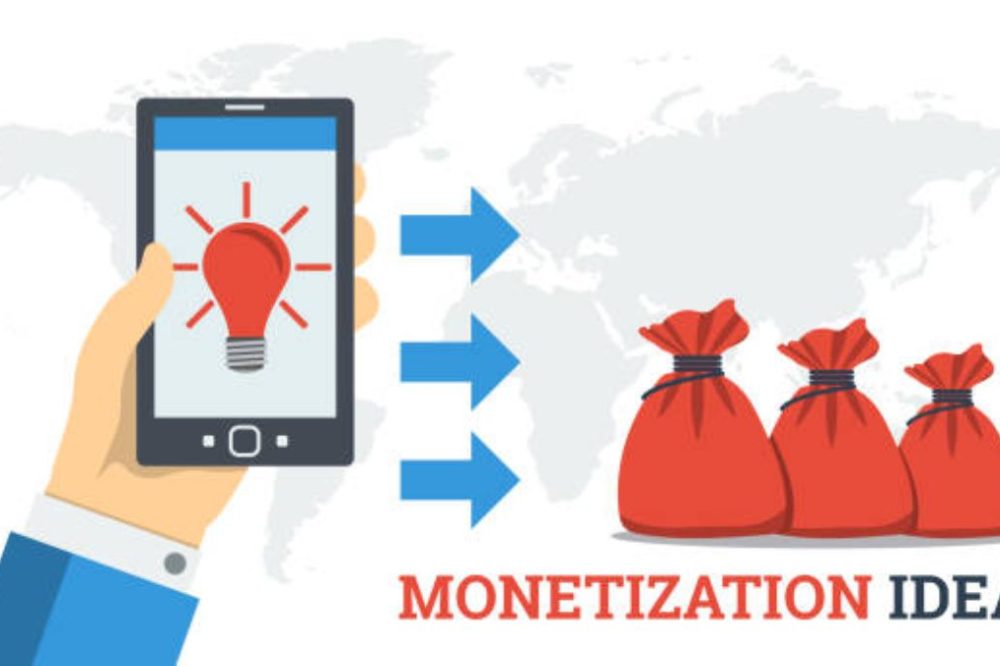
Building great apps is simply half the job. What monetization model you select. Because the path from user acquisition to real money passes straight thru one decision: what monetization model you choose. The real challenge is to make it a sustainable, profitable business. A lousy approach can creep in and leave real revenue and high turnover in its wake. A good one can establish a scalable firm that is really enticing to users and, if it makes sense, to future investors.
Competition for attention and dollars is fierce, with some 2 million apps on the Apple App Store and some 3.3 million on Google Play. In this book we will deconstruct the best app monetization tactics for developers in 2026 – what each model truly looks like in practice, whose apps it works best for and how the most successful apps are increasingly integrating a number of strategies rather than going all in on one.
1. In-App Purchase (IAP)
In-app purchases enable users to buy extra features, content or virtual products within the app itself. It’s a very popular model, especially in gaming and productivity apps, but there are real restrictions of the platform, and very high commission costs from Apple and Google.
That’s a big difference to understand:
- Purchases of consumables, such as in-game cash, can be repeated over and over, resulting in many transactions. But that also involves creating new content on a regular basis to keep giving clients a reason to pay again.
- Non-consumable transactions (like unlocking a permanent feature) are one-time purchases, therefore they have a simpler, more predictable revenue event per user.
Best for: Gaming, productivity apps or any tool with content or features that can actually enhance the experience beyond the free tier.
2. Subscribe.
One of the key business models in 2026 are subscriptions (including freemium). They make surprise one-off sales evolve into predictable ongoing monthly income.Users pay on an ongoing basis to maintain access to premium content, features or services. It provides developers a more predictable stream of revenue than transactional revenue models.
The trade-off is that subscriptions are about delivering constant value – if the user doesn’t see ongoing value turnover grows rapidly, and unlike a one-time purchase, a subscription needs to continually earn its renewal each billing cycle.
Best for: Apps that have a dynamic content or continuing service that provides recurring, not one off value – streaming, fitness, SaaS and content platforms productivity.
3. Freemium
The freemium model remains a major driver of app revenue and isn’t showing signs of slowing down. Provide a real functional free version of your program to get a large user base and then convert some of those users to premium tiers for advanced capabilities. The core value of freemium is that it completely reduces the barrier to entry. A free acquisition approach scales faster than a paid download model and gives a clear upgrade path for those consumers who get real value out of the core product.
The issue is balance. Give too much away for free and you hinder your conversion Make it too limiting and you risk upsetting consumers before they perceive enough value to pay
Best for: Apps that want to recruit users by the droves where some of the free users can potentially be converted to paying customers, in particular gaming, productivity and social apps.
4. In-App Advertising (IAA)
In-app advertising has become one of the most successful and lucrative ways to make money. Global mobile ad spending continues to climb into the hundreds of billions of dollars per year. IAA consists of different ad types with varying trade-offs in user experience:
- Rewarded Ads – Users agree to watch an ad in exchange for an in-app reward, this is usually the most user friendly format as it is voluntary.
- Interstitials are full-screen ads that are shown at natural transition moments in your app. Good for brand visibility, but can be harmful on user experience if overdone.
- Banner advertising – smaller, less intrusive but also generally lower-yield ads
- Native and playable advertising designed to better fit the app’s own content and interaction patterns
It’s crucial to overcome the temptation of thinking more ads equals more revenue. Aggressive ad density tends to increase churn and to diminish the key engagement metrics that make an app attractive to advertisers in the first place. The sustainable form of this model optimizes ad frequency against retention, not only short-term eCPM.
Best for: Apps with high daily engagement and enormous scale, where a large active user base can produce a lot of ad revenue, even at a small per-user rate
5. Business model mix.
The top apps in 2026 will not be one type of model, but rather will combine and match multiple revenue models – freemium with ads, subscriptions with some in-app purchases, or ads with free-tier users and a paid tier without ads. Hybrid models allow developers to monetise multiple segments of the user base simultaneously. Those who don’t want to pay anything are still generating ad revenue, while the most engaged users are converted into subscriptions or sales.”
Best for: Apps with a large user base and a wide range of willingness to pay, where no model can capture the entire range of possible revenue.
6. Pay-As-You-Go (Metered Billing)
consumption based billing is a technique where the user is charged based on the actual consumption of a service, instead of a set recurring price. It links the value paid by a user to the value received by a user. You can see this in practice with real acceptance of this method, especially for API-centric B2B solutions but also AI-powered features where usage naturally varies widely amongst users.
Best for: B2B apps, developer tools and AI-powered features with a broad spectrum of intensity of usage across the user population.
7. Payment apps (Pay-Front)
The simplest model is to pay for users once before download. No monetization built in after that. This has waned as freemium and subscription models have been more effective in increasing lifetime value but it still works for apps with an established value proposition and an audience willing to pay before trying.
Best For: Professional apps that are niche and your audience already understands and expects the value before download.
8. Affiliate Marketing & Partnerships
Some apps earn money by recommending other apps or services that are relevant to their customers and earn a commission for the conversions. Even smaller developers are able to do this, because big platforms like Google, Apple and Microsoft offer app affiliate networks. Commissions tend to be small and it is best employed as part of a diversified approach. There is some brand risk too, if you advertize a low quality partner app, that might seem terrible for you too.
Best For: Niche apps with loyal audiences where relevant product recommendations feel natural.
9. Licenses
Developers are able to license trusted, compliant and flexible technology to other businesses to create a high-margin revenue stream with relatively low churn – particularly in regulated sectors such as finance, health tech, logistics and SaaS, where other companies increasingly desire ready-made, proven technology rather than build from scratch.
Best for: Developers with a robust, technically sound product or component that solves a real need for other businesses and not just end customers.
10. Crowd funding
Sites such as Kickstarter, Indiegogo and Patreon give you an opportunity to make money for apps that have a strong community, a strong mission, or an early audience that is passionate about sponsoring development directly. This is best used as an early or supplement income rather than as a primary income for the long term.
Best for: Community-centric or mission-led apps where the audience is prepared to pay directly for the development.
Selecting the Appropriate Monetization Approach
There is no single perfect model for everyone – it relies on a few factors that are special to your app:
- What’s the price of your app? Subscriptions are a strong fit for ongoing, continuously renewed value (content, services) One-time utility is a better fit for premium or freemium model
- Who are you selling to and why? Freemium + advertising tends to work well for a huge consumer audience whereas a professional or B2B audience is more likely to accept greater value paid or usage based pricing.
- “How many users do you have? How active are they?” If you can get high engagement, ad-based revenue is possible even with modest reach. Usually lower engagement requires greater value transactions per user to be sustainable.
- How competitive is your environment these days? Users already have a price expectation based on other similar apps they are using. No matter how good your argument, wildly straying from category norms harms conversion.
- Are you optimizing for growth or for near-term revenue? Freemium and ad-supported models tend to focus on acquiring as many users as possible, often at the cost of short-term profitability. Premium and subscription models generate cash up front, albeit from a smaller customer base.
Test and Iterate: The Example
Whatever model or combination you start with, treat it as a starting hypothesis, not a final choice. App revenue optimization is a perpetual cycle of testing, iterating and refining – A/B testing price tiers, optimizing ad frequency versus retention statistics, and monitoring what features actually drive conversion. The applications that will provide the most continuous revenue for 2026 won’t be the ones who chose one monetization model and stuck with it. It’s the apps that look at monetization as a process, a system that can be optimized, and that’s driven by real user data, not a one-time choice post-launch.
Summary:
There is no single optimal app monetisation plan. Your best choice relies on what your app does, how willing your audience is to pay and how engaged your users are. Freemium and subscriptions are the current powerhouses of mobile app revenue, because they align the delivery of long term value with recurring revenue better than most other alternatives. But the strongest performers are increasingly combining models, such as ads for free-tier users, subscriptions for engaged ones, and occasional purchases layered on top, instead of betting on any one revenue stream. Whatever the mix, the important differentiator over the long haul will be how often you test, measure and iterate against real user behavior.
Frequently Asked Questions (FAQs)
1. Best App Monetization Strategy For Developers In 2026
There isn’t a universally applicable solution – freemium and subscriptions are the biggest income generators for applications today since they link ongoing value with ongoing cash, but the right call will depend on your app’s purpose and audience. Many of the most successful applications adopt a hybrid strategy, using a variety of models such as freemium, advertising and in-app purchases rather than just one.
2. Do I monetize my app with in-app purchases or advertisements?
It really depends on how engaging your app is, and who your audience is. Apps with lots of engagement and a wide audience can generate substantial revenue trough ads even at a modest rate per user, whereas in-app purchases or subscriptions tend to work better for apps with less involvement but more invested users. A lot of successful apps do both, not one or the other.
3. More ads in my app equals money?
Not needed and often the opposite. High aggressive ad density can lead to greater user churn and less engagement which can eventually influence the total revenue an app makes over time. The sustainable way is to increase ad frequency against retention, not short-term ad impressions.
4. How is subscription monetization different from freemium monetization?
Freemium is where the base program is free and you pay for upgrades/features. Upgrades can be a one-time purchase, or a purchase once in a while. Subscriptions are recurring charges customers pay to access premium services or content. Many apps mix the two, leveraging the freemium model to boost early uptake, and subscriptions to monetize the most engaged users.
5. How can I know which monetization model is suitable for my app?
Consider your app’s value proposition (recurrent or one-time), your target demographic and their readiness to pay, your user engagement levels and the current monetization approaches for your app category. A/B pricing trials and close attention to retention statistics are generally going to be more dependable than betting on a single model based on assumptions alone.

Enjoyed this article?
If this guide helped you, consider supporting Rough Diary. Your support helps us continue creating practical, informative, and useful AI and technology content.