
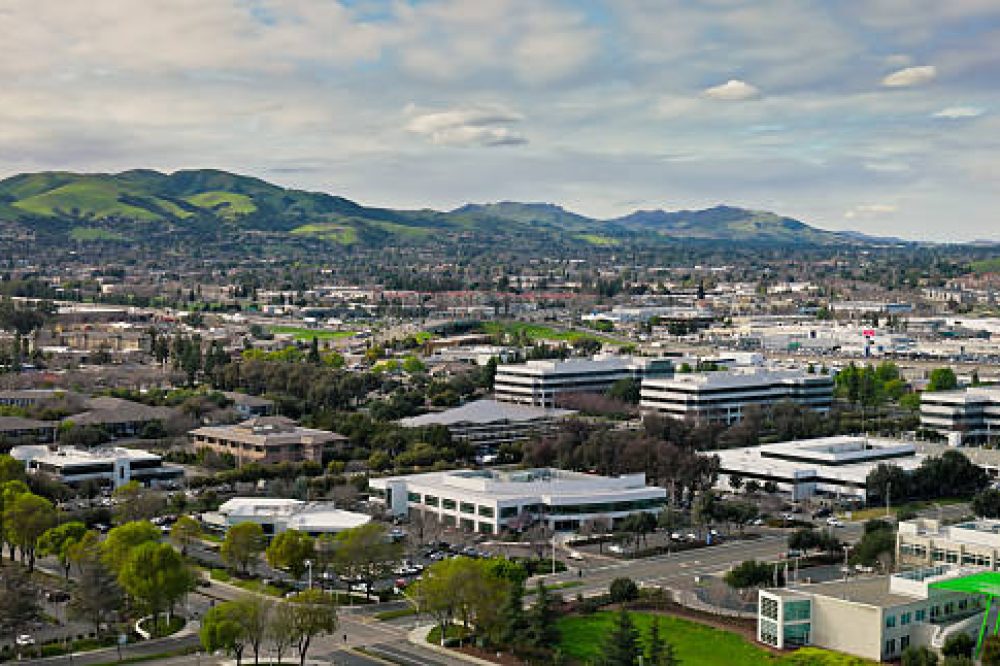
Silicon Valley is a place that everyone loves to talk about like it’s a dying empire. People see the $2 million median home prices and the tents on the sidewalk and they assume the party is over. But it’s not that simple. Even with a quarter of households in the region struggling to meet basic needs, the 2026 Silicon Valley Index just dropped some numbers that are frankly hard to argue with: $92 billion in venture capital and 23,000 new patents in a single year.
It’s a weird paradox. The place is too expensive to live in, yet it’s still the only place where the really “big” things seem to happen first. It’s like a nightclub that charges $50 for a water but still has a line around the block because that’s where the celebrities are.
The AI Gravity Well
If you want to know why the Bay Area is still breathing, look at the chips. 2026 is being called the “Year of Truth” for AI. We’ve moved past the “hey look, this robot can write a poem” phase and into the “this is the backbone of the entire global economy” phase.
Most of the companies building the actual hardware for this—the AI servers, the liquid-cooled data centers, the specialized processors—are still headquartered within a thirty-mile radius of Palo Alto. Deloitte is projecting that the global AI chip market is going to hit nearly $500 billion this year. A massive chunk of that revenue flows right back into the Valley.
Anyway, it’s not just the hardware. The software side is shifting toward “Cloud 3.0,” which is basically a mix of private, hybrid, and sovereign clouds designed specifically to handle massive AI workloads. The engineers who know how to build that stuff aren’t moving to the beach; they’re staying where the high-paying jobs are.
The Great Layoff Reset
You can’t talk about the Valley in 2026 without talking about the pink slips. Last year was brutal. The tech sector saw over 244,000 layoffs globally, and California took the biggest hit by far. Nearly 43% of all U.S. tech job cuts happened right here.
But here is the thing: these aren’t the “we over-hired during the pandemic” layoffs of 2023. These are structural resets. Companies like Block and eBay are cutting their headcounts by half or more, not because they’re failing, but because they’re “rebuilding around AI-first operating models.”
“A significantly smaller team, using the tools we’re building, can do more and do it better.” — Jack Dorsey, CEO of Block.
It’s a cold way to put it. From what I can tell, the “tech capital” isn’t shrinking its output; it’s just shrinking its human footprint. The “boring” roles in HR, customer support, and administration are being phased out in favor of senior technical staff who can wrangle the AI.
The Rise of the “Peer” Hubs
For a while, everyone thought Austin, Miami, and Seattle were going to “kill” Silicon Valley. That didn’t happen. Instead, they’ve matured into what researchers call “peer hubs.”
Austin is a great example. It used to be the “escape plan” for people who couldn’t afford a house in San Jose. Now, the traffic runs both ways. People are moving from Austin back to the Bay Area for specific jobs, and people are moving from San Francisco to Austin for the “energy” and the lower burn rate.
| Tech Hub | Funding Environment (out of 10) | Affordability (out of 10) | Primary Strengths |
| Silicon Valley | 10 | 1 | AI, Fintech, Deep Tech |
| Seattle | 9 | 5 | Cloud, B2B SaaS, Green Tech |
| Austin | 8 | 6 | AI Infrastructure, Tesla/Oracle |
| Miami | 7 | 4 | Crypto, Logistics, Real Estate |
Seattle is actually catching a lot of the spillover. It saw over 16,500 layoffs recently, mostly from the corporate layers of Amazon and Microsoft, but it still has an incredible depth in engineering. It’s becoming the go-to place for “technical rigor” while the Valley stays the place for “speculative moonshots.”
The Venture Capital Stranglehold
If you want to understand why a startup still starts in a garage in Menlo Park instead of a condo in Miami, follow the money. Even with a global slowdown, California still dominates the venture capital market.
Traditional firms like Sequoia, Andreessen Horowitz, and Accel are still sitting on tens of billions of dollars. And they still prefer to invest in people they can meet for coffee on Sand Hill Road.
There is also a new trend toward “tech sovereignty.” Countries and big corporations are trying to build their own resilient ecosystems so they don’t have to rely on a single supplier. But even these “sovereign” projects usually hire consultants or buy tech from… you guessed it, the Bay Area.
Is the Crown Slipping?
So, is it still the capital? Yes. But the “vibe” has changed. It’s no longer the place where a bunch of kids with a laptop can easily strike it rich and buy a house. It has become a highly specialized, incredibly expensive laboratory.
It’s less of a “community” and more of an “engine.”
The imperfection in the system is the cost of living. You can only squeeze people so hard before the “gulf” between the sky-high productivity and the reality on the ground becomes too wide to bridge. We are seeing more “long-distance moves” now, with nearly 1 in 5 house hunters looking to leave their home metro area.
The Verdict for 2026
Silicon Valley isn’t going anywhere. It’s just becoming more exclusive. It’s the “intellectual capital” in the same way New York is the “financial capital.” People will always complain about it, and politicians will always try to replicate it, but you can’t just manufacture fifty years of institutional knowledge and a $92 billion pile of cash in a different city overnight.
Anyway, the world is bigger now. Innovation happens in Bengaluru, Berlin, and Mexico City too. But when the dust settles on the “Year of Truth for AI,” the winners will likely still be cashing their checks in a bank with a 650 area code.