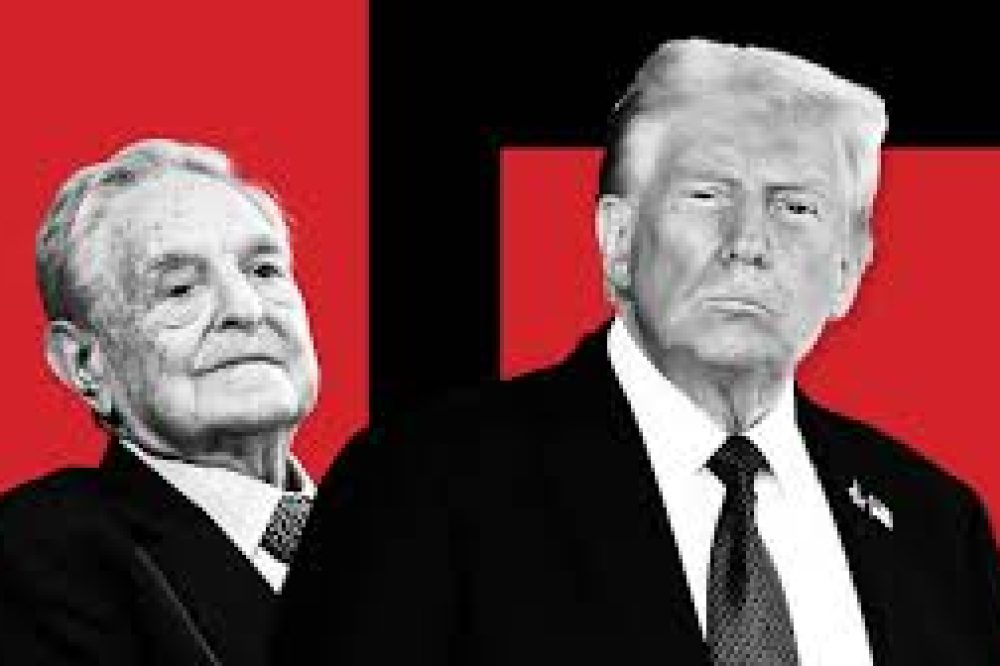
The names on the ledger are getting longer. Donald Trump has officially added George Soros to his list of people slated for a bit of government-sponsored payback. It isn’t just about one billionaire, though. It’s about the whole tangled web of charities, activists, and policy wonks that rely on his checkbook to keep the lights on.
Soros runs the Open Society Foundations, or OSF. His son Alex is the one steering the ship these days. They pour money into everything: voting rights, climate justice, racial equity, and higher education. If there’s a progressive cause out there, chances are OSF has sent them a grant at some point. We’re talking thousands of groups worldwide. Some get a few thousand bucks; others, like the ACLU, get millions. Now, the Justice Department has reportedly told US attorneys to start drawing up plans to investigate the whole network.
Trump put it in a memo. He wants to “investigate and disrupt” groups that supposedly stir up political violence. He pointedly mentioned that Soros is at “the top of everything.” It’s a heavy-handed move, and honestly, from what I can tell, it’s mostly about making life difficult for the opposition.
The Legal Pincers and the “Terror” Label
The pressure isn’t just coming from the White House. It’s coming from Congress too. Republican lawmakers are trying to bake new rules into the latest spending bill – the one Trump calls his “big beautiful bill.” They want the power to strip tax-exempt status from any group they decide is “terrorist-supporting.”
Then you have Ted Cruz. He introduced something called the “Stop Funders” act. It’s designed to let the Justice Department go after any organization that officials claim is coordinating or backing “violent riots.”
“These accusations are politically motivated attacks on civil society,” an OSF spokesperson said. “When power is abused to take away the rights of some people, it puts the rights of all people at risk.”
Last month, Trump even designated “antifa” as a terrorist organization. The problem is that antifa isn’t really a group with a headquarters or a president; it’s more of a loose movement. But by slapping that label on it, the government gets a lot more leeway to dig into the finances of anyone even remotely associated with it. OSF has been clear: they don’t fund terrorism. They have compliance teams. They expect their grantees to follow the law. But when the IRS or the DOJ starts knocking, you have to spend your time and money on lawyers instead of your actual mission. That’s the real goal here – hobbling the other side by drowning them in paperwork.
The Palestinian “Canaries” in the Coal Mine
One of the biggest targets in this whole mess is the movement for Palestinian rights. A rightwing group called the Capital Research Center put out a 72-page report claiming OSF gave over $80 million to “pro-terror” groups. Interestingly enough, they quietly changed the title to “extremism” after their boss admitted to the New York Times that they didn’t actually have evidence of any crimes.
The report lists some big names. Jewish Voice for Peace, the US Campaign for Palestinian Rights, and the Center for Constitutional Rights are all on there. It even loops in the Movement for Black Lives and the Sunrise Movement because they expressed solidarity with Palestinians.
Funding for Palestinian causes has always been a slog. It’s stigmatized. Most big institutional donors are too scared to touch it. OSF was one of the few big players willing to step up. Leena Barakat, who runs the Women Donors Network, says the Palestinian movement is like the “canary in the coal mine.” Whatever tactics the government tests on them – freezing bank accounts, investigations, labels – will eventually be used on every other progressive group.
Democracy and the “No Kings” Resistance
If you look at the groups focusing on voting and democracy, they’re digging in. There’s a mass protest planned for October 18 called “No Kings.” Over 200 organizations are involved. Despite the threats of a crackdown, not a single group has dropped out.
Ezra Levin, who co-founded Indivisible, says they’ve been called “Soros-funded Astroturf” since they started back in 2017. He isn’t surprised by the latest threats. He says they keep their books “squeaky clean” because they know they’re always under a microscope. But what worries him more than a court case is the threat of actual violence if the administration keeps painting them as enemies of the state.
The Center for American Progress (CAP) is another one. They see the attacks on Soros as the “tip of the spear.” They’re “locking arms” with other foundations. The idea is that if the government goes after a small non-profit with three employees, the bigger groups will share their legal teams and resources. They’ve learned that staying quiet doesn’t work. In places with autocratic leaders, the groups that tried to fly under the radar were the first ones to get picked off.
Climate Justice and the $400 Million Question
Climate groups are also looking over their shoulders. Trump has hinted he might revoke the tax-exempt status of “green” non-profits. Last year, OSF pledged $400 million over eight years to help build green economies in the global south. They also put money into US infrastructure.
The Sunrise Movement is a big one here. They received $2.1 million from OSF between 2019 and 2023. Their executive director, Aru Shiney-Ajay, calls this “textbook authoritarianism.” Sunrise was named in that Capital Research Center report because they supported a legal defense fund for people protesting “Cop City” in Atlanta. Most of those charges were dropped, but the label stuck in the report anyway.
Sunrise says they aren’t going to be intimidated. They’re actually expanding their focus. They aren’t just doing climate work anymore; they’re moving into broader “anti-authoritarian” action.
Why Independent Media Matters Now
In a world where the government can lean on the IRS or the DOJ to silence its critics, having a media that doesn’t answer to a billionaire is pretty important. Most news outlets are owned by massive conglomerates or tech bros with their own agendas.
Back in 1936, the guy who owned the Guardian, John Scott, did something unheard of. He gave away his stake. He put it into the Scott Trust so that the paper could stay independent forever. That means no billionaire owner can tell them what to write. They can report on the climate crisis or the targeting of non-profits without worrying about what some shareholder thinks.
It’s a unique model. It relies on people – regular people – chipping in a bit every month. When the rich and powerful start using the machinery of the state to go after their enemies, you need a scrutinizing force that isn’t afraid to stand up.
Anyway, the non-profit world is in for a rough ride. But for now, they seem to be sticking together. If you go after one, you’re going after all of them. That’s the plan, at least.
Would you like me to find the specific legal filings for the “Stop Funders” act so you can see the exact language being proposed?