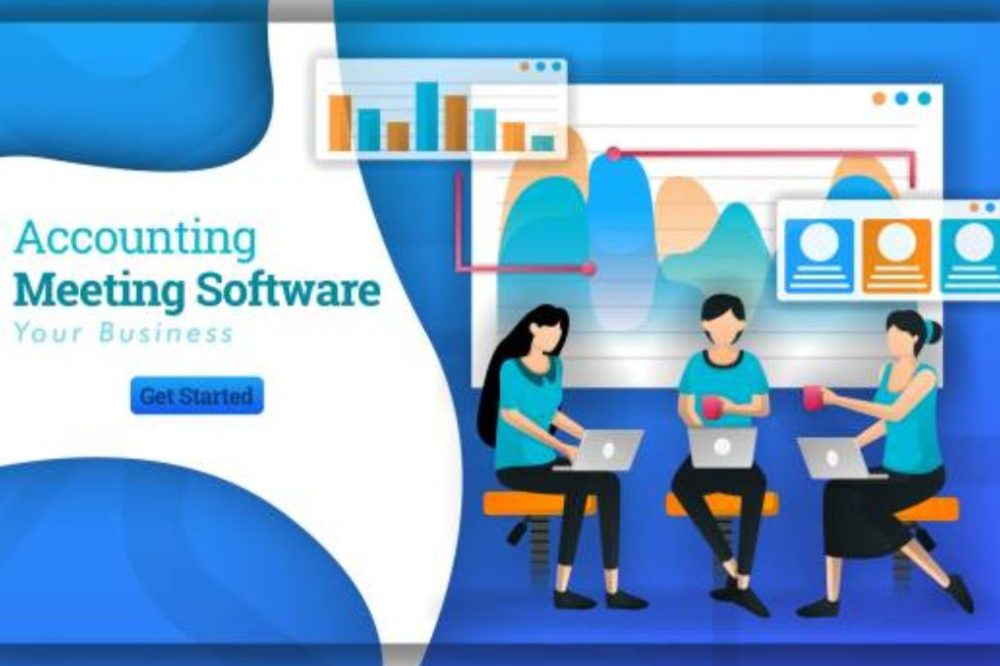
If you’re still handling your business finances with spreadsheets – or worse, a shoebox full of receipts – you’re making life harder than it needs to be. Without the correct system in place, it’s easy to miss warning signs like increased spending, late payments or declining margins, turning tax season into a guessing game built on obsolete or incomplete statistics.
Choosing the finest accounting software for your needs isn’t really about which platform has the most features on offer – it’s about which one you’re actually going to use consistently, and if your accountant or CPA can get to it easily when it counts. This review compares the greatest accounting platforms for freelancers and small businesses in 2026, with pricing, convenience of use, and exactly who each one is ideal for.
What to Consider When Choosing Accounting Software
Business owners spend hours studying the objectively “best” software, yet the question is very simpler: which one fits your situation? Before you compare platforms, consider these:
- CPA Compatibility – Software your accountant can’t easily access costs you money in wasted time and back-and-forth
- Are you really going to use it regularly ? The platform with the greatest features is useless if it is too complicated to manage on a monthly
- Invoicing requirements – how core is invoicing to your firm versus deeper accounting and reporting
- Team size and collaboration – do you require several persons to have access at the same time
- Inventory monitoring – if you sell real goods, this is crucial; if you don’t, it’s unnecessary
- Integration ecosystem – how effectively the platform plays with your current payment processors, ecommerce site and payroll system
1. FreshBooks – Best for freelancers and service-based businesses
Invoicing software to complete bookkeeping platform, FreshBooks has come a long way, but its essential strength remains the same: It’s still the ideal solution for anyone who bills by invoice or by the hour. Its UI is considered by many to be the easiest to use of any major platform, with a clean design and a low learning curve that gets a novice freelancer creating professional invoices within minutes.
- Best for: Freelancers, consultants and service-based organizations where invoicing and time tracking are the most important
- Strengths: Great invoicing, bank import automation, expense and mileage monitoring, tax time reports, fastest set up of any major platform
- Watch out: As a firm grows, with more staff, more bank accounts or more complex sources of income, FreshBooks often becomes a less viable option than QuickBooks or Xero – great for the freelancing stage, but not always the long-term pick for a growing business.
2. QuickBooks Online – Best Overall Small Business Software in the US
For most small businesses in the US, QuickBooks is still the safest default, mostly because accountants are most comfortable with it (it’s the most popular platform among American CPAs and bookkeepers, so when you’re prepared to hand off your books, it’s nearly always a painless process). It has a much richer feature set than FreshBooks, with solid reporting, payroll integration and inventory management, and more than 750 integrations with third-party apps, like Shopify, PayPal, Square and Gusto.
- Best for: Small to medium businesses that accept in-person payments, sell physical products, or want AI-powered automation and deep reporting
- Pricing: Simple Start around $38/month, Essentials around $75/month, Plus around $115/month, Advanced around $275/month
- Watch out for: The feature-rich interface has a steeper learning curve than FreshBooks for absolute beginners, but it rewards that learning curve with genuinely powerful functionality
3. Xero – Best for Growing Teams & Collaboration
Xero is particularly special in terms of collaboration and scalability, with unlimited users on all plans – a huge cost advantage as soon as you have more than one or two individuals that need access at the same time, while competitors generally charge per person. It has a modern UI that nicely balances ease of use with comprehensive functionality and links with 1,000+ third-party apps, like Shopify, Stripe, HubSpot, and Gusto for payroll.
- Best for: Small to medium-sized organizations with several employees, a higher frequency of more complex transactions, or teams that require excellent accountant collaboration
- Pricing: Early tier $25/month (limited invoices/transactions), Growing $55/month, Established $90/month
- Things to watch out for: Its wider feature set necessitates a little longer onboarding time than FreshBooks to properly comprehend its potential.
4. Wave – Best Free Option
Wave offers essential accounting services – invoicing, spending tracking and financial reporting – that are free forever, not a limited-time trial and not a “freemium” service. That makes it a bona fide option for extremely early-stage firms on a $0 budget. It’s a real, well-supported tool, not a stripped-down teaser for a paying product.
- Best for: New businesses and freelancers that wish to begin before paying for a paid platform
- Strengths: Truly free minimal features, easy for the fundamental accounting demands
- Watch out: Fewer accountant/CPA access options than QuickBooks or Xero, no inventory management, smaller integration ecosystem, and limited customer support since it’s a free product
5. Zoho Books – Best for budget automation
Zoho Books offers good automation tools and a decent mobile experience at a really inexpensive price point. It’s a sensible middle ground choice for those who want some more automation than Wave gives but don’t want to jump straight to QuickBooks or Xero prices. There’s also a forever-free plan for businesses making less than $50,000 per year in revenue.
- Best for: Small firms who need good automation but don’t want to pay premium prices
- Strengths: Real free tier for tiny revenue, good mobile app, good automated depth for the price
- Watch out for: Less familiarity with US accountants than QuickBooks, which can be important if you want to pass off books to a CPA later
6. Sage 50 – Best for Manufacturing and Construction
Sage 50 is a more niche product than the previous platforms, enabling task costing, offline access and industry-specific capabilities for more sophisticated operational industries like manufacturing and construction where general purpose accounting software generally falls short.
- Best for: Manufacturing, construction and other enterprises with sophisticated job costing or offline access demands
- Beware of: Overkill and not as obvious for simple freelance or service-based enterprises
Quick Comparison Table
| Platform | Best For | Starting Price | Free Tier |
|---|---|---|---|
| FreshBooks | Service firms, freelancers | Paid plans (varies) | No (entry-level tier) |
| QuickBooks Online | Best overall for US small business | ~$38/mo | No (free trial) |
| Xero | Teams, unlimited users | ~$25 per month | No (free trial) |
| Wave | $0 funding, early-stage | Free | Yes (core functionality) |
| Zoho Books | Affordable automation | Paid tiers | Yes < $50K revenue |
| Sage 50 | Manufacturing, construction | Mid-tier | No |
FreshBooks versus QuickBooks vs Xero: The Real Decision Filter
These three should not be selected based on pricing alone or a simple checklist of features. A cheaper platform that requires manual workarounds can be expensive later on during cleanup, tax filing, or investor due diligence – and a more capable platform that is improperly set causes the same issue. The better issue is not “which software has more features” but “which system can you (or your bookkeeper) actually maintain, review and close every single month without it becoming a burden.”
Rule of thumb here: go with FreshBooks if you’re a freelancer or a very small services business where invoicing and time tracking are your bread and butter. If you are a US small-to-medium business with employees, payroll, sales tax complexity or inventory needs and want the safest, most accountant-compatible default, go with QuickBooks. Choose Xero if you are a growing team that needs several simultaneous users and robust collaborative cloud accounting with a vast app ecosystem.
Conclusions
There’s no one accounting software that’s best for every freelancer or small business – the right platform depends on your business complexity, team size, and whether you’ll actually stick with it month after month. For freelancers and service firms who live and die by invoicing, FreshBooks is still the hands-down winner. For U.S. small businesses, especially those who work closely with an accountant, QuickBooks Online remains the safest default overall. Xero is the pick for growing teams who want genuine multi-user cooperation without the costs of per-seat fees, and Wave and Zoho Books are legitimate, well-supported free solutions for enterprises just starting out.
Whatever you choose, focus on consistency over functionality – a simpler platform that you actually update weekly will provide you more accurate, more valuable numbers than a powerful one that sits half-configured and neglected. And, if you engage with a CPA or bookkeeper, be sure that they can access and work within your selected platform before you settle; software that your accountant struggles with typically ends up costing more in clean-up time than it ever saved in membership fees.
FAQs
1. What’s the best free accounting software for small business?
Wave Accounting is one of just a few of accounting tools that are actually free for essential functionality like invoicing, expense tracking and financial reports, with no time limit. This makes it a viable option for extremely tiny or early-stage firms. Zoho Books has a forever-free option for companies with less than $50,000 in annual revenue.
2. FreshBooks versus QuickBooks: Which is better for freelancers?
FreshBooks is usually a better fit for freelancers specifically, with a simpler interface, quicker setup, and an invoicing-first design built for independent contractors. Once you get to the point where you are hiring people or you are working on more complex operations, depth and scalability become more critical.
3. What is the finest accounting software to use with an accountant or CPA?
In the US, QuickBooks Online is often considered the most CPA-compatible, because it’s by far the most familiar among accountants and bookkeepers. Xero also has good features for working with accountants, and Wave’s more limited accountant access choices can create friction if you work directly with a CPA.
4. Do I require accounting software with inventory management?
Only if you sell physical products. QuickBooks Plus does feature decent inventory monitoring and integrations with platforms like Shopify, Square and Amazon, so it’s a fantastic alternative for small businesses that sell things. Service-based freelancers using FreshBooks usually don’t require this function at all.
5. How much does accounting software cost on average for a small business?
Pricing varies: There’s a really free tier for qualified small businesses with Wave and Zoho Books, while subscription systems normally start at $25–38/month for entry-level plans and can grow up to $90–275/month for higher-end tiers with payroll, inventory and multi-user access.

Enjoyed this article?
If this guide helped you, consider supporting Rough Diary. Your support helps us continue creating practical, informative, and useful AI and technology content.