Digital dinosaurs in your living room. Performing a hard operation at your office before seeing a patient. These are not science fiction anymore. These are daily uses of two related, but really different, technologies: augmented reality (AR) and virtual reality (VR). They are used interchangeably in casual conversation, but they are fundamentally different ways of merging the digital and physical worlds, with different hardware, different use cases and different answers to a simple underlying question: does the technology replace your reality, or add to it?
This tutorial will explain augmented reality vs virtual reality in plain terms – what they are, how they are different in practice, real-world examples, and where the new category of mixed reality sits in between.
The Core Difference in a sentence
The basic distinction between VR and AR is simple: AR supplements your reality, VR replaces it. Everything else-the hardware, the use cases, the level of immersion-comes from that one difference.
What is Augmented Reality (AR)?
Augmented reality works by superposition: it takes the physical world that you already have-the room you’re in, the street you’re going down, the equipment you’re operating-and puts digital information right on top of it. The overlay may be as basic as a navigation arrow floating on your car windshield, or as elaborate as a full-scale animated character that appears to sit on your real sofa.
The important thing is to never lose sight of, or connection to the real world. AR is a digital lens that augments your perception, giving you contextual information exactly where and when you need it instead of taking you somewhere else.
How you experience AR: Most typically via a smartphone or tablet camera, you aim the device toward a real-world scene and then superimpose digital information on the live video feed. More and more the same idea is being delivered in a hands-free version using dedicated AR glasses and headsets with transparent lenses.
A classic example is Pokémon GO, where you walk about a real-world place and see virtual monsters overlaid on top of it thru your phone’s camera.
What does Virtual Reality (VR) mean?
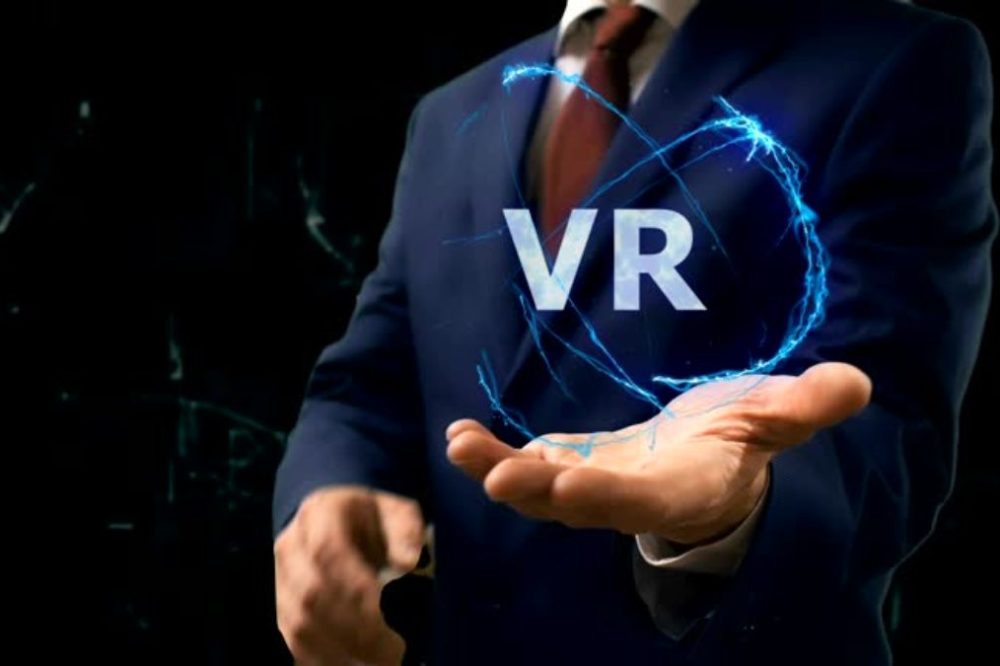
Virtual Reality is based on the opposite principle: absolute immersion. Rather of supplementing your environment, VR attempts to block out the physical world altogether, replacing your senses – principally sight and hearing – with a fully simulated, computer-generated environment. When you put on a VR headset, your surrounds are fully replaced visually and aurally.
Usually they add to the immersion by playing spatial audio thru headphones and providing handheld controllers so you can interact with and with the virtual space directly, frequently using an avatar to represent yourself inside the digital realm. Total immersion is the goal – making your brain believe as convincingly as possible that you are somewhere you are not.
How you experience VR: Only via a head-mounted display (headset) that blocks out your field of vision, cutting you off from the physical world around you.
Classic example is VR gaming environments . In which a player completely occupies and navigates a digital world that has no direct visual link to their actual physical surroundings .
Key Differences – Quick Overview
| Augmented Reality (AR) | Virtual Reality (VR) |
|---|---|
| Enhances reality with digital content | Replaces the real world |
| Smart phone, tablet or AR glasses | Full enclosure VR dedicated headset |
| Completely present – you are still in your real environment | Completely blocked – your actual environment is replaced |
| High – runs on equipment most people already own | Lower – requires specialized, often expensive hardware |
| Moderate degree of immersion – augments rather than replaces reality | High – completely immersive digital experience |
| Navigation Help in real time Retail try-on Field service | Training simulation Gaming Entertainment |
Real-Life Applications
What AR Does Well
- Retail & e-commerce – essentially putting on clothes, make-up, or furnishings in your real world environment before you buy it
- Navigation – overlays on a windshield or phone screen that provide real-time directions
- Field service and maintenance – technicians can see repair instructions or diagnostic information superimposed directly over the equipment they are servicing
- Education – students can see 3D models or interactive content laid over real classroom situations
- Gaming & entertainment – location-based games that combine virtual features with real-world exploration
Where VR Excels
- Training simulations – practice high-risk procedures, such as surgery or operating dangerous equipment, in a completely safe simulated environment before ever performing them for real
- Gaming and entertainment-deep engagement, completely immersive virtual worlds
- Therapy and exposure therapy – Controlled, repeatable replicated environments utilized in several clinical and therapeutic contexts
- Virtual tourism and real estate – visiting a place or property remotely, as if you were there
- Design and prototyping – architects and engineers tour a 3D model of a space or product before it exists in the real world
Accessibility and Hardware: A Practical Difference
One of the most significant practical contrasts between AR and VR is the current level of accessibility. Augmented reality is much more accessible since it works on smartphones and other lightweight, commonly owned devices, and is easy to use in everyday life without any specialist purchase. virtual reality needs a specific headset and usually a larger hardware investment, which keeps it more niche, yet it offers a deeper immersion. This disparity in accessibility is a big reason why AR has seen broader adoption in everyday and enterprise use cases, while VR remains mostly in gaming, training and specialist professional applications where the deeper immersion justifies the higher expense and friction.
Where Mixed Reality and Spatial Computing Come In
Between AR and VR is a third category that is becoming increasingly essential – mixed reality (MR). Mixed reality combines physical and digital surroundings so that devices can understand and interact with real-world spaces, not just overlay static content on top of them. This relates closely to the more general notion of spatial computing – technology that allows digital information to sense and interact with real-world spatial context, as opposed to a flat overlay divorced from the physical surroundings.
As spatial computing evolves, the barrier between AR and VR will likely become even more blurred. Rather than being viewed as competing alternatives, many firms now are purposefully blending both technologies, deploying AR to provide real-time, in-context help and VR to provide safe and repeatable training environments. This convergence is typically defined as the building blocks for next-generation digital engagement, often considered under the larger umbrella of the “metaverse,” where the line between physical and digital experiences is becoming increasingly blurred, not distinct categories.
So which is “Better”? It Relies on the Objective
The question of whether AR or VR is objectively better is a little like asking whether peanut butter or Nutella is better. They are both legitimately helpful, but they serve very different reasons. It all depends on what you’re really attempting to do:
- Choose AR if you need to augment real-world context, want to maximize accessibility without special technology, or need users to be aware of and engaged with their real physical environment.
- Go for VR when you want full immersion. Deep involvement, safe simulation of high risk scenarios or an experience that intends to entirely transport the user somewhere they couldn’t otherwise go.
Today many businesses don’t have to choose one entirely. Combining both technologies for distinct stages of a workflow, such AR for real-time, on-the-job support and VR for pre-job training simulations, is an increasingly typical method that leverages each technology’s specific strengths.
Final Thoughts
Augmented reality and virtual reality are commonly spoken about together, but they are actually two quite different ideas for blending the digital and physical worlds – one enhances what’s currently in front of you, the other replaces it completely. AR has become the more ubiquitous, everyday technology because of its accessibility, but VR’s deeper immersion keeps it valuable for gaming, training and specialist simulation, even if it requires more dedicated hardware. As spatial computing and mixed reality continue to advance, anticipate the line between the two to get blurrier. But grasping the key difference between adding to reality and replacing it is still the best way to get your head around where each innovation belongs.
Frequently Asked Questions (FAQ’s)
1. Augmented reality versus virtual reality, what’s the key difference?
Augmented reality (AR) is the overlay of digital information over your real world environment without blocking the real world view and using a smartphone, tablet or AR glasses. Virtual reality (VR) immerses you in a virtual world. The VR headset completely substitutes your real-world experience by filtering out your real environment entirely.
2. Do AR or VR need specific equipment?
AR is generally available on devices most people already own like a smartphone or tablet, making it so much more accessible for everyday use. More immersive, yet VR requires a particular headset that needs to be totally enclosed. They also tend to have a bigger hardware investment which keeps them more niche.
3. What Is Mixed Reality? How is this different from AR and VR.
Mixed reality (MR) integrates the physical and digital worlds. Unlike AR, which overlays static digital material, MR-enabled devices can observe and interact with the physical world. It is very much tied to the larger concept of spatial computing and more and more considered as a bridge between AR and VR and not a stand-alone category.
4. Is Pokemon GO AR or VR?
Pokemon GO is a great example of augmented reality. It uses a camera to overlay virtual animals over a live shot of the actual world. That is, users can see and manipulate digital items right over the top of their actual world, rather than being placed in a fully separate simulated environment as VR would allow.

Enjoyed this article?
If this guide helped you, consider supporting Rough Diary. Your support helps us continue creating practical, informative, and useful AI and technology content.