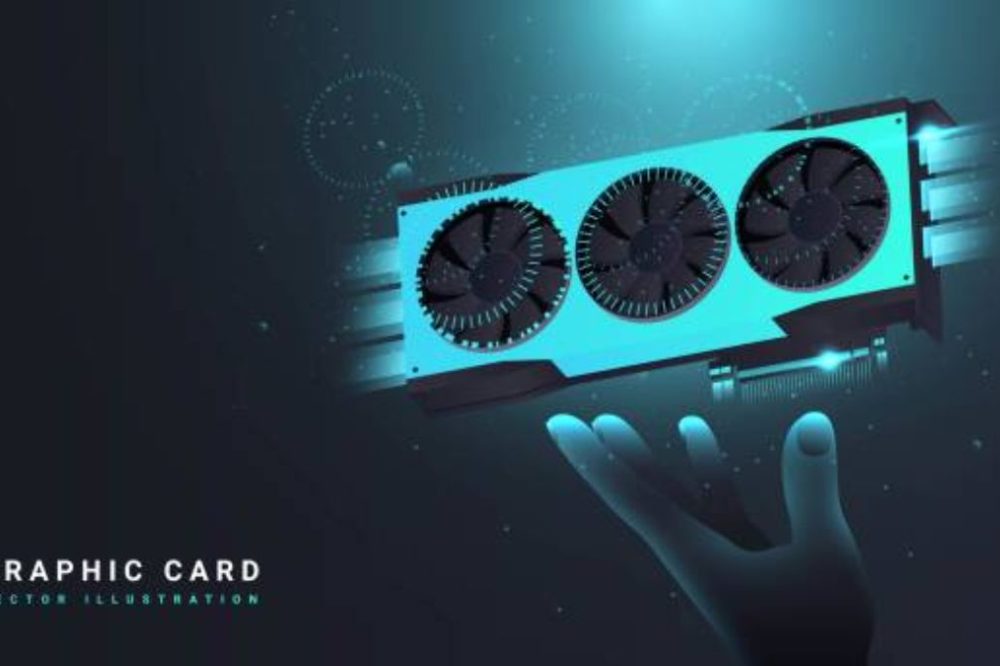
In 2026, buying a graphics card means addressing a question that used to matter less: are you buying for gaming, for AI, or for both? The two use cases reward completely different requirements. For gaming, sheer rendering performance and upscaling tech are king. In terms of AI, and specifically running huge language models and picture generators locally on your own machine, there is one spec that stands head and shoulders above the rest: video memory, or VRAM. The improper card for your actual use case can lead to outstanding gaming performance and a GPU that just can’t fit the AI models you bought it to run.
This guide lists the best graphics cards for AI and gaming in 2026, from NVIDIA’s RTX 50 series to AMD’s latest line-up, and what really counts depending on whichever side of that gaming vs AI divide you’re shopping on.
Fundamental Rule for AI: Model Must Fit in Memory
If your aim includes local AI work, VRAM should not be an afterthought, but your first spec to check. Running AI models on your own machine-from local LLMs to picture and video generators—is totally commonplace in 2026, largely because more users want to play with AI privately, without transmitting data to the cloud or paying continuous API costs. But the first constraint of local AI is strict and fast: a model must to fit in your GPU’s memory to do anything at all. A faster GPU with not enough VRAM will not only be slower to run, but may not be able to load the model at all.
Top GPUs for Gaming in 2026
GeForce RTX 5070 Ti – Best Overall for 1440p/4K Gaming
The majority of reviewers seem to think the RTX 5070 Ti is the ideal combination of high performance and modern graphics innovation for 1440p or 4K gaming. It’s fully compatible with NVIDIA DLSS 4.5 upscaling and Multi Frame Generation, and its 16GB of VRAM means you can turn on every DLSS 4 function without worrying about running out of memory in-game.
Best for: Gamers who want high-end 1440p/4K performance, but don’t want to pay RTX 5090 prices.
NVIDIA GeForce RTX 5070 – Best for 1440p Gaming
But for 1080p gaming, the RTX 5060 is the clear best-in-class choice for around $380. Built on top of NVIDIA’s Blackwell architecture, it offers considerable gains in rasterization, ray tracing and AI performance over the previous generation and easily pushes well over 100 FPS in demanding titles on a 144Hz or 165Hz panel.
Best for: 1080p gamers on a budget looking for a smooth, high-refresh-rate experience without breaking the bank.
AMD Radeon RX 9070 XT – Best Overall Gaming, AI and Creative Performance
The GIGABYTE Radeon RX 9070 XT Gaming OC 16G has been named one of the best overall picks in multiple 2026 roundups, due to its solid gaming performance, 16GB of VRAM, and a price point that undercuts flagship-level cards. It’s a really excellent pick for customers who want one card that can do gaming, some light AI exploration and creative work decently, without flagship-tier cost.
Best for: shoppers who want a single, well-rounded card that does a decent job throughout gaming, artistic work and lighter AI activities.
NVIDIA GeForce RTX 5090 – Best for Maximum Performance (If You Can Find One)
The RTX 5090 is still the best option for those seeking the most powerful performance for gaming, content creation or AI. With 32GB of VRAM, it is truly in a class of its own, making it the obvious choice for running the biggest local AI models – but its cost, power drain, and physical size are more than many 1440p-focused gamers actually require.
finest for: Power users that want the finest performance and are willing to pay flagship prices for it.
Best GPUs for On-Device AI Work in 2026
Best for Running the Biggest Local Models: NVIDIA GeForce RTX 5090 (32GB)
If you’re serious about doing AI work locally and have the budget for it, the RTX 5090 with its 32GB of VRAM stands out from the rest of the consumer portfolio, and makes it the obvious choice for running the biggest models without hitting memory limits.
Best All-Rounder in AI, Gaming & Price: NVIDIA GeForce RTX 5080
If you want good AI capability, gaming performance, and budget, then the RTX 5080 is the mainstream pick that most people exploring with local AI should consider. Real headroom for serious model work without flagship pricing.
NVIDIA GeForce RTX 5070 Ti – The Best Budget Entry Point for Local AI
The RTX 5070 Ti is the budget-friendly option that still allows for genuine local AI exploration. It has adequate VRAM to handle a variety of models while being significantly cheaper than the more expensive cards.
The common theme in all three is buy for the RAM your models genuinely require first and consider the great gaming performance a bonus rather than the major deciding reason.
Top GPUs for AI Training and Development in the Cloud
When you’re really talking AI training, fine-tuning, or deployment at scale (i.e. not a single consumer card), data center GPUs accessed via cloud platforms are the norm, not a local purchase:
- NVIDIA B200 – NVIDIA’s next-gen datacenter GPU intended for the most demanding large-scale AI training and inference workloads.
- NVIDIA H200 – a decent option to the B200, a bit cheaper for all the big scale training and inference.
- NVIDIA H100: Still common, highly supported on cloud AI platforms, a mature, established alternative for significant training workloads.
For most individuals and small teams, the practical reality of developing AI in the cloud is that your choice of GPU directly impacts the speed of your training, the size of models you can realistically train, and your overall deployment costs. That’s because renting access to cloud GPUs is much more practical than buying data center hardware outright.
DLSS, FSR and XeSS Why Upscaling Tech Matters More Than Ever
More and more, buying decisions for modern GPUs are on the upscaling technique and less about sheer rendering power. Both the NVIDIA DLSS 4 and AMD FSR 4 are mature technologies that potentially offer considerable frame rate gains with no sacrifice of quality. Double checking that your card of choice supports at least one of these is really vital to future proof your purchase. Intel’s XeSS upscaling can beat FSR in some cases, and works best specifically on Arc GPUs, but isn’t supported by as many games as its rivals yet – something to note if you’re tempted by an Intel card, tho most reviewers still wouldn’t advise buying an Arc card just for gaming in 2026.
The VRAM Debate: 8GB Still Enough for Gaming?
There is still some discussion regarding the VRAM requirements but real world tests indicate that gaming with an 8GB GPU is really fine in most cases at 1080p and many at 1440p. However, the VRAM calculus is different for AI work, where it’s memory capacity – not gaming benchmarks – that matter. If you’re just gaming, don’t feel like you need to spend more on VRAM that you won’t utilize. If you’re doing AI work, VRAM is going to be a main spec that you want to focus on, not an afterthought.
Quick Comparison
| GPU | Best For | Standout Spec |
|---|---|---|
| RTX 5070 Ti | Overall 1440p/4K gaming | DLSS 4.5 + Multi Frame Generation |
| RTX 5060 | 1080p gaming value | Solid showing around $380 |
| RX 9070 XT | Gaming + AI + creative work | 16GB VRAM, all-around value |
| RTX 5090 | Max performance / biggest local AI models | 32GB VRAM |
| RTX 5080 | Balanced AI + gaming | Good VRAM to price |
| H200 / B200 / H100 | Data-center-grade throughput | Cloud-scale AI training |
Choosing the right GPU for your needs
- Firstly, identify your primary use case. If it’s only for gaming, you should focus more on rendering performance and upscaling support (DLSS/FSR) rather than raw VRAM. If local AI work is important at all, then VRAM capacity is king above all else.
- Match your card with your resolution. Flagship GPU is excessive for 1080p gaming, cheap card bottlenecks a 4K high-refresh-rate configuration.
- Make sure you have enough power supply overhead before you buy. Efficiency has increased across both the NVIDIA and AMD line-ups, but budget cards can still become hot under continuous heavy load – make sure your PSU can easily manage your choice of card.
- If you’re serious about training AI, rent cloud GPUs. For training or fine-tuning at scale, data-center-grade throughput is a must, and renting access to a B200, H200 or H100 via a cloud platform is generally significantly more practical than buying hardware locally.
- Don’t assume the answer is the most expensive. But for most gamers at 1440p, the RTX 5090 is more GPU than you need. It’s better to match the card to your actual resolution and workload than to just get the most powerful thing out there.
Final Thoughts
There’s no optimum graphics card for 2026 – the right decision depends entirely on whether you’re optimizing for gaming performance, local AI experiments, or any mix of the two. The RTX 5070 Ti and RTX 5060 are good value propositions for the vast majority of gamers at their respective resolutions while the RX 9070 XT is a very well-rounded choice for gaming, AI and creative work. Remember the basic guideline for local AI, specifically: Check VRAM first, because a model that doesn’t fit in memory won’t function properly regardless of how fast the rest of the card is. And for real AI training that goes beyond what a personal GPU can do, cloud-based data center GPUs are the more practical and cost-effective way for almost everyone.
Questions frequently asked about
1. What is the best video card for gaming and AI in 2026?
Both the AMD Radeon RX 9070 XT and the NVIDIA RTX 5080 are great choices for users who want good performance for gaming, AI experimentation and creative work without the cost of a flagship. If you’ve got the budget and want the absolute best of both worlds, the RTX 5090 with 32GB of VRAM is the most powerful all-rounder, but at a steep cost premium.
2. What VRAM do I need to run AI locally?
Depends on the size of the models you want to run. To run well, a model must to fit inside your GPU’s memory. The RTX 5090 is the best consumer option with 32GB for real local AI experimentation, the RTX 5080 offers a fair balance of capability and price and the RTX 5070 Ti provides a reasonable affordable entry point for doing some substantial exploration.
3. Will 8GB of VRAM Be Enough for Gaming in 2026?
Real world testing reveals that 8GB is still actually enough for most gaming conditions, especially at 1080p and many 1440p systems. However, if you plan to use AI work on the GPU, the VRAM requirements are much larger and should be considered separately from pure gaming needs.
4. Should I buy a GPU, or rent cloud GPU access for AI training?
If you’re doing local experimentation, personal projects, or privacy-conscious use, then buying a consumer GPU like the RTX 5080 or RTX 5090 makes sense. If you want to train or fine-tune AI at scale in earnest, it’s generally much more practicable (and affordable) to rent access to data center GPUs such as the NVIDIA B200, H200, or H100 thru a cloud provider rather than purchase the gear yourself.
5. Should I buy a new GPU with DLSS or FSR support?
Yes, that is deserving of the priority. Both NVIDIA’s DLSS 4 and AMD’s FSR 4 are mature upscaling technologies that can provide a major boost to frame rates with little-to-no sacrifice in quality. Knowing that your card of choice supports at least one of these technologies is a major part of future-proofing your purchase against the growing demands of AAA titles.

Enjoyed this article?
If this guide helped you, consider supporting Rough Diary. Your support helps us continue creating practical, informative, and useful AI and technology content.