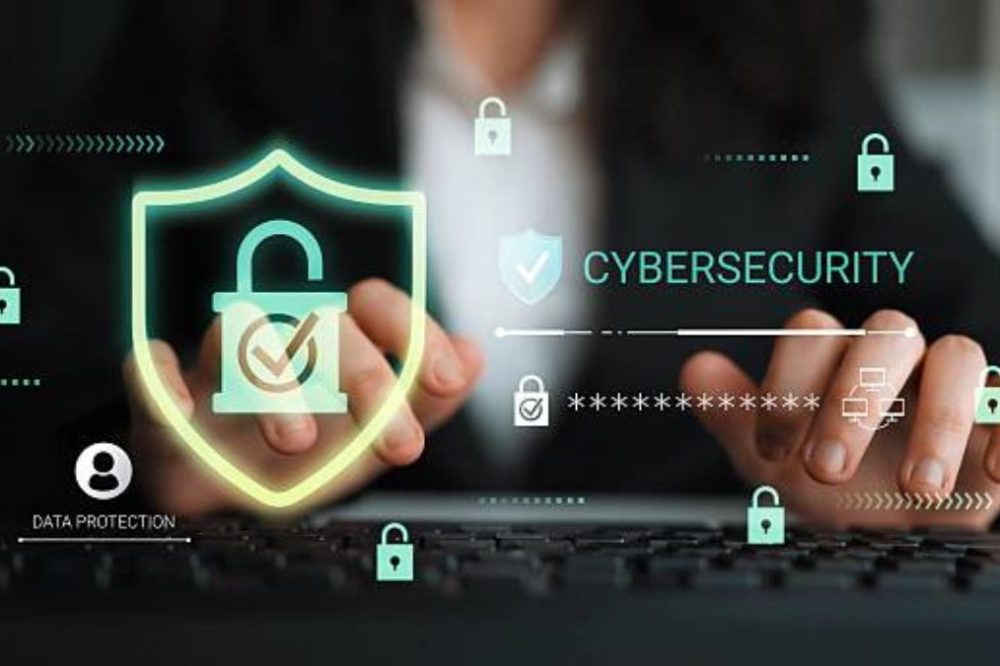
Every time you log into your bank account, send an email, purchase online, or even just turn on your phone, you’re trusting that there are systems in place to protect your information. Together they make up the field of cybersecurity, the technology, techniques and regulations aimed to secure computers, networks and data from assaults, damage and unwanted access.
Cybersecurity used to be the problem of big business, government organizations and technology businesses. By 2026, it will impact every person, every small business and every organization that interfaces with the internet — just about everyone. Data breaches, ransomware attacks, phishing scams and identity theft are now common-place events that cost individuals and businesses trillions of dollars each year.
This beginner’s introduction to all things cybersecurity will cover what cybersecurity is, why it matters, the main sorts of cyber dangers you’ll meet, how companies defend against them, and practical steps anyone can do to protect themselves online.
What Is Cyber Security?
Cybersecurity is the activity of protecting systems, networks, programs and data from digital attacks, damage and unauthorized access, and theft. It’s the combination of technologies, processes and people working in concert to fight against threats ranging from the lone hacker to the sophisticated nation-state actor.
Cybersecurity is more than simply stopping assaults; it is about assuring three key properties of information security, known as the CIA Triad:
- Confidentiality – making sure that information is only available to those who are allowed to see it. Your bank balance is for you and your bank only. Not for strangers.
- Integrity – making sure that the information is correct and has not been altered. If you send $100 online, you want to be sure it didn’t get transformed to $10,000 in route.
- Availability – ensuring systems and data are available when genuine users require them. A hospital’s patient records need to be available 24/7, and a ransomware attack that locks up those documents risks lives.
All cybersecurity controls – firewalls, encryption, multi-factor authentication, antivirus software, security training – are there to safeguard one or more of these three features.
Cybersecurity: Why It’s More Important Than Ever in 2026
There are multiple converging reasons why cybersecurity is one of the most important concerns in modern technology:
Attack surface has exploded
Ten years ago, “securing your network” meant protecting a handful of PCs in an office. Today, every employee’s home router, every IoT device, every cloud application, every mobile phone and every third-party service provider is a possible point of entry for attackers. The attack surface – the number of different ways an attacker can get in – has increased by orders of magnitude.
Cybercrime Is a Multi-Trillion-Dollar Industry
So cybercrime makes more money per year than most of the biggest companies in the world. Ransomware gangs are like businesses with customer service departments. Phishing-as-a-service kits are sold for $50 on dark web forums. Advanced hacking operations are carried out by nation-states. The economics of cybercrime are heavily weighted in favor of attackers, who only need to succeed once, whereas defenders need to succeed all the time.
How AI Has Changed the Threat Landscape
AI tools generate more convincing phishing emails, produce deepfake audio and video to imitate people, automate vulnerability scanning at new speeds and assist attackers in designing malware capable of bypassing defenses. Attackers have the same AI capabilities as defenders – frequently cheaper, and without the operational limits enterprises experience.
Critical infrastructure seeing growing attacks
Hospitals, electricity grids, water treatment plants, banking systems, and transportation networks have been targets of major cyberattacks. When vital infrastructure is successfully attacked, the repercussions extend beyond financial loss – lives and national security are at risk.
Cyber Risks Types
Knowing the types of online dangers can assist you to identify and counteract them. Here are the most popular categories novices should be aware of:
Malware
Malware (malicious software) is a catch-all word for any software designed to damage, exploit or otherwise obtain unauthorized access to systems. Sub-categories are as follows:
- Viruses – programs that infect valid files and spread when the valid files are opened, sometimes destroying or deleting data.
- Worms: self-replicating programs that propagate via networks without user involvement. WannaCry, which struck hospitals and companies around the world in 2017, was a worm.
- Trojans – malicious software that disguises itself as real software. A consumer downloads an app that appears to be useful, but instead installs a backdoor for attackers to exploit.
- Ransomware – locks your files and demands money to unlock them. One of the most common and most damaging types of attack on both individuals and organizations. Ransomware has shut down Colonial Pipeline, hospitals and city governments.
- Spyware : Secretly monitors the actions of a user ( key strokes , browsing history , screenshots , etc. ) and sends it back to the attacker . Industrial espionage, credential theft, surveillance.
- Adware – Displays unwanted adverts and often captures surfing data. Not as deadly as other malware but annoying and privacy invading.
Phising
Phishing involves imitating a trusted entity to deceive users into providing confidential information (passwords, credit card details) or performing activities (clicking on dangerous links, sending money).
- Email phishing – scam emails that look to be from a bank, company or government agency, and tell the receiver to visit a false website or hand over important information.
- Spear Phishing – Targeted phishing using knowledge of the victim’s personal details. A phony email that knows your name, company and job title will be far more believable than a generic email from an attacker.
- Vishing (voice phishing) is social engineering over the telephone. A caller pretends to be your bank, the IRS or tech support and convinces you to hand over credentials or send money.
- Smishing (SMS Phishing) – phishing via text messages. A number of popular vectors include fake product delivery notifications, bank alerts, and reward notifications.
- Business Email Compromise (BEC) – hackers compromise or fake high-level email accounts, and then send employes requests for money or sensitive data. One of the costliest forms of cybercrime, costing firms billions of dollars annually.
Social Engineering (Phishing)
Social engineering is an attack against the human psyche, not against technology. Attackers use authority (posing as executives or law enforcement), urgency (act immediately or face punishment), fear (your account has been compromised), and trust (posing as someone the victim knows).
The most advanced assaults combine technical and social engineering, exploiting a legitimate vulnerability to obtain initial access, then employing social engineering to increase privileges or spread the attack.
Man-in-the-Middle (MitM) Attacks
A man-in-the-middle attack happens when an attacker intercepts the communication between two parties, reading, changing or injecting data without the knowledge of either party. Public Wi-Fi networks are a frequent attack vector, and an attacker on the same network can eavesdrop on unencrypted traffic. This is why you should avoid HTTP web sites . HTTPS ( encrypted web connections ) protects you against many MitM attacks .
Denial of Service (DoS) and Distributed Denial of Service (DDoS) attacks
A DoS attack is basically when you flood a system with traffic or requests so that it can no longer reply to genuine users. DDoS assaults do this by simultaneously utilizing dozens or millions of hacked devices (a botnet). DDoS attacks often target news sites , financial organizations and gaming servers .
SQL injection
SQL injection attacks are attacks that target weaknesses in web applications that use databases. Attackers can inject malicious code into input fields (login forms, search boxes) to change the database underpinning the website – extracting data, circumventing authentication, or deleting entries. SQL injection is still one of the most common online application vulnerabilities, while it’s well understood and avoidable.
Zero Day Exploits
A zero-day vulnerability is a security hole in software that the vendor doesn’t know about yet, meaning there have been “zero days” for them to produce a cure. A zero-day exploit is an attack on these unknown vulnerabilities before they are patched. They are highly valued on underground marketplaces and are key weapons of advanced attackers like nation-state actors.
Insider Threats
Not all hazards are external. Security incidents can be caused by employes, contractors and partners having authorized access to systems, either intentionally (malicious insiders) or unintentionally (negligent insiders). Insider attacks are among the hardest to detect and avoid because the activity is generally normal use.
The Essential Cybersecurity Concepts You Must Know
Authentication and Authorization
Authentication is proving who you are – verifying your identity before being granted access. Passwords, biometrics, authentication applications, all this is for this.
Authentication is who you are . Authorization is what you can do . Being logged onto a workplace network does not automatically grant you access to every file on the network.
Multi-Factor Authentication (MFA) means using more than one kind of verification. Typically, this includes something you know (password), something you have (phone with authenticator app), or something you are (fingerprint). If credentials have been taken, MFA provides a huge reduction in the chance of an account being compromised.
Encryption
Encryption takes readable data and scrambles it into a format that can only be unscrambled with the correct key. When you see HTTPS in your browser, it means your connection to the target website is encrypted – so if someone intercepts the transmission, they only see jumbled data, not intelligible content.
End-to-end encryption (as used by Signal, WhatsApp and iMessage) means only the sender and receiver can read communications – not even the service provider.
firewall’s
A firewall is a security device that uses a set of rules to filter incoming and outgoing information, allowing valid communication to get thru while preventing suspicious or unauthorized connections. Think of it as a security guard at the border of your network, checking credentials before letting traffic in.
Modern firewalls are far more than just blocking ports – Next-Generation Firewalls (NGFW) examine traffic content, detect applications and prevent threats in real-time.
VPN (Virtual Private Network)
A VPN encrypts your internet traffic and routes it thru a tunnel to hide your IP address and prevent your data from being intercepted – especially on public Wi-Fi. VPNs are often utilized by remote employes to access business networks securely.
Updates and Patches
Software vulnerabilities are constantly found in operating systems, browsers, applications and firmware. Vendors issue patches to fix these vulnerabilities. Attackers know exactly what vulnerabilities are present in earlier versions of software and have pre-made tools to exploit them . This is one of the most prevalent attack routes : unpatched systems .
The 2017 WannaCry ransomware assault mostly hit Windows systems that hadn’t been patched by Microsoft two months earlier. The fix was out there; organizations using it were not harmed.
Key areas of cybersecurity
Cybersecurity is not one discipline, but rather a group of specialized areas:
- Network Security – securing the infrastructure that connects systems, including firewalls, intrusion detection systems (IDS), intrusion prevention systems (IPS), and network monitoring.
- Application Security – safeguarding software as it is developed and deployed, including secure coding techniques, penetration testing, and code reviews. Web application firewalls (WAF) secure deployed applications.
- Endpoint Security – securing individual devices (laptops, phones, servers) with tools such as antivirus, endpoint detection and response (EDR) and device management.
- Cloud Security – Protecting Cloud Infrastructure, Applications and Data. As enterprises transfer workloads to AWS, Azure, and GCP, cloud configuration security is of the utmost importance.
- Identity and Access Management (IAM) – managing who may access which systems and data, such as multi-factor authentication, single sign-on (SSO), and privileged access management (PAM).
- Data Security – securing data thru encryption, data loss prevention (DLP) techniques and control of access.
- Operational Security (OpSec) – processes and decisions on how data assets are handled and protected. For example, how employes handle sensitive information.
- Incident Response – the process of identifying, containing, assessing and recovering from security incidents.
- Security Operations (SOC) – teams who centrally monitor security events, respond to alarms and manage security tools 24×7.
Practical steps for protection: Individual cybersecurity
You don’t need to be a security specialist to defend yourself. These basics protect you against the vast majority of attacks against individuals:
- Create strong, unique passwords for each account. Account compromises are most often caused by password repetition. A password manager (Bitwarden, 1Password, Dashlane) creates and saves unique complicated passwords so you only need to remember one master password.
- Use multi-factor authentication everyplace. Use an authenticator app (Google Authenticator, Authy) instead of SMS codes – SIM swapping attacks can intercept SMS-based 2FA. First, enable MFA on your email, banking and social media accounts .
- Keep your software and gadgets up to date. Turn on automatic updates for your operating system, browsers and programs. Unpatched software is one of the most popular attack vectors.
- Be wary of unsolicited emails, links and attachments. The most common attack vector for people is phishing . Double-check unusual requests via a distinct channel (call the known phone number of the sender, not a number listed in the suspicious email) before clicking links or submitting information.
- Use secure websites (HTTPS) Look for the padlock icon and HTTPS in the address bar of your browser. Never type in passwords or financial details on a http site.
- Back up your data. Regular backups safeguard you against ransomware, device failure and inadvertent deletion. 3-2-1 rule – 3 copies, 2 distinct mediums, 1 offsite
- Get a VPN and a Password Manager. Password managers address the issue of password re-use. A VPN keeps your traffic secure on public networks.
- Protect your home network. Change the default router credentials, utilize WPA3 encryption, and keep the router firmware updated. Your home router is a security device, not a plug-and-forget box.
Small Business Cyber Security
Cybercriminals disproportionately target small businesses – they have valuable consumer data and financial accounts, and they frequently have weaker protection than enterprises despite having more to lose than individuals.
Basic cybersecurity for small businesses includes: employe security awareness training (humans are the most common attack vector), multi-factor authentication on all business accounts, endpoint protection on all devices, regular data backups tested for restoration, and a basic incident response plan so the team knows what to do when (not if) something happens.
Cybersecurity Careers: An Expanding Field
Cybersecurity is one of the best career pathways in technology. The worldwide cybersecurity workforce gap is so large that there are millions of jobs vacant – demand is continually higher than supply across all specializations.
There are many cybersecurity career pathways, including security analyst, penetration tester (ethical hacker), cloud security engineer, security engineer, incident responder, digital forensics analyst and Chief Information Security Officer (CISO). Entry-level certifications like the CompTIA Security+, Certified Ethical Hacker (CEH), and Google’s Cybersecurity Certificate offer structured pathways into the profession without requiring a computer science degree.
Closing Thoughts
Cybersecurity is not a destination but an ongoing discipline to mitigate risk in a continuously changing threat landscape. No system is entirely secure; the objective is to make it more expensive and harder to attack you or your business than the possible reward.
For individuals, the essentials – good unique passwords, multi-factor authentication, updated software and a healthy mistrust of unexpected messages – removes the great bulk of risk that targets everyday users. Technical controls, when combined with employe training and incident response planning, provide considerable protection for enterprises against even complex attacks.
FAQs
1. What is the difference between information security and cybersecurity?
Information security (InfoSec) is the larger discipline that deals with protecting information in all its forms, whether it is digital, physical, or procedural. Cybersecurity is a subfield focused on protecting digital systems, networks, and data from cyber assaults. Practically speaking, the two concepts are commonly used interchangeably, however strictly speaking, all cybersecurity is information security, but not all information security is cybersecurity.
2. What are the most prevalent cybersecurity threats for beginners?
The four most prevalent dangers to individuals and small organizations are: Phishing (tricking people into giving credentials or clicking dangerous links) Malware (viruses, ransomware, trojans) Weak or repeated passwords Unpatched software vulnerabilities Real world, defending against these four covers most of the risk.
3. Do I need security software on my smartphone?
Mobile devices are under attack – Malicious apps, SMS and messaging app phishing, unprotected Wi-Fi networks. The iPhone’s overall security architecture from Apple provides good baseline security. On Android, staying inside apps downloaded from Google Play, keeping your OS up to date and not clicking on suspicious URLs gives you a lot of protection. A mobile security app can enhance safety, but it’s more necessary on Android than iOS.
4. You may have been hacked if: What are the warning signs?
You’re not able to get into your accounts (someone changed your password without your knowledge), you notice strange activity in your accounts (purchases you didn’t make, emails you didn’t send), devices performing unusually slow or hot, you receive unexpected password reset emails, apps installed on your devices that you’re not familiar with. Check HaveIBeenPwned.com to see if your email address is in any reported data breaches.
5. Will a job in security be worthwhile in 2026?
Yes — cybersecurity is one of the best employment options in the computer world. The demand is always more than the supply globally . Salaries are good ( starting analysts get $ 60,000- $ 80,000 ; experienced people $ 120,000- $ 200,000+ ) Remote employment is widespread . There is always something new to learn as the threat environment is always growing . There are entry-level certificates such as CompTIA Security+ and Google Cybersecurity Certificate that provide accessible entry points without requiring a four-year degree.

Enjoyed this article?
If this guide helped you, consider supporting Rough Diary. Your support helps us continue creating practical, informative, and useful AI and technology content.