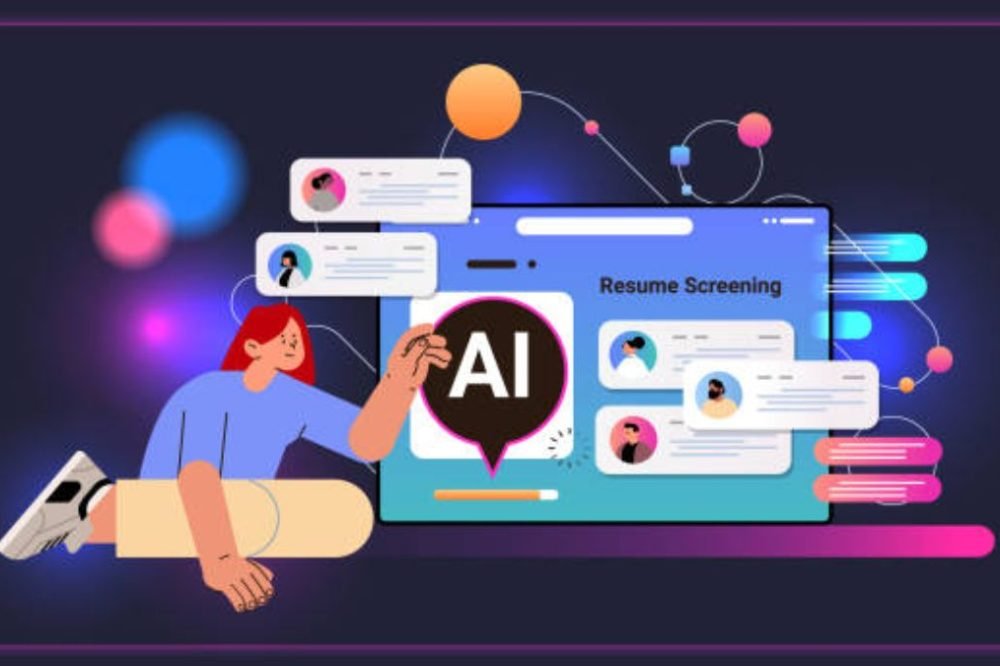
Application traffic has increased sufficiently to really strain traditional hiring processes – average applications per job posting increased from 207.2 in 2024 to 257.6 in 2025, according to Employ Inc. , partly driven by candidates themselves utilizing AI to apply faster and to more opportunities at once. Manual review simply isn’t scalable for such volume, and the numbers bear this out. SHRM’s 2025 Talent Trends report found that 43% of organizations now use AI to perform HR tasks, up from just 26% the year prior, with resume screening being the second most common use after only AI-assisted job description writing.
This guide compares the best AI tools for resume screening and hiring in 2026 by real use case – high-volume screening, enterprise talent intelligence, bias reduction, video interviewing, and budget-conscious teams – plus a candid look at the compliance and bias questions that are as important as any feature comparison.
The First Compliance Reality You Need To Know
Before evaluating tools, one important consideration should guide every purchase: The EU AI Act, which started enforcement in November 2025, labels AI hiring tools as “high-risk” technologies, which must be transparent, documented and supervised by real humans, rather than entirely automated decision-making. This is not a niche regulatory footnote – it’s a live compliance question that reshapes how every firm operating in or hiring from the EU should consider and apply these tools.
It’s also essential being upfront about prejudice: AI screening lowers some forms of keyword bias but can bring a another problem-model bias, inherited from whatever past recruiting data the system was trained on. If a vendor says their tool has “zero bias” it’s a red flag to be cautious of, not a cause to buy it -bias reduction is an ongoing, measured activity, not a solved, one-time feature. The best suppliers in this category provide real bias audit data and provide explainable, not black box, candidate grading so decisions may be examined and explained.
What to Really Look For
- Explainable scoring, not black box – A candidate score should have a clear justification that a recruiter can look at and stand by, not just a number
- Published bias audit results – suppliers who test and report on demographic bias in their own system, instead of just saying that their system is fair
- Human supervision embedded into workflow – true AI screening technologies don’t entirely automate the final employment choice, but assist human review at crucial decision points.
- ATS integration – how well the solution integrates with your existing application tracking system and wider HR stack
- Correct for your actual volume of hiring and role type – an enterprise-size talent intelligence platform is real overkill for a 20-person business, and a lightweight screener may not scale at all at true enterprise scale
1. Eightfold AI – Best Enterprise Talent Insight
Eightfold AI is created for major organizations and matches individuals based on abilities, potential and career trajectory, not just CV keywords, utilizing deep-learning models trained on a dataset of over 1.5 billion career profiles. It goes way beyond screening into broader personnel management – internal mobility, workforce planning and talent rediscovery – and its Agentic AI Interviewer performs first candidate interviews and provides structured summaries straight to recruiters.
Ideal for: Large organizations (1,000+ people) with sophisticated personnel management needs want screening embedded within a broader talent intelligence platform, not a standalone product
2. HireVue – Best for Video-Based Screening at Scale
For more than 10 years, HireVue has been a mainstay in AI hiring technology, helping more than 700 clients around the world – including several Fortune 500 firms – conduct assessments. By 2026, it offers on-demand video interviews with AI analysis, cognitive exams based on games, and text-based chat assessments. AI models analyze spoken responses and the substance of structured answers to produce candidate ratings. The organization has invested considerably in bias auditing and publishes annual fairness reports – a really critical feature, as 47% of HR leaders say they worry explicitly about algorithmic fairness, according to Deloitte’s 2026 Global HR Trends Report.
Best for: High-volume hiring where you need to examine thousands of candidates fast and consistently, especially when video evaluation gives you genuine signal beyond a resume
3. Pymetrics – Best for Bias Reduction and Skills-Based Testing
Pymetrics is the only solution with proven bias reduction capabilities, with independent audits showing it dramatically decreases demographic bias compared to standard resume screening. It uses skills-based behavioral assessments to be particularly effective in positions where a CV fails to provide an accurate predictor of an employee’s future work performance – sales, customer service, and operational roles in particular.
Best for: Enterprise firms with a real commitment to DEI who do a lot of hiring in jobs where success is not strongly predicted by resume screening alone
4. Workable – Best Overall, Integrated Into a Full ATS
Workable’s AI screening is built in a whole application tracking system, so it’s a great “best overall” selection, especially for teams that want screening and full hiring workflow management in one connected platform rather than piecing together different point solutions.
Best for: Teams wanting AI screening as a native part of a full ATS, not a separate add-on tool
5. Manatal – Cheapest Option
Manatal has good AI scoring at a really accessible price point (~$15/user/month), thus it’s one of the more reasonable solutions for smaller teams to add actual AI-assisted screening without enterprise-tier pricing.
Best for: Small teams and budget-minded hiring managers looking for targeted, economical AI screening
6. Fetcher – Best for Independent Sourcing and Screening
Fetcher combines dedicated AI sourcing and screening in one single platform, beneficial primarily for teams who want to both identify and evaluate candidates through one tool rather than sourcing separately from a different platform.
Best for: Teams who want a combined sourcing and screening solution without a complete enterprise ATS
7. Paradox (Olivia) – Best Conversational AI for High Volume Roles
Paradox’s Olivia is a conversational AI assistant intended primarily for high-volume, frequently front-line or hourly hiring, automating candidate discussions and interview scheduling in addition to basic pre-screening.
Best for: High-volume hiring, particularly for frontline and hourly roles where conversational, fast-moving candidate engagement is as important as scoring accuracy
8. GoPerfect – Ideal for Integrated Inbound & Outbound Screening
GoPerfect is the most comprehensive AI resume screening solution in 2026, screening inbound ATS applicants and sourcing outbound candidates all within a single system, scoring each candidate 1-5 with explainable reasoning, auto-triaging into approved/pending/declined categories and connecting to 60+ existing ATS systems.
Best for: Recruiting teams requiring inbound applicant screening and outbound sourcing in one platform
9. Sovren (Textkernel) – Best Enterprise Parsing & Semantic Matching
Sovren’s expertise is in deep semantic resume parsing and matching technology and it’s commonly employed as the underlying engine inside other, larger HR platforms rather than as a separate recruiter-facing solution.
Best for: Companies wanting enterprise-grade accuracy when scanning resumes, usually as infrastructure within a larger HR tech stack
10. Greenhouse: Ideal for human-led, structured AI workflows
Greenhouse combines a mature applicant tracking system with organized, intentionally human-led AI assistance, for firms that want AI support incorporated in a strong, structured recruiting process, rather than a totally automated screening pipeline.
Best for: Companies looking for structured, compliance-driven hiring processes, using AI as an assistant rather than a replacement
Quick Comparison Table
| Tool | Best For | Approx. Cost |
|---|---|---|
| Eightfold AI | Enterprise talent intelligence | Enterprise / custom |
| HireVue | High volume video screening | Enterprise / custom |
| Pymetrics | Skills-based roles, Bias mitigation | Enterprise / custom |
| Workable | Best overall, full ATS | Tiered |
| Manatal | Budget alternative | ~$15/user/month |
| Fetcher | Standalone sourcing + filtering | Tiered |
| Paradox | Conversational AI at scale | Enterprise / custom |
| GoPerfect | Inbound + outbound combined | Tiered |
| Sovren (Textkernel) | Enterprise parsing/semantic matching | Enterprise / custom |
| Greenhouse | Structured, human-led AI + ATS | Tiered |
Can AI Screening Enhance Hiring Outcomes?
The evidence is actually positive, but not unconditional. LinkedIn Talent Solutions data reveals organizations utilizing AI screening technologies report a 35% lift in quality-of-hire indicators – a genuine, substantial increase. But accuracy is very dependent on things beyond the AI tool itself: the quality of the underlying job description, the true diversity of the candidate pool being screened, and if the specific AI model was trained on data that is actually relevant to the role and industry. No tool is flawless, and human review at critical decision stages is actually crucial for final hiring calls, not an obsolete formality the technology has made redundant.
Choosing the Right Tool for Your Organization
- If you’re a huge company with complex talent needs, Eightfold AI’s broader talent intelligence platform delivers more than just screening.
- If you are doing a lot of hiring and video evaluation is truly adding value, HireVue’s decade-long effort in bias auditing and fairness reporting is a major differentiation at scale.
- If improving DEI outcomes and reducing bias are top corporate priorities, the independently audited bias reduction results from Pymetrics are worth the effort, especially for roles in which resumes are poor predictors.
- If you want AI screening integrated inside a full ATS, Workable or Greenhouse both avoid the hassle of sewing together different point solutions.
- If affordability is your main issue, Manatal offers decent AI score without the enterprise-tier pricing.
Whichever tool you use, ensure it has explainable scoring, published bias audit data, and real human supervision baked into the workflow. And if you’re hiring in or from the EU, check its compliance status under the EU AI Act’s high-risk classification.
Conclusion
There’s no single AI solution for resume screening and hiring in 2026. The most suitable alternative relies on your recruiting volume, company size, and how much you’re emphasizing bias mitigation and compliance particularly, not just rapid screening speed. Eightfold AI and HireVue are the best for large-scale, high-volume hiring, Pymetrics is great for organizations that want to reduce bias, and Workable, Greenhouse, and Manatal all are great for teams that want AI screening as part of (or at a budget-friendly price alongside) a full hiring workflow.
Regardless of which tool you use, apply real skepticism to “zero bias” marketing claims, prioritize vendors that publish real bias audit data and explainable scoring, and be sure to keep human review firmly in the loop for final decisions – the technology has moved from optional to operationally necessary for high-volume hiring, but it hasn’t moved from assistive to fully autonomous, and current regulation increasingly reflects just that distinction.
Questions and Answers
1. Is screening resumes with AI legal? Is it regulated?
AI resume screening is lawful in most places but is becoming increasingly controlled. Enforced since November 2025, the EU AI Act designates AI hiring tools as “high-risk” systems that must provide transparency, documentation, and real oversight by humans – firms employing in or from the EU should verify their selected tool’s compliance posture particularly against this classification.
2. Can AI resume screening get rid of bias, or can it create new bias?
AI screening may decrease some types of keyword prejudice, but it might also add model bias inherited from whatever past recruiting data the system was trained on. Any vendor that claims ‘zero bias’ should be met with skepticism, not confidence – the best tools provide genuine, continuing bias audit data instead of declaring the problem is solved.
3. What is the finest AI resume screening tool for a small business or a startup?
Manatal is a frequent mention as the best budget-friendly choice, providing decent AI scoring at roughly $15/user/month, a truly attainable price point for smaller teams who don’t need enterprise-level talent intelligence platforms like Eightfold AI.
4. Which AI Hiring Tool Is Best for Diminishing Demographic Bias?
Pymetrics is particularly known for its demonstrated bias reduction. Independent audits have shown that it reduces demographic bias by a significant amount compared to traditional resume screening, particularly for harder-to-predict-from-resumes positions such as sales, customer service and operations in relation to actual job performance.

Enjoyed this article?
If this guide helped you, consider supporting Rough Diary. Your support helps us continue creating practical, informative, and useful AI and technology content.