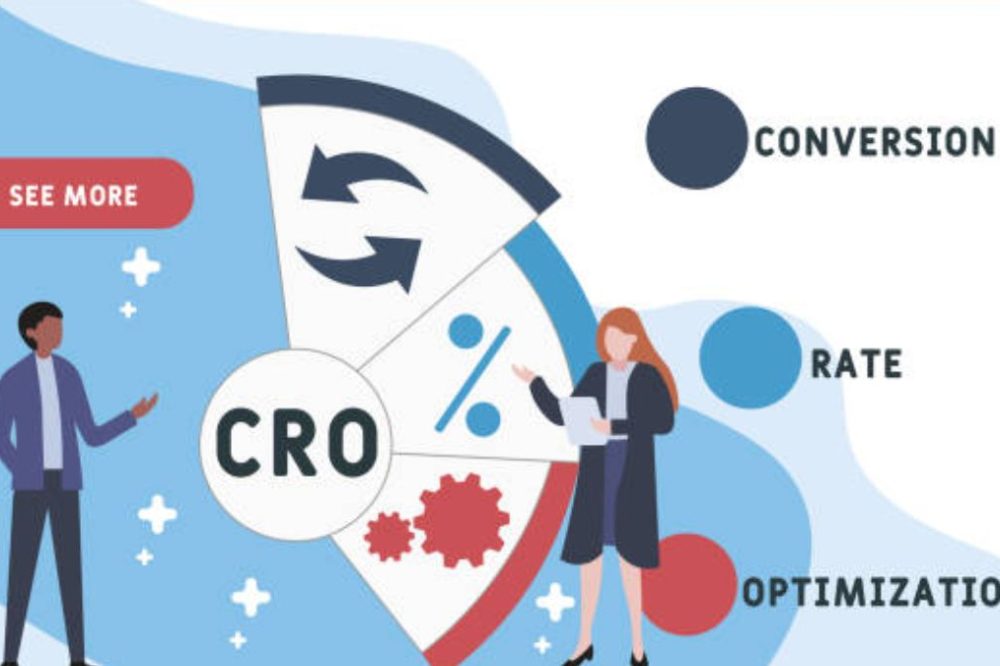
You’ve done the hard work of getting traffic to your website – but if your visitors aren’t converting you’re leaving significant growth on the table. And that’s the precise problem Conversion Rate Optimization, or CRO, is meant to solve: the systematic increase of the percentage of visitors who do a desired action, whether that’s purchase, fill out a form, request a demo or sign up for a newsletter.
CRO is particularly important in 2026 for one very specific reason: The rise of AI-driven search is lowering click-through rates across the board, with AI Overviews increasingly answering informational inquiries directly, instead of directing a click to your site. Impressions are up and clicks are down, which means organizations need to get considerably more value from the traffic they do acquire rather than counting on constantly increasing traffic volume to drive growth. This manual will show you how to increase your online conversion rate, covering the tactics, testing methodology, and data practices that truly move the needle.
What CRO Is (And Isn’t)
Conversion rate optimization is the practice of optimizing a website or landing page to enhance the percentage of visitors who do a particular action. It combines user experience improvements, structured testing, and data-driven decision-making to create more leads, sales, or sign-ups without necessarily increasing traffic at all – which makes it one of the highest-leverage growth levers available, because it multiplies the value of traffic you’re already earning.
To be clear, CRO is not about changing button colors at random or guessing what could work. Real, sustained benefits come from a disciplined process: finding friction spots with real data, formulating a particular hypothesis, testing a targeted modification, and measuring the effect. It’s a game of inches, not miles. One of the most typical reasons CRO efforts stall out is seeing it as a one-time activity, rather than a continuous discipline.
Step 1 Understand the Customer Journey in Steps
Test your site based on the visitor’s journey, not random parts, and divide it into stages – Attract, Engage and Close being common – then use strategies that align with the visitor’s attitude at each stage. This changes CRO from random guesswork into a strategic approach that prioritizes improvements where they’ll have impact, rather than optimizing aspects a visitor may never even view before bouncing off earlier in the funnel.
Step 2: Use Data To Discover Where Visitors Truly Get Stuck
You can’t guess your way to conversion rate optimization, you need statistics to tell you where to focus your efforts first. CRO usually uses two complementary forms of data:
- Quantitative data – from technologies like Google Analytics (GA4), Search Console, or Matomo, showing traffic sources, top performing pages, exit points, and conversion funnels.
- Qualitative data – from heatmaps, session records and user surveys that tell you why users behave the way they do, not just what they did.
Funnel analysis is particularly helpful here: by charting the exact steps visitors take toward conversion, you can easily pinpoint exactly where they’re getting stuck, so you can prioritize resolving that specific barrier rather than making broad, unfocused adjustments across the whole site.
Step 3: Fix the Fundamentals – Speed and Mobile Experience
No amount of persuasive writing can overcome a slow, broken or hard-to-use experience, so make sure the essentials are rock-solid before you test headlines or button colors.
- Page speed – pages should load in less than 3 seconds ideally, site speed is also a factor in search rankings, thus SEO and CRO enhancements frequently play well into each other. If the load time is an issue, a simple first solution is to compress huge image files.
- Mobile experience – Approximately two-thirds of online retail sales are now made via mobile devices, therefore mobile optimization is no longer a “nice-to-have” but a “must-have.” Double-check how images, text, and calls-to-action truly look and behave on phones and tablets.
Step 4: Minimize forms and reduce friction
Every input field you add to a form causes friction, and friction directly correlates to conversion suppression. Audit your forms ruthlessly, removing everything that isn’t absolutely necessary at that particular step. Ask yourself whether a social login would do instead of a manual signup, or whether it’d be OK to gather certain facts later on in the onboarding process rather than up front. This notion is true not only for forms but for the entire signup or checkout flow: each step, page, or decision point a visitor has to go thru is another opportunity for them to give up on the process altogether.
Step 5: Write Clear Benefit-Oriented CTAs
Calls-to-action should be explicit, action-oriented and centered on the value to the visitor, rather than generic phrasing. “Start your free trial” says more than “Submit.” A CTA that tells visitors what to expect next eliminates the opportunity for indecision at the same moment they are selecting to act or not act.
Step 6: Harness the Strength of Social Proof
Testimonials, case studies, reviews, and trust signals help minimize the perceived risk of converting, especially for higher-consideration transactions or B2B offers. Testimonials that reference measurable outcomes tend to do better than generic praise on the SaaS and service side in particular, since they give a visitor a solid reason to trust the product or service will work for them particularly.
Step 7 : Personalize the Experience Where it Counts
Dynamic content – giving visitors case studies or testimonials related to their particular business or scenario – can create a powerful feeling that an offer was developed just for them, significantly increasing the likelihood of conversion over a completely generic experience. Getting started with this doesn’t require complicated personalization infrastructure; even basic segmentation by traffic source or referring content can inform which page version a visitor sees.
Step 8: Optimize category specific pages
Different sorts of pages use different tactics:
- Pricing pages – experiment with alternative pricing intervals (monthly vs. annual framing), ensure clear explanations of what’s included at each tier, and consider adding a direct contact option for visitors with issues before they commit.
- Product pages – high-resolution, zoomable photos, clear information and reviews that are easily accessed eliminate buying hesitancy.
- Homepage navigation – simple logical category names and a prominent search box with autocomplete assist visitors self-navigate to what they actually want instead of bouncing from misunderstanding.
- SaaS-specific sites – Make sure the landing page copy matches the ad or search query that brought the visitor, and provide a seamless free trial or demo path with minimal signup obstacles.
Step 9: Conduct Structured A/B Tests
A/B testing is where you show two (or more) versions of a page, section or element to various segments of your visitors and measure which one is better at meeting your conversion target. When done right, it enables you validate ideas with real evidence, not opinion, and improve the experience incrementally while lowering the chance of a change that really impacts conversion. What matters here is discipline: test one important variable at a time, run tests long enough to achieve statistical significance, and allow the data – not internal desire – select the winner.
The simple, repeatable cycle works well: Find a crucial page → formulate a particular hypothesis based on your data → test a focused enhancement → measure the result → repeat. This is not a campaign with a set end date, but rather a perpetual loop.
Step 10: Analyze Data at Scale Using AI
Now, AI tools can help marketers examine massive data sets, detect behavioral trends and surface improvement opportunities that would take a lot longer to locate manually. This doesn’t replace the strategic judgment needed in CRO, but it dramatically speeds up the process of turning raw analytics and session data into specific, tested ideas – especially helpful as the volume of behavioral data most sites collect continues to expand.
Top CRO Mistakes to Watch Out For
- Considering CRO as a one-time project. A top performing site is never “done” – user behavior changes, expectations vary and offers shift, therefore CRO needs to be an ongoing cycle rather than a one-off endeavor.
- Chasing a single magic bullet solution. Real, permanent conversion increases are made by optimizing each phase of the client experience, not by one big overhaul.
- Testing without a hypothesis. Testing cycles that could be spent on data-driven, prioritized improvements get ruined by random gut feel adjustments.
- Excluding qualitative data. Quantitative data tells what is happening, but heatmaps, session records and user feedback are what tell you why, and missing this side of the picture leads to misdiagnosed problems.
- Optimization without other teams. The best CRO programs communicate insights across marketing, product, and sales, using the learnings from each test to inform the next, not working from a segregated collection of data.
Conclusions
Improving your website’s conversion rate isn’t one neat trick. It’s an organized and continuing discipline of UX, data, psychology, copy authoring and constant experimentation. Begin by leveraging quantitative and qualitative data to determine where visitors are truly dropping off, address core issues like as site performance and mobile experience first, then proceed into testing specific, hypothesis-driven modifications to forms, CTAs and page content. In a search market where AI Overviews are making every click tougher to earn, getting more value out of the traffic you already have is no longer optional, it’s one of the most reliable growth levers still totally within your control.
FAQs (Frequently Asked Questions)
1. What’s a good website conversion rate?
There’s no one-size-fits-all benchmark here – what a decent conversion rate looks like will vary a lot depending on your industry, type of product, where your traffic is coming from, and who you’re targeting. Instead of comparing your rate to an industry average, it’s more helpful to watch your own conversion rate over time, and analyze whether specific CRO improvements are moving it in the correct way.
2. Why is conversion rate optimization more crucial in 2026?
Many informational searches are seeing reduced click-through rates from AI-driven search, and AI Overviews in particular, because the answer is provided directly rather than requiring a click thru to the underlying page. As traffic gets tougher to acquire, organizations will need to get more out of the traffic they do acquire, making CRO a higher priority than just relying on traffic volume to continue to expand.
3. What is the difference between quantitative and qualitative CRO data?
Quantitative data from platforms like Google Analytics indicates what’s happening on your site – traffic sources, exit points and conversion paths. Qualitative data (heatmaps, session recordings and user surveys) explains why users behave the way they do. Both are important to good CRO. Quantitative data shows where the problems are, while qualitative data helps explain why.
4. How long should I perform an A/B test before I make a decision?
A/B testing should be run long enough to achieve statistical significance and to factor in normal variation in visitor behavior, rather than being terminated based on early results. The length of time you should run a test depends on the volume of your traffic and the extent of the effect you’re testing for, but one of the most typical ways that CRO teams draw inaccurate conclusions is by stopping a test too early.
5. Quickest strategy to start raising my website’s conversion rate?
Start with the basics – make sure your page loads in about 3 seconds or less, and that the experience works properly on mobile, because these flaws undercut all other optimization efforts. Then, use analytics and heatmap data to pinpoint your biggest drop-off, test one focused modification, build a hypothesis about why it’s happening, and then move on to the next.

Enjoyed this article?
If this guide helped you, consider supporting Rough Diary. Your support helps us continue creating practical, informative, and useful AI and technology content.