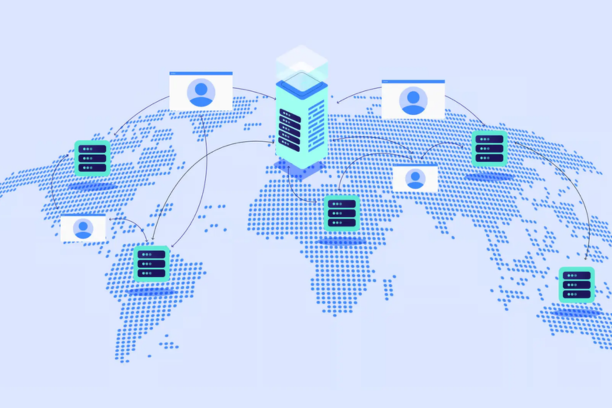

Even firms with huge technical teams, redundant data centers, and dedicated security staff – Google, Amazon, GitHub – have been knocked offline by distributed denial-of-service attacks that good protection could have stopped. If it can happen to enterprises with that much infrastructure, it can happen to a small business site running on a single shared hosting package. And the stats are growing worse, not better : StormWall expects the number of mitigated DDoS attacks worldwide to reach about 58 million in 2026, almost three times the 2025 figure. Financial services, healthcare and critical infrastructure will continue to be the most targeted sectors.
So what really changes in 2026? Attackers are more and more using AI-assisted tools to script attacks, probe your defenses in real-time, and rotate attack methods the moment your mitigation kicks in. What used to be a blunt flood becomes an adaptive, multi-layer campaign hitting your network and application layers simultaneously. Learn exactly how to prevent DDoS assaults on your website in this article – from infrastructure fundamentals to incident response.
What is a DDoS Attack?
DDoS, which stands for Distributed Denial of Service. It is an attack which floods a target system with traffic coming from several sources simultaneously. The target system cannot handle valid requests. These attacks often employ a botnet, a network of hijacked devices, to flood a target with an overwhelming volume of traffic beyond what the victim’s systems can manage. The result? A slow, unresponsive, or fully offline website, or legitimate visitors can’t get thru.
Why It’s More Critical In 2026
The true cost of downtime is considerable – industry studies frequently place the price of one hour of delay in the five figures for many businesses, and the damage goes well beyond the lost transactions that hour represents. This includes reputational damage and SEO impact that might take months to recover from, since both search engines and users will remember an unreliable site.
Two particular tendencies for 2026 make prevention more crucial than other years:
- Hyper volumetric assaults, measured in many terabits per second, once rare, are now recorded regularly
- And short-burst application layer attacks that last seconds or minutes — enough time to do serious damage before traditional, manually-monitored defenses even react
For US security teams in particular, DDoS pressure has become background noise that has to be actively managed all the time, not a periodic, infrequent interruption risk to plan around once in a while.
Step 1: Inventory What You’re Really Protecting
Before deploying any specific security, make a full inventory of all web assets you need to protect – network details, protocols in use, domains, number of applications and when each was last updated. Attackers start by discovering what is exposed on your internet perimeter—open ports, unpatched services, misconfigured APIs—before they ever launch an attack. This implies your own visibility into that same surface area is the crucial first step in lowering it.
Step 2: Place a CDN in Front of Your Site
A Content Delivery Network distributes incoming requests among several global points of presence, absorbing traffic spikes before they even reach your actual origin server. This is one of the single highest-impact, most accessible defenses—and providers like Cloudflare, Akamai and Fastly offer it as a core part of their edge network service:
- Traffic is reviewed at the edge of the network, not on your server
- Malicious requests are screened before getting to your infrastructure
- Good traffic continues to pass thru as normal, bad traffic is stopped at the border
Many hosting companies and CDN services now incorporate meaningful DDoS protection even on their free tiers, making this a genuinely accessible first line of defense regardless of business size.
Step 3: Implement a Web Application Firewall (WAF)
A typical network firewall is not meant to handle large or prolonged DDoS attacks, especially at the application layer. A Web Application Firewall (WAF) filters malicious HTTP requests before they even reach your application, guarding against Layer 7 (application-layer) threats that a simple firewall or CDN alone won’t be able to entirely prevent. Layer 7 attacks are especially designed to mimic normal user behavior, which makes them much tougher to catch with simple, static rules – this is precisely why behavioral detection has become such a crucial addition to a competent WAF configuration in 2026.
Step 4: Add rate limiting
Rate limitation sets limits on the number of requests that a single source can make to your server in a particular time period, blocking abusive traffic before it can saturate your resources. This is a basic control that works with your CDN and WAF, not instead of them. Think of it as just one more layer, but one that is specifically intended to catch high-volume, repetitive request patterns coming from a single source.
Step 5: Behavioral detection instead of static signatures
Traditional security systems utilize signatures to match incoming traffic against known attack patterns . Attacks consisting of individually valid and seemingly genuine requests can easily evade static matching . The trend is to use purpose built DDoS prevention that uses behavioral detection instead of generating a traffic baseline unique to each endpoint on your site and then detecting real time deviations from that established typical pattern. This captures assaults that seem like legal requests when seen individually, but display an obviously odd pattern when seen together – the kind of adaptive, AI-assisted attack that is becoming prevalent in 2026.
Step 6: Over-provision bandwidth, build in redundancy
The secret to building real resilience into your infrastructure is to begin this process before you are ever attacked:
- Over-provision bandwidth – have far more capacity than you regularly require, to handle unexpected traffic surges
- scattered infrastructure- geographically scattered servers and data centers removes a single point of failure that one concentrated attack may bring down completely
- Build redundancy – ensuring key parts have real failover capabilities, so failure in one location doesn’t domino into a whole outage
- Load balancers – spread incoming traffic across numerous servers so no one resource is overloaded on its own
Step 7: IP Reputation Filtering and Geoblocking
If your legitimate traffic is concentrated in some places, geoblocking traffic from those regions where you have no real business can greatly minimize your attack surface. IP reputation filtering also filters traffic that comes from recognized sources of malicious activity, preventing a large volume of attack traffic from ever having to undergo further, more resource-intensive analysis.
Step 8. Select a Hosting Provider with Built-in DDoS Protection
Most site owners don’t realize how important it is who you choose for your hosting. A company that offers always-on, multi-layered DDoS protection that filters traffic in real-time from Layer 3 thru Layer 7 provides a considerably stronger baseline of protection than a provider who checks for problems manually and only reacts after something has already gone wrong. If your present provider’s answer to DDoS protection is “we’ll monitor it manually,” take that as a serious warning it’s time to investigate alternatives because real-time, automated, multi-layer filtering is the basic standard in 2026, not a premium add-on.
Step 9: Look at a Dedicated DDoS Mitigation Service
For organizations that are actually high risk – ecommerce sites during busy sales periods, financial services, healthcare, or any firm that has been targeted before – a dedicated DDoS protection service adds a major layer to your CDN and hosting provider’s baseline security. Services you pay for, like Cloudflare ’s specialized DDoS protection or AWS Shield, detect and neutralize attacks in real time and have the global capacity to absorb even a large-scale onslaught that may buckle a smaller provider ’s shared infrastructure.
Step 10: Spot the Warning Signs Early
Early assault detection minimizes damage significantly. Look for:
- The site or app is unusually slow and there is no apparent, obvious reason for it.
- One particular page or service being totally down
- A sudden, unexpected rise in traffic, especially from unknown or questionable sources.
- Multiple users concurrently facing connection timeouts or intermittent problems
- A sudden increase in spam emails at the same time – sometimes used as a distraction during an active attack
Step 11: Develop and Test an Incident Response Plan Before You Need It
Every DDoS assault is unique and your recovery procedure will depend on the specific circumstances-which is precisely why a documented, tested response strategy is more important than improvising in the moment. Rather than trying to figure out the proper thing to do while your site is down and consumers are actively fleeing, consult with cybersecurity pros and industry-specific counsel ahead of time to provide your staff with specialized, actionable guidance.
A Basic incident response plan should include:
- How is someone alerted to a potential attack?
- Emergency contact and escalation mechanism of your specific mitigation supplier
- A plan for communicating with consumers in case of noticeable or protracted disruption
- A clear post-incident evaluation procedure to figure out what worked, what didn’t and what to alter before the next try
Step 12: Keep Patches Current and Perform Regular Security Audits
Any specialized tool of defense is just as important as proactive, ongoing upkeep. Routine security assessments, staying on top of security patches, and training your employes to recognize the signs of a DDoS attack all reduce your real exposure – many successful attacks specifically target outdated, unpatched services or misconfigured systems that a routine assessment would have caught before an attacker found them first.
Pulling It All Together: A Layered Defense
In 2026, the organizations that will stay resilient against DDoS attacks are those that combine infrastructure-level protection (mitigation services, CDN, DNS resilience) with application-layer hardening (WAF, rate limiting, server configuration tuning) and a genuinely tested incident response plan – not relying on any single layer alone. No single tool or service is a full replacement for any of the others. Each one fills a niche that the others don’t.
Summary
How To Prevent DDoS Attacks On Your Website In 2026: Rather than relying on a single silver-bullet technology, DDoS prevention in 2026 requires a tiered, proactive defense. Begin with the low-hanging fruit: CDN in front of your website, a good WAF, and rate limiting. Then move up to true infrastructure resilience with redundancy, over-provisioned bandwidth, and a hosting provider that provides real-time, multi-layer protection as standard rather than as an add-on. For higher risk enterprises, a dedicated mitigation service and a defined and tested incident response plan complete a really complete defense.
With attack volumes roughly tripling year over year, and attackers increasingly leveraging AI to adapt in real time, DDoS protection has gone from a ‘nice to have’ to a serious operational necessity for any organization with a substantial online presence. The good news: the layered defenses outlined in this guide are more available and better documented than ever, and having them in place before an attack – not during one – is the single biggest factor differentiating a temporary inconvenience from a truly costly outage.
FAQs
1. Can a DDoS assault truly target a small business website?
Yes, DDoS attacks are not necessarily personal or aimed at big firms, as free and cheap tools have made it easier for attackers to target any website, from small blogs and shops to big companies. “Size alone doesn’t provide real safety.
2. What is the difference between a firewall and DDoS protection?
A conventional firewall filters traffic based on very simple, static rules, and is not designed to handle the volume or sophistication of a persistent DDoS attack, especially at the application layer. Purpose-built DDoS defense includes traffic filtering, rate limitation, behavioral detection, and frequently global edge network capacity specifically built to absorb and reduce attack-scale traffic before it reaches your infrastructure.
3. Will a CDN protect my website from DDoS attacks?
A CDN can be an effective way to help mitigate network and volumetric attacks by absorbing that traffic at the edge before it hits your origin server, but it doesn’t automatically imply you are protected from sophisticated Layer 7 (application-layer) attacks. Combining a CDN with a Web Application Firewall and rate restriction will give you more full, layered protection.
4. How fast can a DDoS assault bring down a website?
Some application layer attacks last only seconds or minutes – long enough to interrupt things for real before manual, human-monitored protections can react. And this is exactly why the 2026 standard for effective security is not that a team notices and responds manually, but rather an automatic real-time mitigation that replies in seconds after detection.

Enjoyed this article?
If this guide helped you, consider supporting Rough Diary. Your support helps us continue creating practical, informative, and useful AI and technology content.